Genealogy Services, Old Photos, Postcards, Trade Cards, Etc.

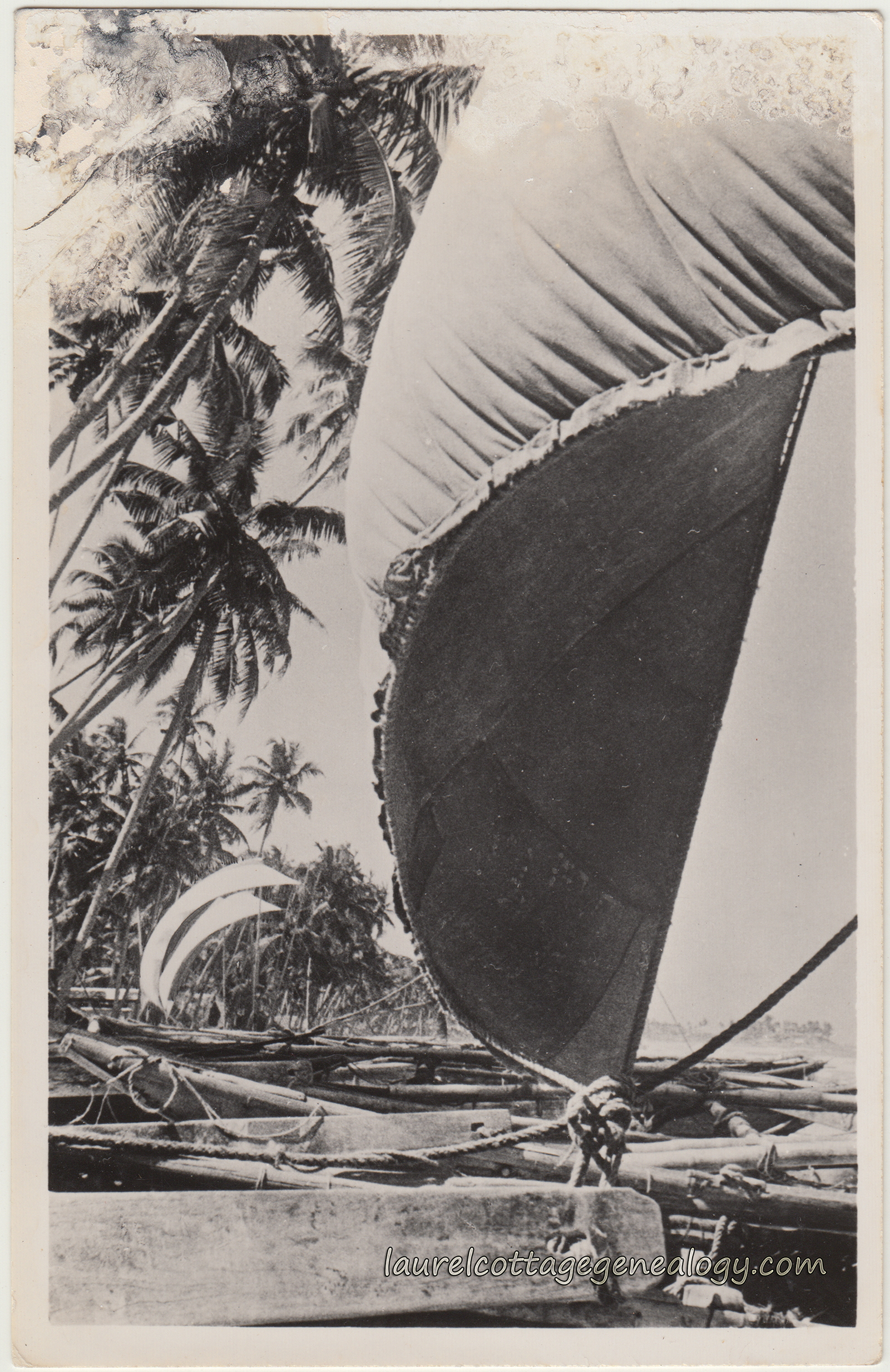
Fishing Boats, Mount Lavinia, Ceylon

Fishing Boats, Mt Lavinia, Ceylon2 (2)Fishing Boats, Mt Lavinia, Ceylon2 (1)

Non-postal card showing black and white photo of fishing boats at Mount Lavinia, Ceylon. Mount Lavinia today is part of the city known as Dehiwala-Mount Lavinia, a suburb of the capital city of Colombo, Sri Lanka. Ceylon became Sri Lanka in 1972. This photo looks to be the second in a series under the title “Ceylon Views” and as the description on the back indicates, it was published by The Lake House Bookshop in the city of Colombo. This bookshop is still very much in operation and their website is listed below. Card printed in England. The top of the photo shows what looks to be maybe a little water damage. Maybe from the waters of the Indian Ocean? As to the age of the card, the bookshop was originally established as a lending library in 1941, and developed into a bookshop from there. This places the date of the card approximately from 1941 up until 1972 when the country became Sri Lanka.

Non-postal tourist card, No. 2 Fishing Boats, Mount Lavinia. Publisher:  The Lake House Bookshop, Colombo 10, copyright. Printed in England. Circa 1941 -1972.

Sources:  http://en.wikipedia.org/wiki/Dehiwala-Mount_Lavinia

http://en.wikipedia.org/wiki/Sri_Lanka

http://www.lakehousebookshop.com/
Song Of The Merchant Kalashnikov

Russian pc1Russian pc2

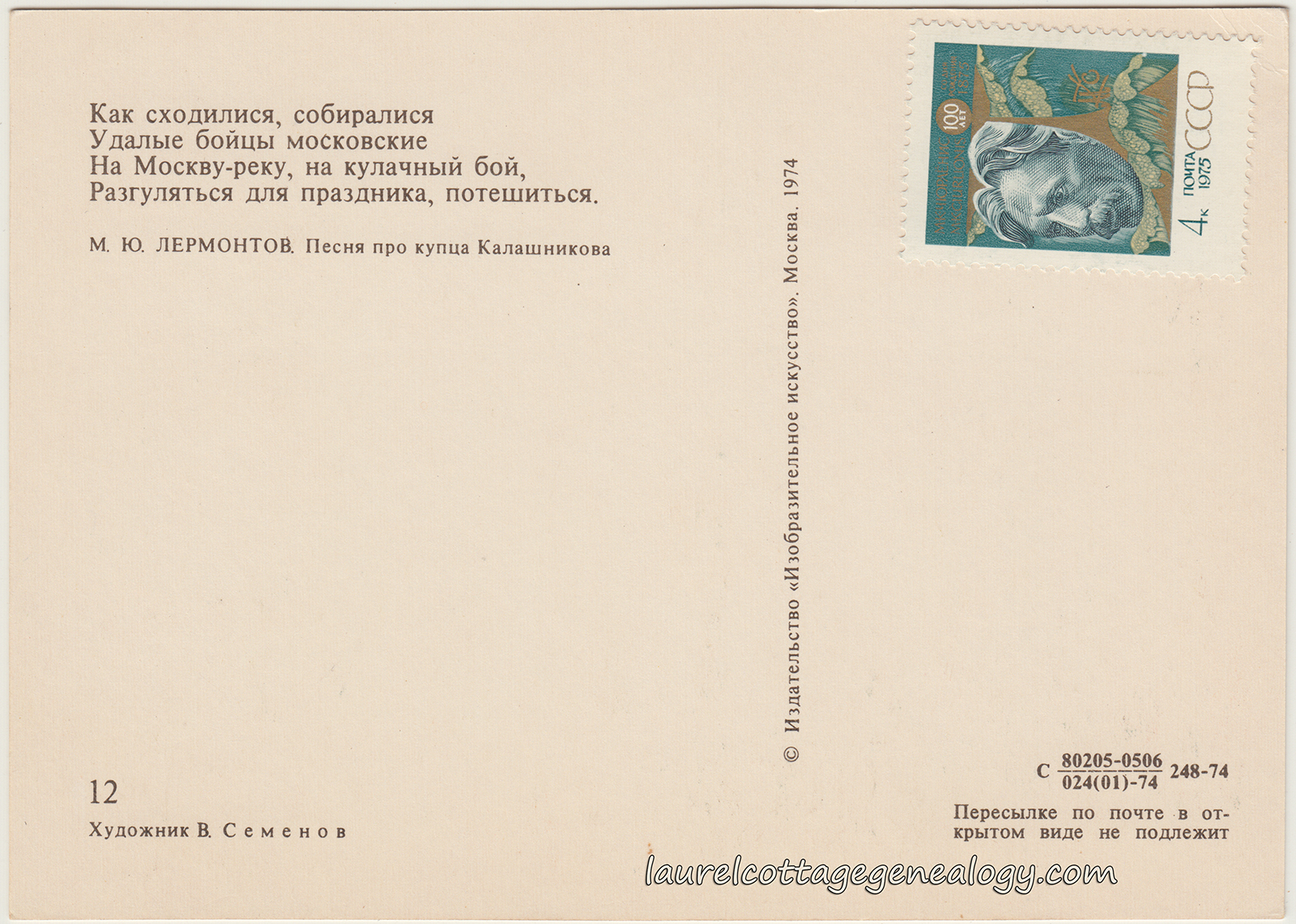
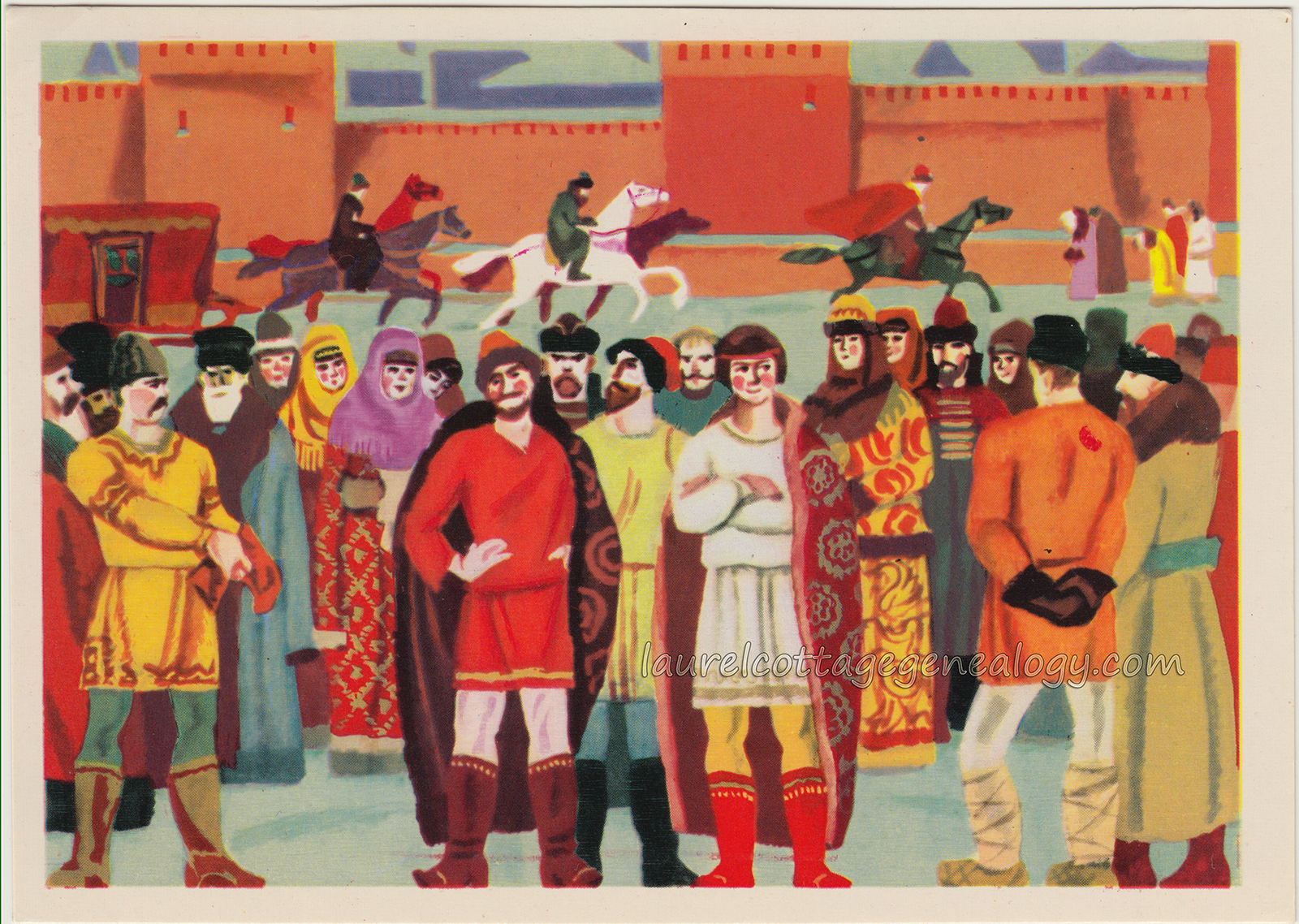
Russian postcard from a painting of a scene about the epic poem by Mikhail Yuryevich Lermontov (Михаи́л Ю́рьевич Ле́рмонтов). The full title of the poem in Russian is “Песня про царя Ивана Васильевича, молодого опричника и удалого купца Калашникова” and is about Tsar Ivan Vasilyevish (Ivan the Terrible), a young Oprichnik (guardsman in the Tsar’s police force), and the valorous merchant Kalashnikov, but the title is often known under the shortened version of “Song of the Merchant Kalashnikov” (Песня про купца Калашникова). Lermontov (1814-1841) was a gifted Russian poet, novelist and artist, and is considered to be  “…the supreme poet of Russian literature, alongside [Alexander] Pushkin and the greatest figure in Russian Romanticism.” (Wikipedia)

The description on the card in Russian is:

Как сходилися, собиралися, Удалые бойцы московские, На Москву-реку, на кулачный бой, Разrуляться для праздника, потешиться.”

Online quick translations are varied but the description has to do with a boxing or fight scene at the Moscow River. At the bottom left of the back of the card is printed in Russian “12 Художник В. С е м е н о в” indicating series or number 12 by artist V. Semenov. This artist’s name shows up on other vintage postcards of this era, but more information on the artist was not located, as of the date of this posting. In any case, this is a wonderful card (the colors!)

Unused postcard with Russian stamp. Year of stamp 1975. Postcard published 1974. Copyright. Publisher:  “Изобразителъное искусство”  Moscow 1974 (Издательство “Изобразителъное искусство” Москва 1974.)

Price:  $20.00

Sources:  http://en.wikipedia.org/wiki/Mikhail_Lermontov

http://en.wikipedia.org/wiki/The_Song_of_the_Merchant_Kalashnikov

Greetings From Fenton, Michigan

Greetings From Fenton Michigan pc1Greetings From Fenton Michigan pc2

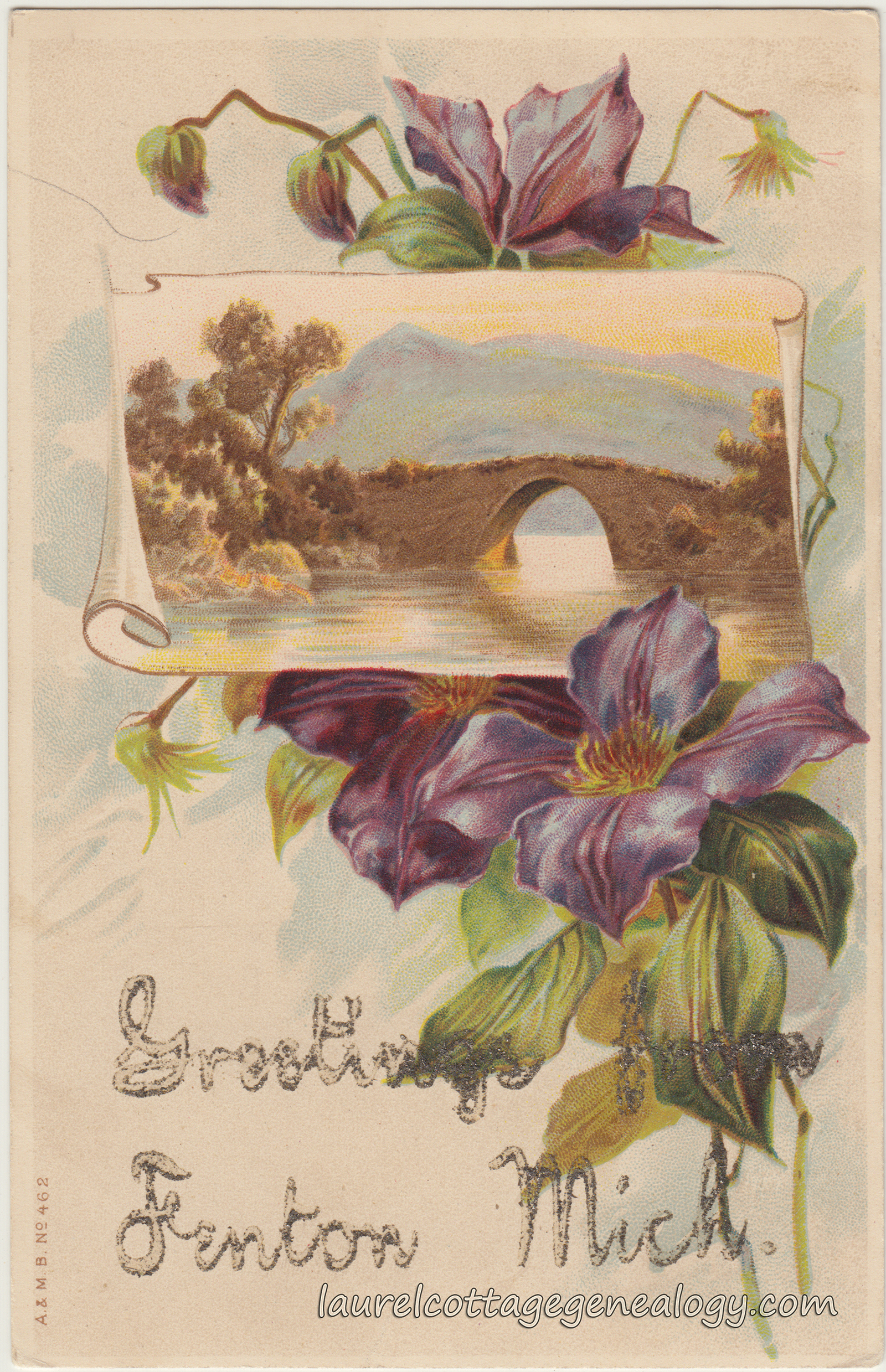
Beautifully done, non-divided back postcard, printed in Germany, showing purple clematis and a scene perhaps designed to resemble a painting on unfurled canvas of a stone bridge over a river, with mountains in the background.  The caption  “Greetings from Fenton Mich.”  appears in cursive glitter. A stunning postcard.

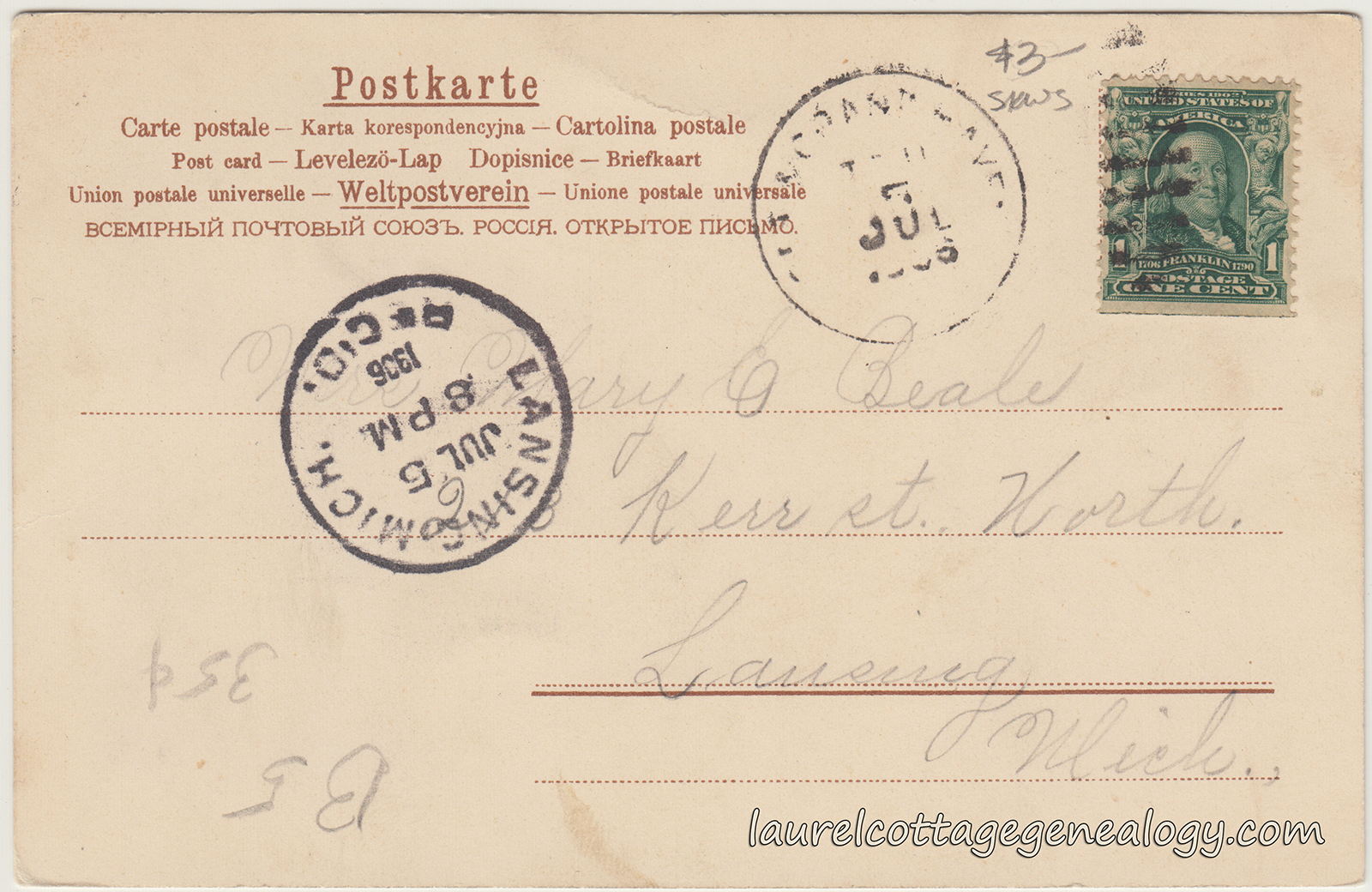
Addressed to:  “Mrs. Mary E. Beale, 211 Kerr st. North, Lansing, Mich.”

Mary E. Beale, born Canada (of Scottish descent) about 1872, appears on the 1910 Federal Census taken in Lansing, with husband Charles F. Beale, born Michigan, about 1874, along with their son, Stanley, born Michigan, about 1905, and Charles’ mother Mary A. Beale, born New Jersey, about 1835. Charles’ occupation is listed as Picture Framer, and the address given on this census is 213 Kerr. There is no writing on the front (or back) indicating who the sender was. (We wonder if the choice of postcards had anything to do with Charles’ occupation.)

Undivided back postcard, printed in Germany. Postmarked from Lansing, Michigan, July 5, 1906. Publisher A. & M. B. (Albrecht & Meister of Berlin) No. 462.

Price:  $25.00

Source:  Year: 1910; Census Place: Lansing Ward 5, Ingham, Michigan; Roll: T624_651; Page: 5B; Enumeration District: 0072; FHL microfilm: 1374664. (Ancestry.com)

Basket of Forget-Me-Nots

Basket of Forget Me Nots pc1Basket of Forget Me Nots pc2

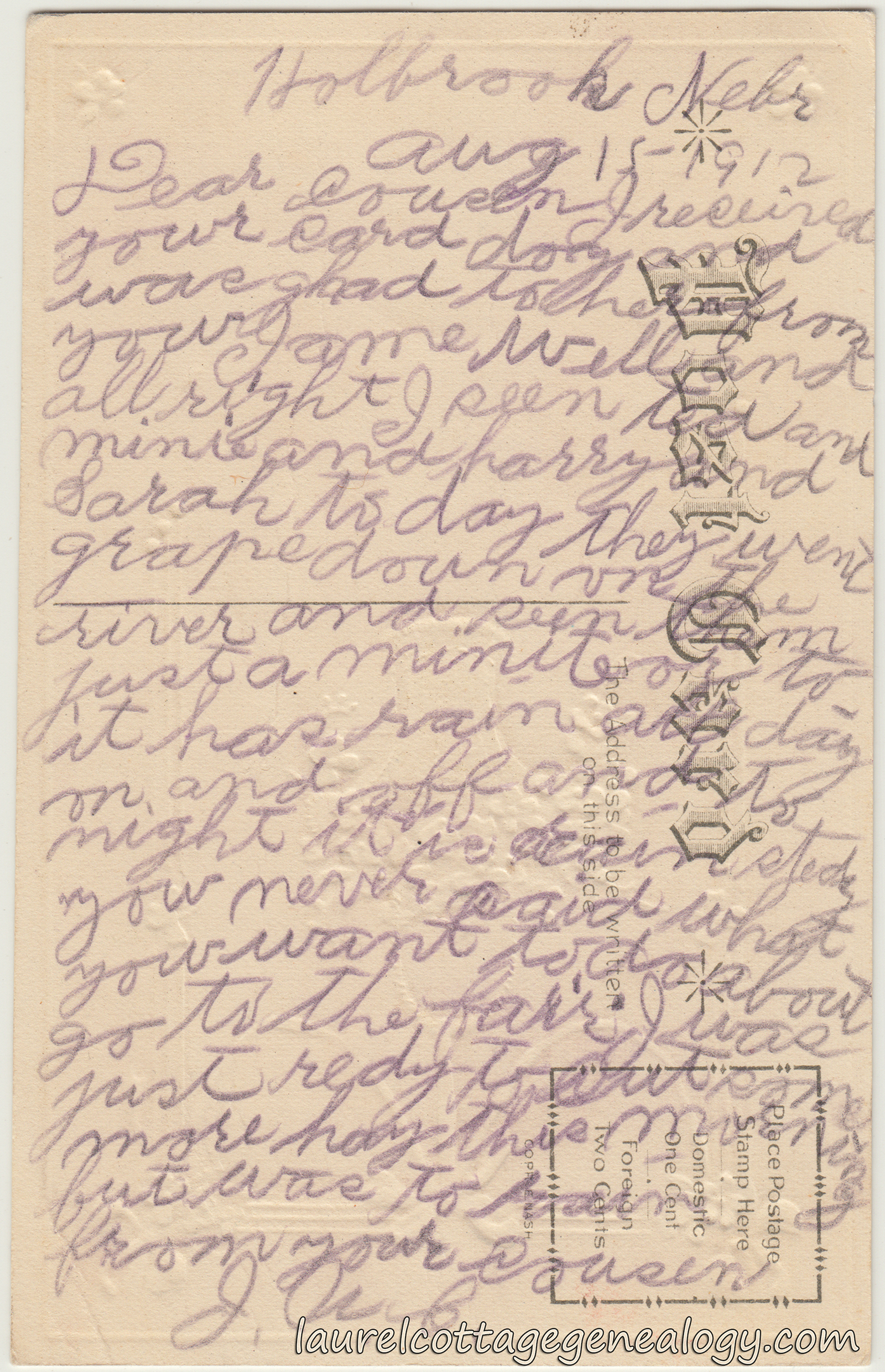
“Holbrook, Nebr Aug 15, 1912. Dear cousen I received your card today[?] and was glad to here from you. I ame well and all right. I seen ted and minie and harry and sarah to day. They went grape down on the river and seen them just a minite or to. it has rain all day on and off and to night it is rain stedy. you never said what you want to do about go to the fair. I was just redy to cut some more hay this morning but was to rain. from your cousen J. W. C.”

The line with the word grape is hard to figure out. Maybe the word is a misspelling of something else. Or could Ted, Minnie, Harry and Sarah have been picking grapes by the river? (Maybe someone else will have a better guess at this than me.)

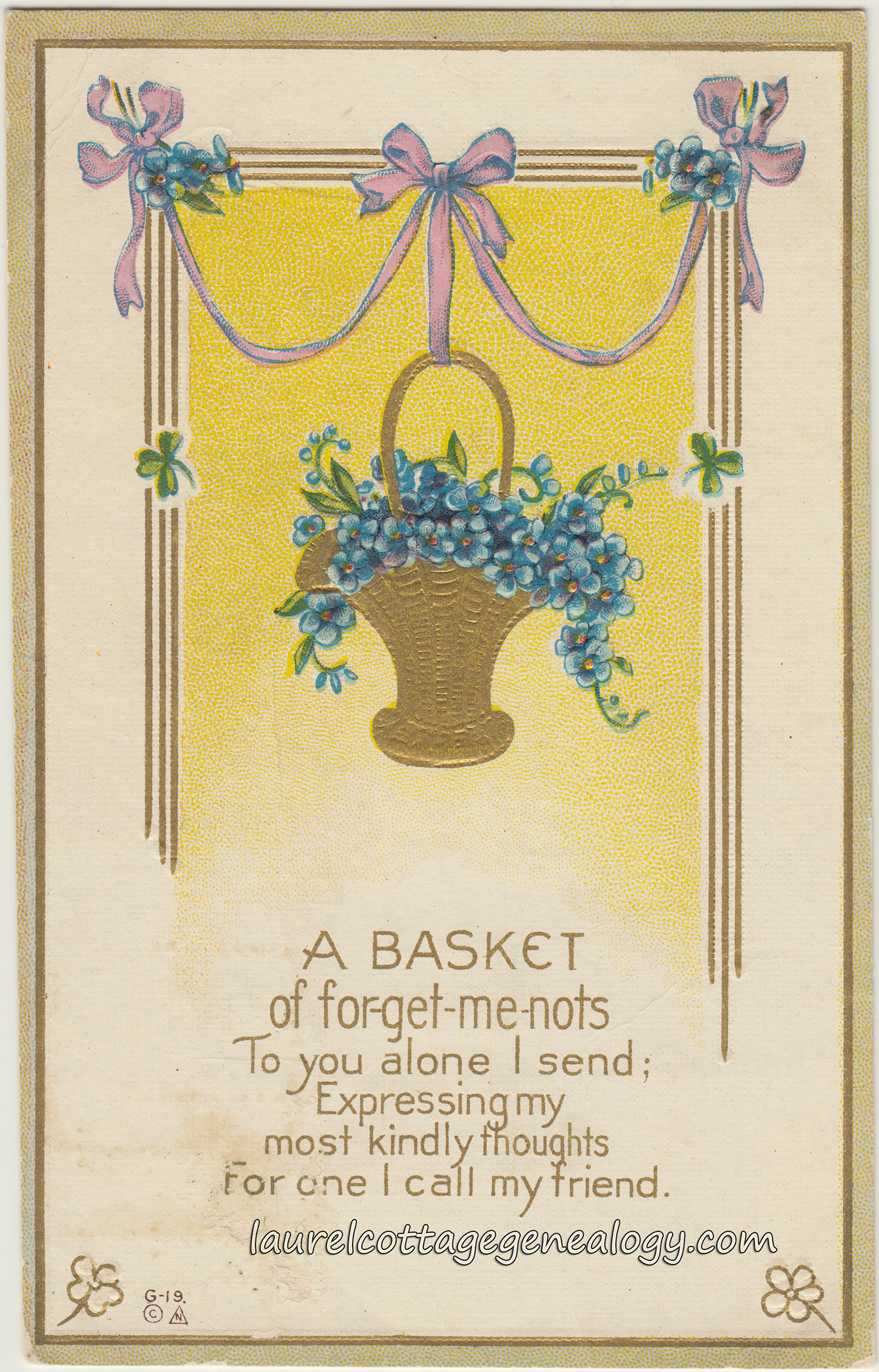
The front of the card shows a lovely design of a draped pink ribbon with bows. Suspended from the center ribbon is a gold-tone basket that is overflowing with forget-me-nots. Center background is yellow with gold-tone framing, and a couple of clovers are thrown in for good luck on each side. The little flower drawings in the bottom corners just add to the charm, as does the caption:

“A BASKET

of for-get-me-nots

To you alone I send;

Expressing my

most kindly thoughts

For one I call my friend.”

Divided back, embossed, unused postcard with writing. Copyright E. Nash. G-19. Circa 1912.

Price:  $5.00

Mission San Luis Obispo de Tolosa

Mission San Luis Obispo pc1Mission San Luis Obispo pc2

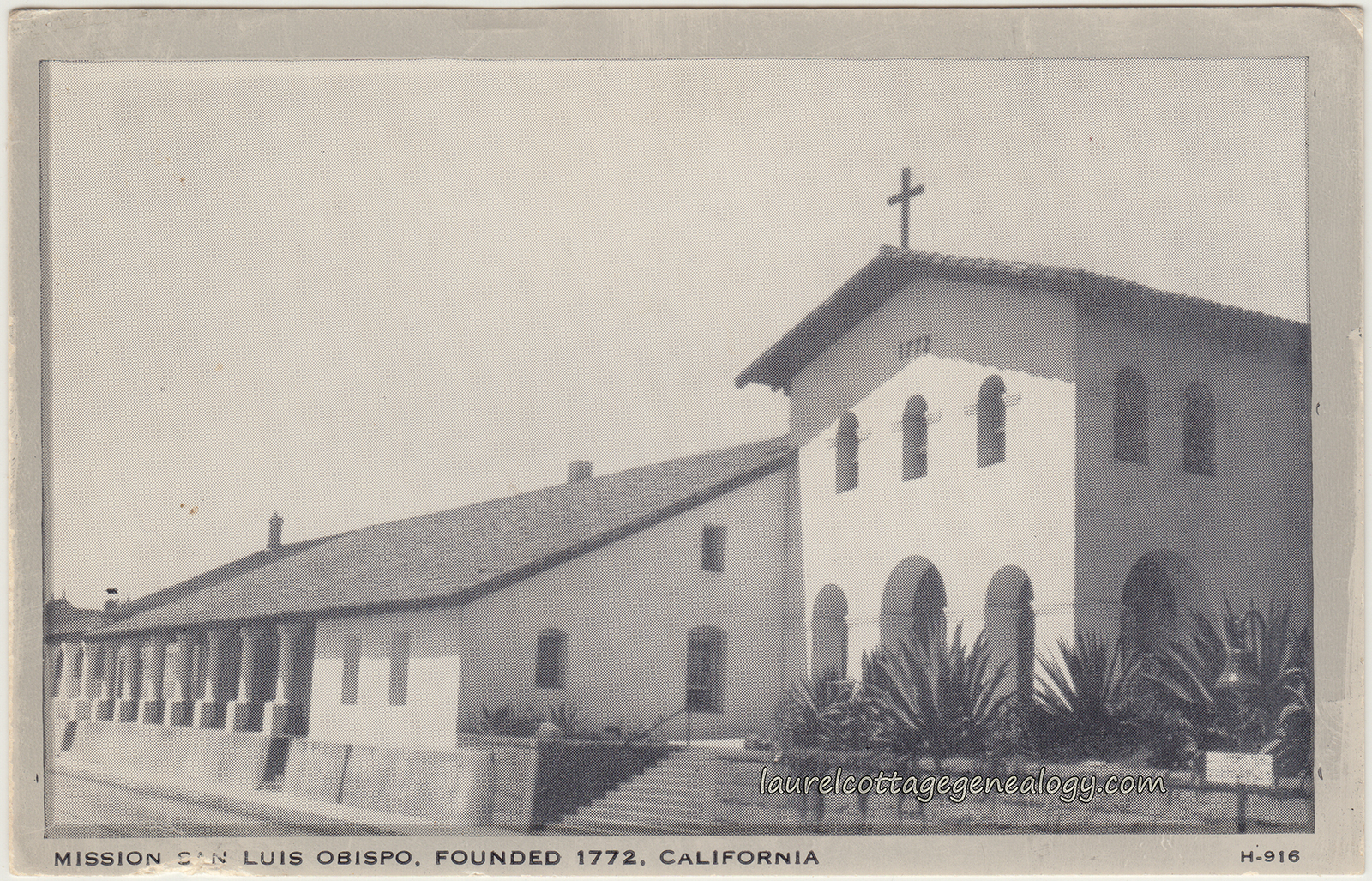
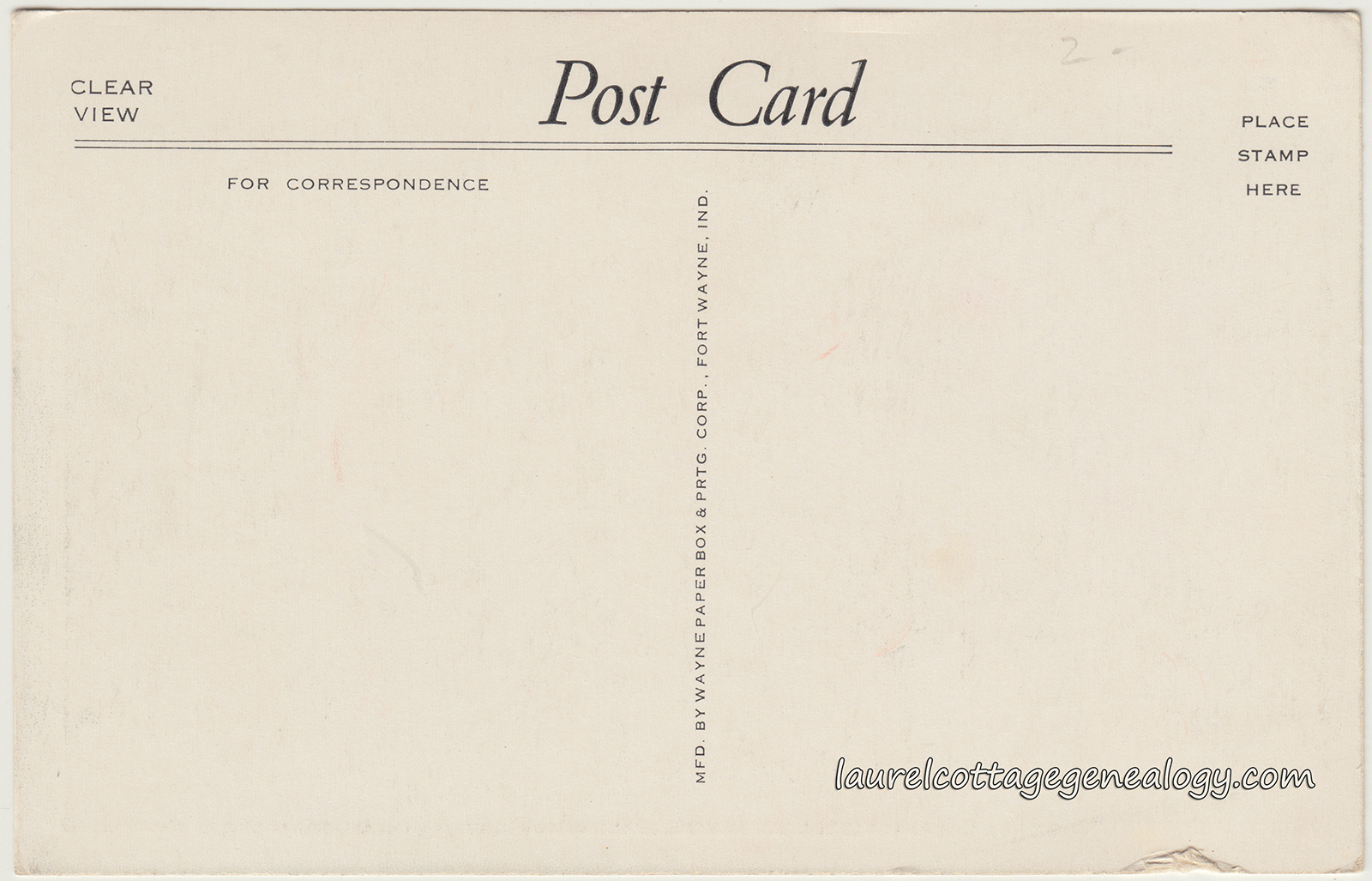
Divided back, unused postcard. Manufactured by Wayne Paper Box & Printing Corp., Fort Wayne, Indiana. Series H-916. Circa 1940-1946.

Price:  $12.00

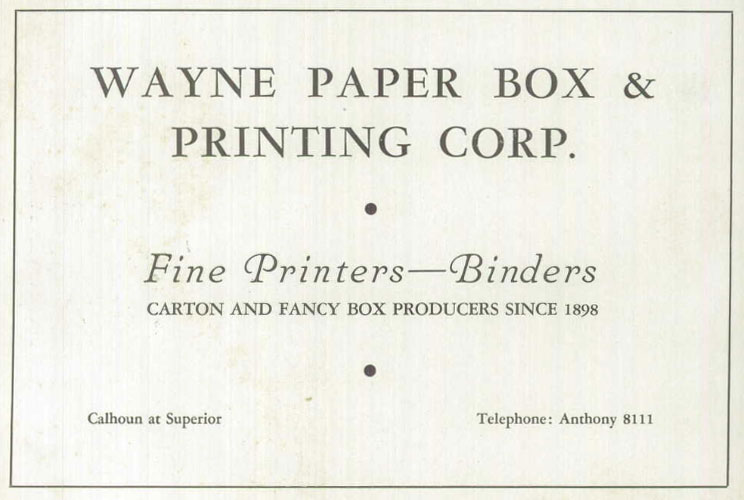
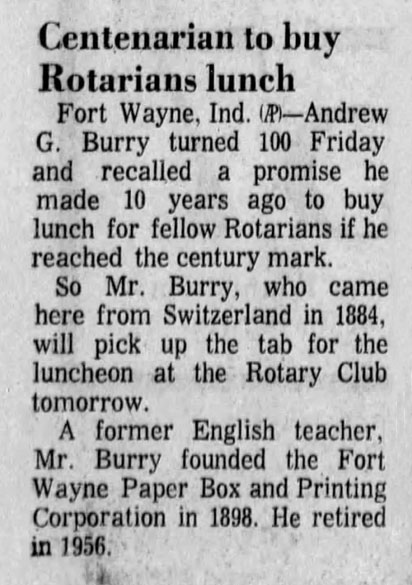
This mission, founded in 1772 by Father Junipero Serra, was named after Saint Louis, Bishop of Toulouse, France, and is located in downtown San Luis Obispo, California. The postcard has a gray border,  glossy finish, double-lined header (on the back) and is estimated to be from about 1940-1946 (from the online source listed below.) The card’s publisher started operations in 1898 per their ad below, that appeared in Fort Wayne, Indiana’s North Side High School’s 1936 yearbook edition, The Legend.

A promise kept

Andrew G. Burry, founder of Wayne Paper Box & Printing Corp, buys lunch for his fellow Rotarians:

Sources: Mission San Luis Obispo de Tolosa, history. http://missionsanluisobispo.org/visit/#history. (Accessed March 3, 2018).

Becker, John R. “Wayne Paper Box Co. Cards.” http://www.dejean.com/salem/1930s/wayneboxcards_becker.html (Accessed March 3, 2018).

North Side High School, The Legend (n.p. 1936), Ancestry.com. U.S., School Yearbooks, 1900-1990.

“Centenarian to buy Rotarians lunch.” The Baltimore Sun, February 4, 1973. Sunday, p. 12. (Newspapers.com)

At The Train Depot

At The Train Depot pc1At The Train Depot pc2

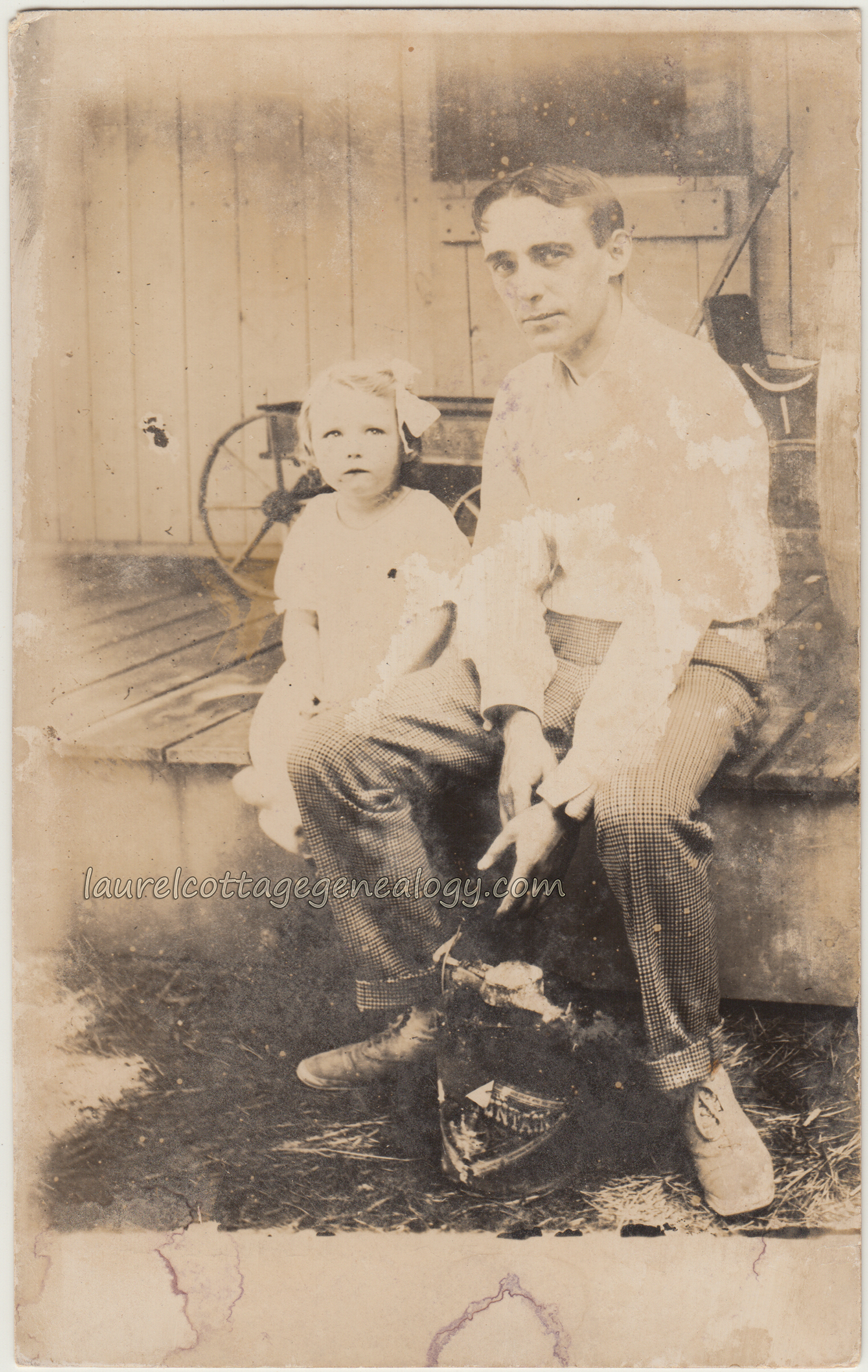
Divided back, Real Photo Postcard, unused with writing, Sailboat stamp box. Circa 1908.

Price:  $12.00

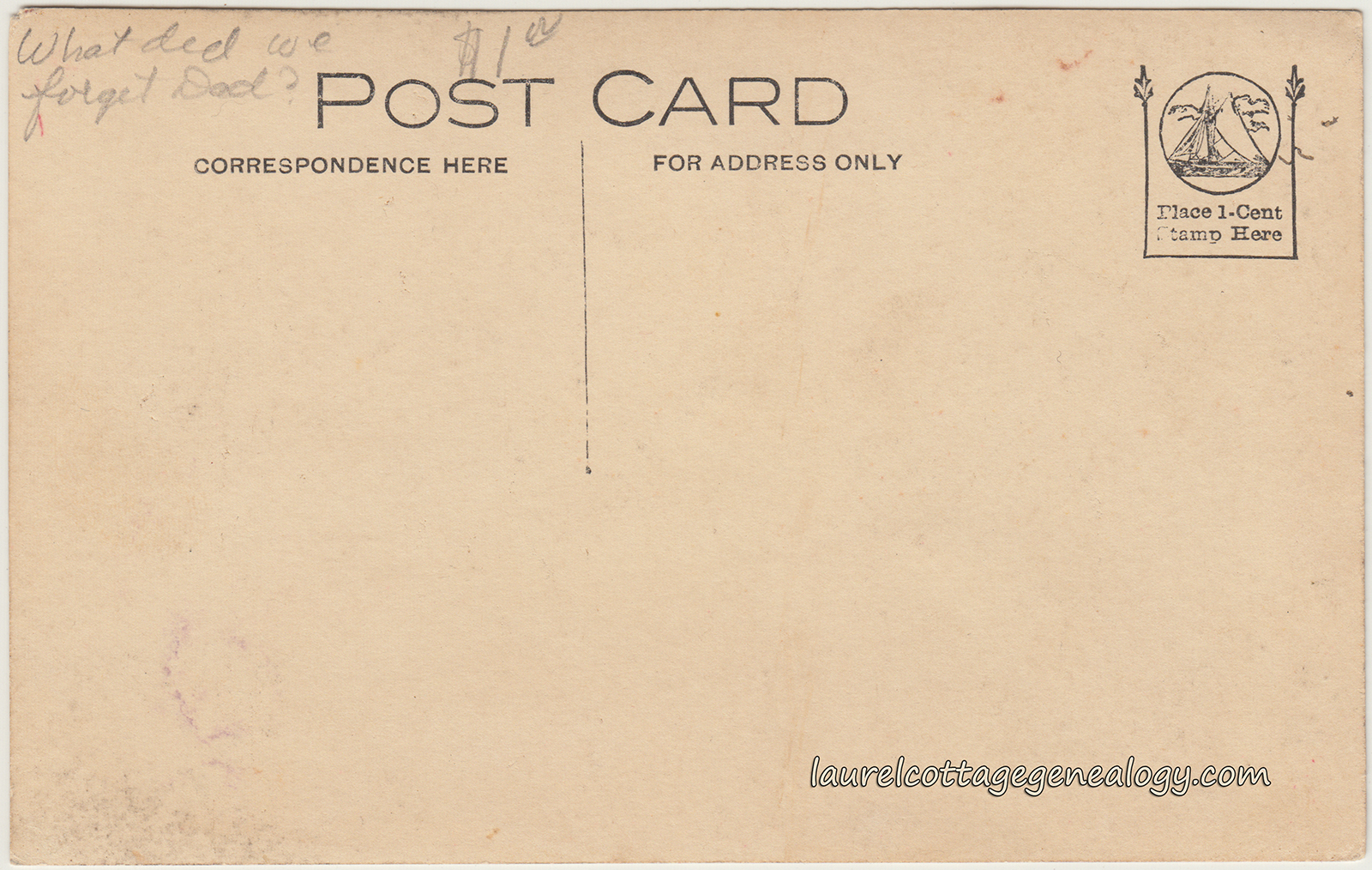
“What did we forget, Dad?”

This one is priceless. A photo taken of father and daughter, and because of the above caption that appears on the back, and the pull cart that we see behind them in the photo, it’s a good bet that they are at the train depot, either waiting for the train, or waiting to be picked up after they got to their stop. It looks like that is a barrel on our far right. The other very interesting thing about this photo is that the dad is holding a pail with a crank and handle on top. It turns out that what he actually has there is a White Mountain Ice Cream Freezer. You can see that the label is coming off. I love both of their expressions, and the possible stories that weave themselves around this photo. It would seem like the writing on the back was done years later by the now grown-up daughter but it could have just as well been done by the mom, after the postcard was made. Either way we can just picture the little girl and her dad having a running joke about always forgetting to bring something on their train trips. And were they going to visit relatives, maybe to have a big family dinner, and then have homemade ice cream for dessert?

As far as the time-frame for this postcard, various online websites date this stamp box version of the sailboat as 1905 – 1908. However, as of the date this post is going up, I did not find anything identifying the name of the company that produced this type of printing out paper. (For example, the Eastman Kodak Co. produced SOLIO, and the Ansco Co. produced CYKO.) But I did find an illustrated ad in Hardware of this version of the White Mountain Ice Cream Freezer, dated January 10, 1907, so taking the stamp box and the ice cream maker into consideration, I am estimating this postcard to be from about 1908,  since the White Mountain label is peeling, so we’d assume the ice cream maker was not brand new. Of course, it could be from after 1908 as photographers sometimes used up old card stock.

Source:  Hardware, Vol. XXXIV, no. 1. January 10, 1907, pg. 33. Publisher unknown, possibly a New York company (looks like the full info was cut off). (Google eBook)

Greetings From Holbrook

Greetings From Holbrook pc1Greetings From Holbrook pc2Greetings From Holbrook pc2 a

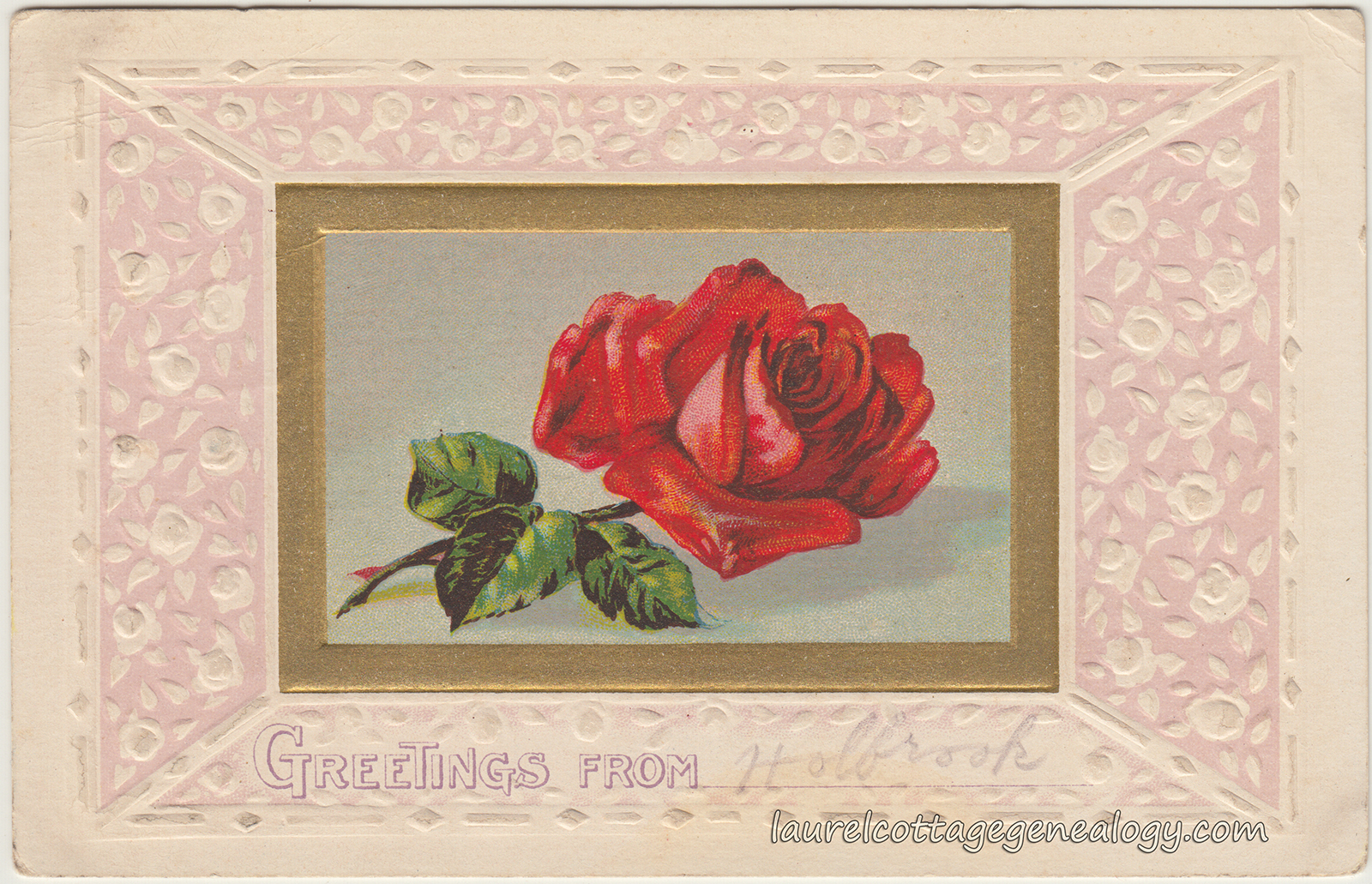
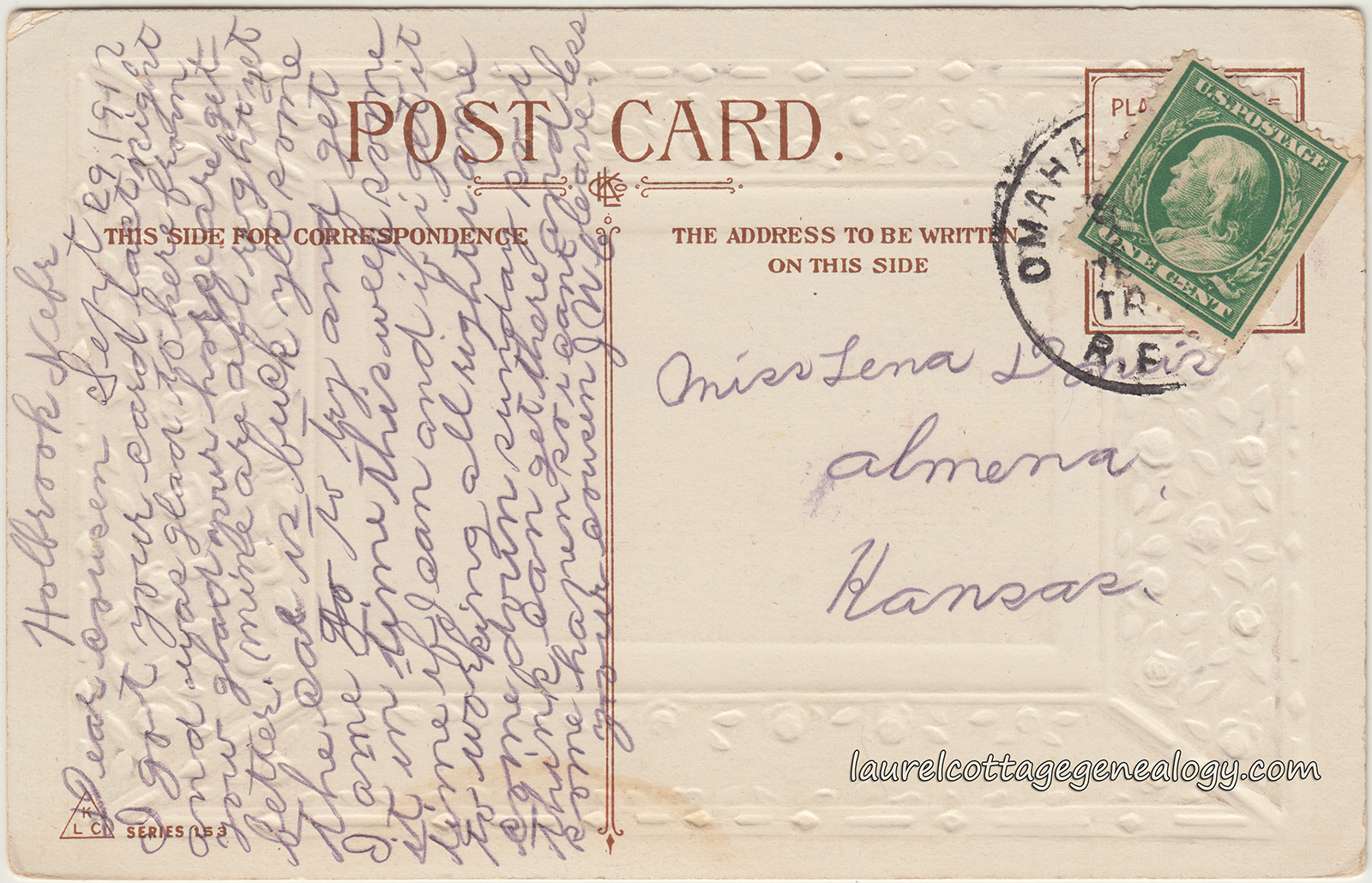
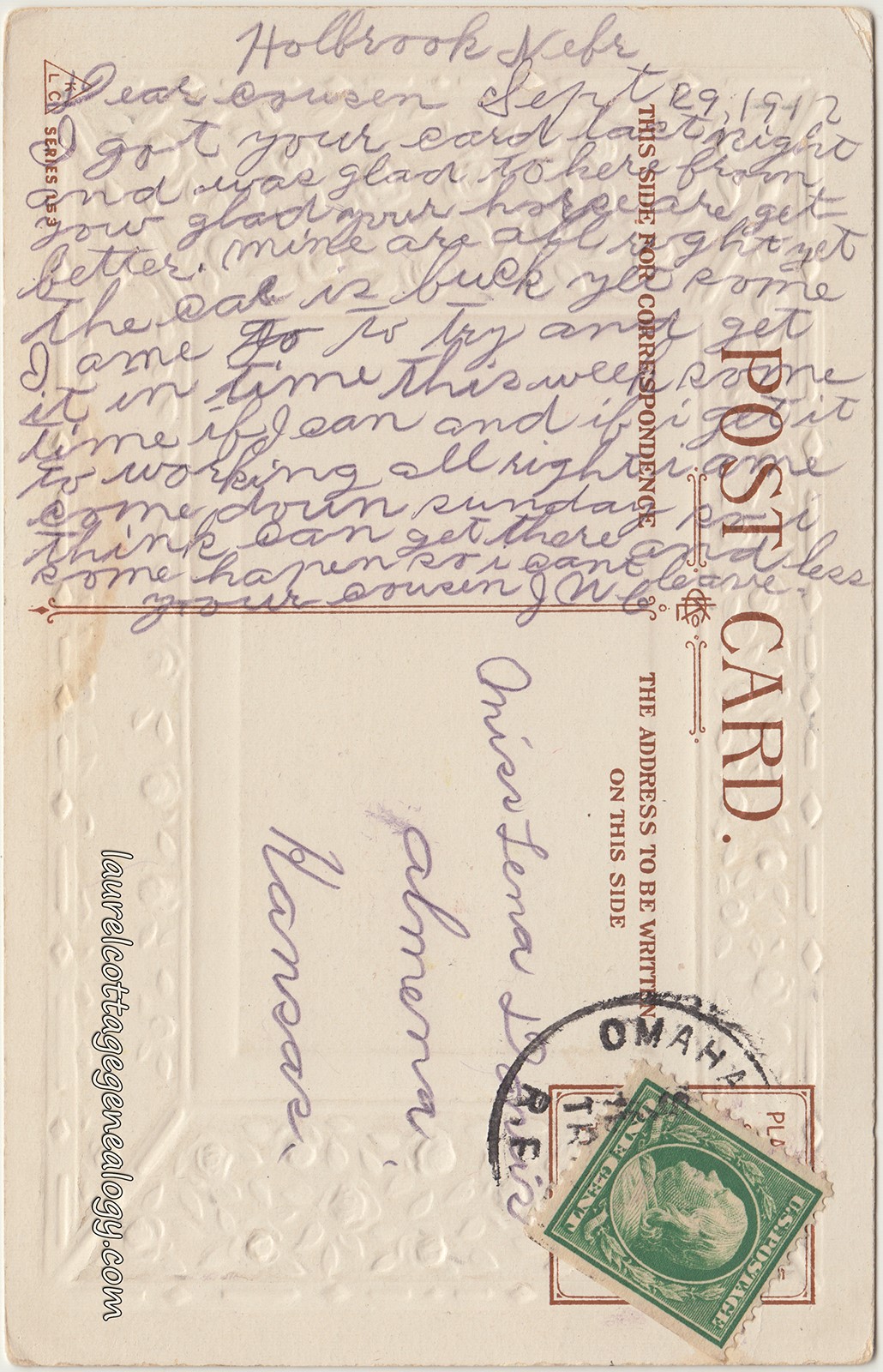
“Holbrook Nebr, Sept 29, 1912. Dear cousen. I got your card last night and was glad to here from you glad your horse are get better. mine are all right yet. The cab[?] is buck yet some. I ame go to try and get it in time this week some time if I can and if i get it to working all right i ame come down sunday so i think can get there and less some happen so i cant leave. your cousen  J W C”

Addressed to:  “Miss Lena Davis, Almena, Kansas”

What was it that was bucking yet some? It sounds like it’s a vehicle that’s not running right, and if so, how do you like that for a horse type expression for a car? As, here we are in 1912, in that transitional period in rural America when the car was still in the process of becoming the established mode of transportation. Also, the distance between Holbrook, Nebraska and Almena, Kansas is about fifty miles, so it would seem like it would be too long of a trip to take by horse, for someone that is very busy making a living farming.

The front side of the card shows a red rose, framed in gold tone, surrounded by an embossed pink and white roses design, white border and lettering at the bottom that says “Greetings From ____” where J. W. has written “Holbrook.” The overall framing (because of the diagonal lines in the corners) resembles a carved wooden frame where the frame juts out and the center part with the rose is flat against the wall. Not that this is anything earth shattering, but I just think that the glimpses into the artists’ ideas for the postcards are interesting.

Divided back, embossed, used postcard. Postmarked in Omaha, date not appearing, approx. September 30, 1912. Publisher:  KLC or KL Company? Series 153.

Thoughts Of You

Thoughts Of You pc1Thoughts Of You pc2

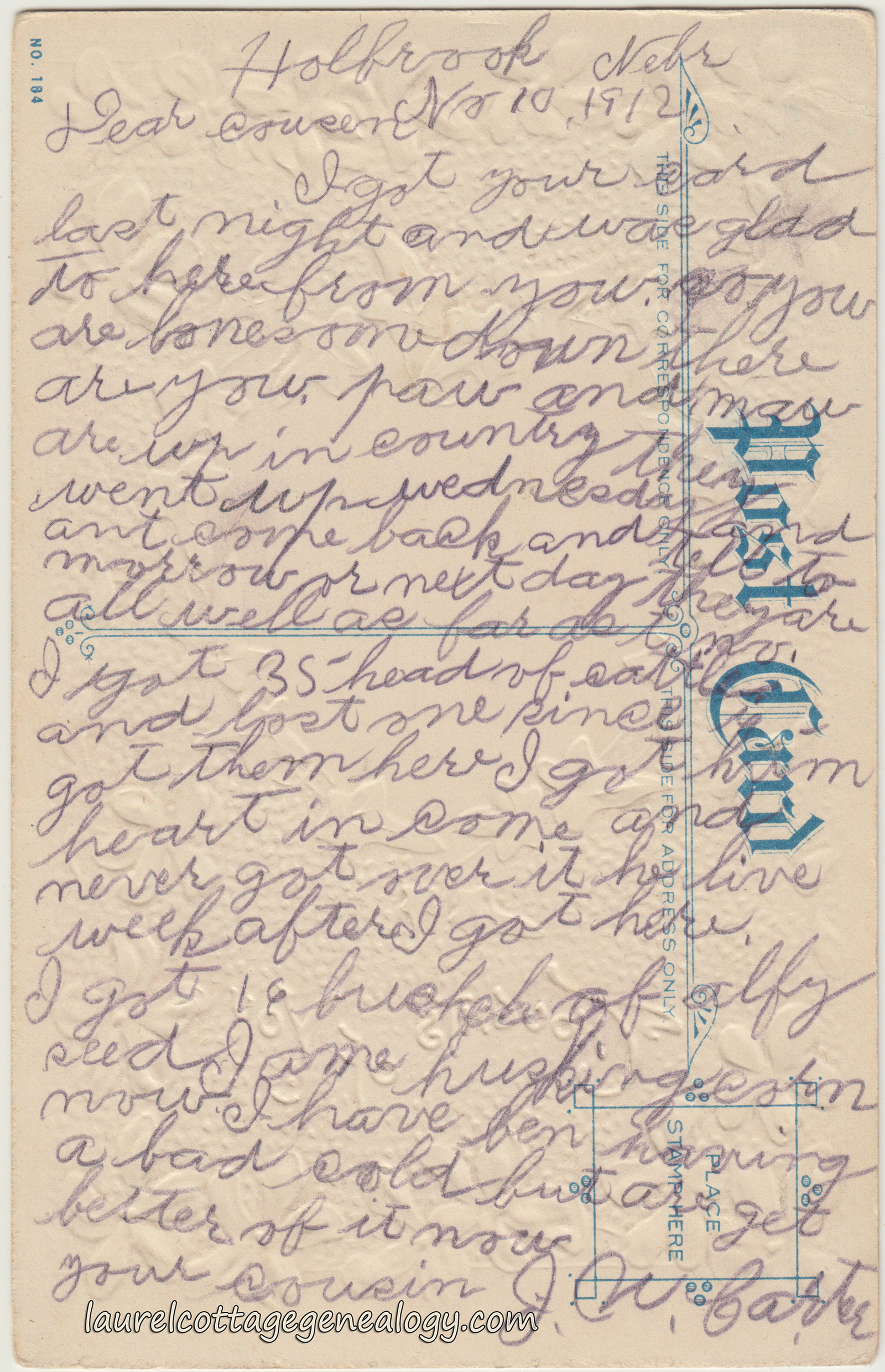
“Holbrook Nebr, Nov 10, 1912. I got your card last night and was glad to here from you. You are lonesome down there are you. paw and maw are up in country they went up wednesday and ant come back and tell tomorrow or next day they are all well as far as I no. I got 35 head of cattle and lost one since i got them here. I got him[?] heart in come and never got over it he live week after I got here. I got 16[?] bushel of alfy seed. I ame husking corn now. I have ben having a bad cold but are get better of it now. your cousin  J. W. Carter”

A really nice one from J. W. that says a lot, including how he was noticing that Cousin Lena sounded lonesome, Pa and Ma are up in the country, he lost the one cow or bull that sounds like had a heart problem (poor baby), he is busy husking corn, he got what looks like sixteen bushels of alfalfa seed (love the “alfy”  expression), and his bad cold is getting better.

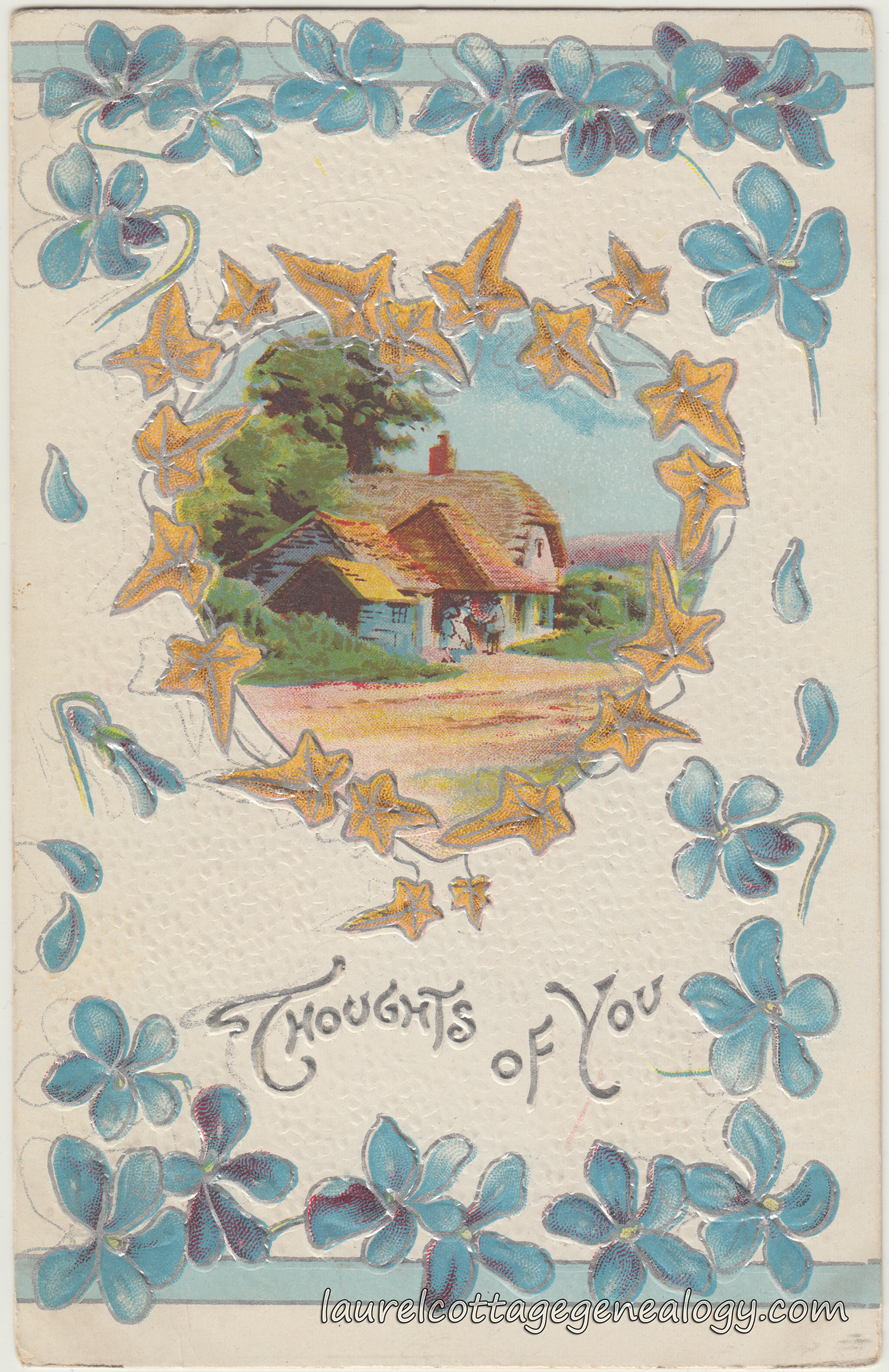
This beautiful postcard bearing the inscription “Thoughts of You”  shows a thatched roof cottage scene with a visitor being greeted at the door. (If you look closely you will see some figures there.) The heart-shaped scene is surrounded by brown or gold ivy (not sure why the ivy was done in this color but it’s still nice) and then by forget-me-nots. There’s a light blue bar at the top and bottom of the card. The forget-me-nots and ivy are highlighted with silver-tone lines, (a nice departure from the more common gold) and their placement on the card is elegant.

Divided back, embossed, unused with writing. Publisher unknown. No. 184.

May The Golden Sunrise . . .

May The Golden Sunrise pc1May The Golden Sunrise pc2 - CopyMay The Golden Sunrise pc2

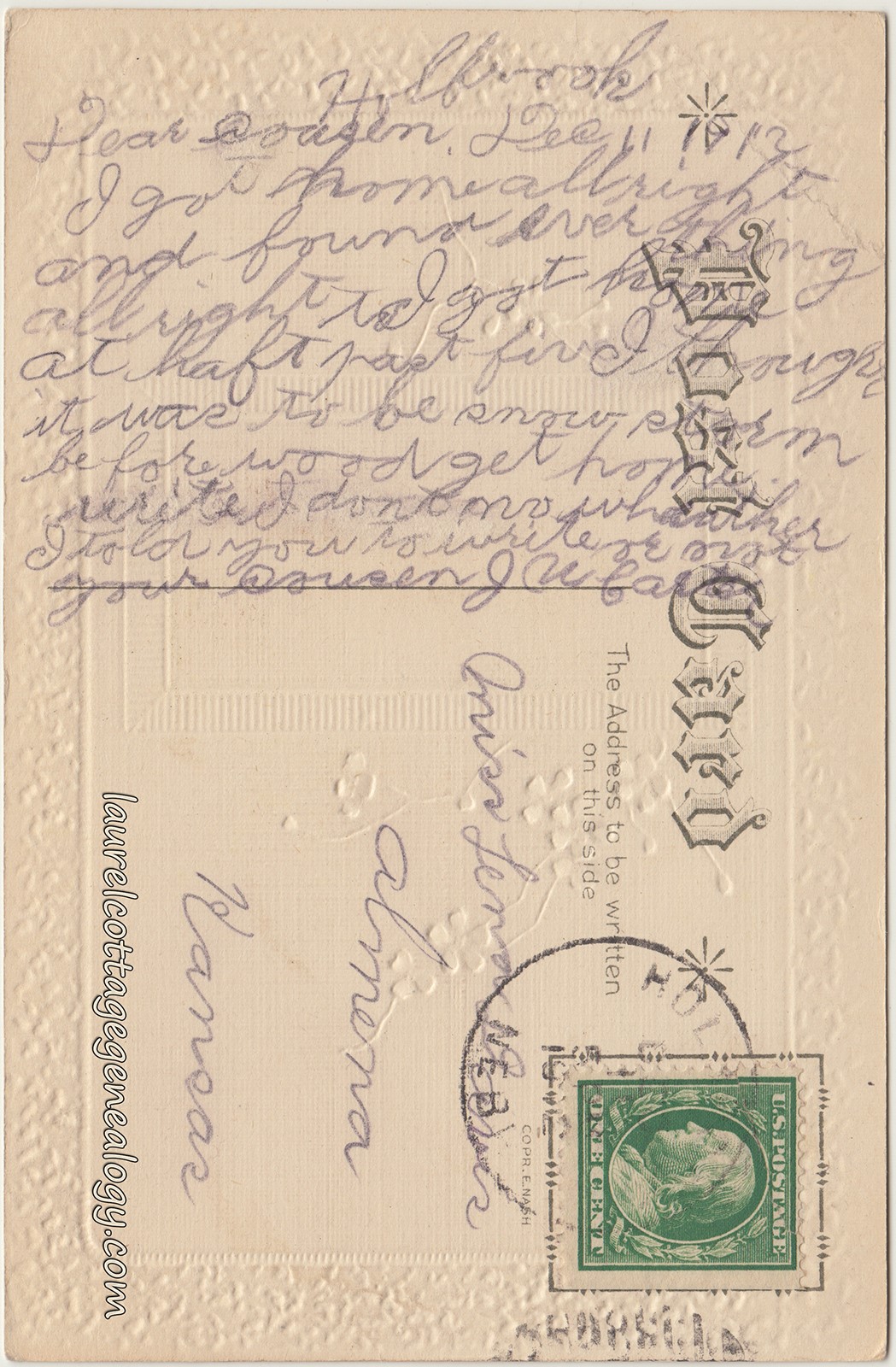
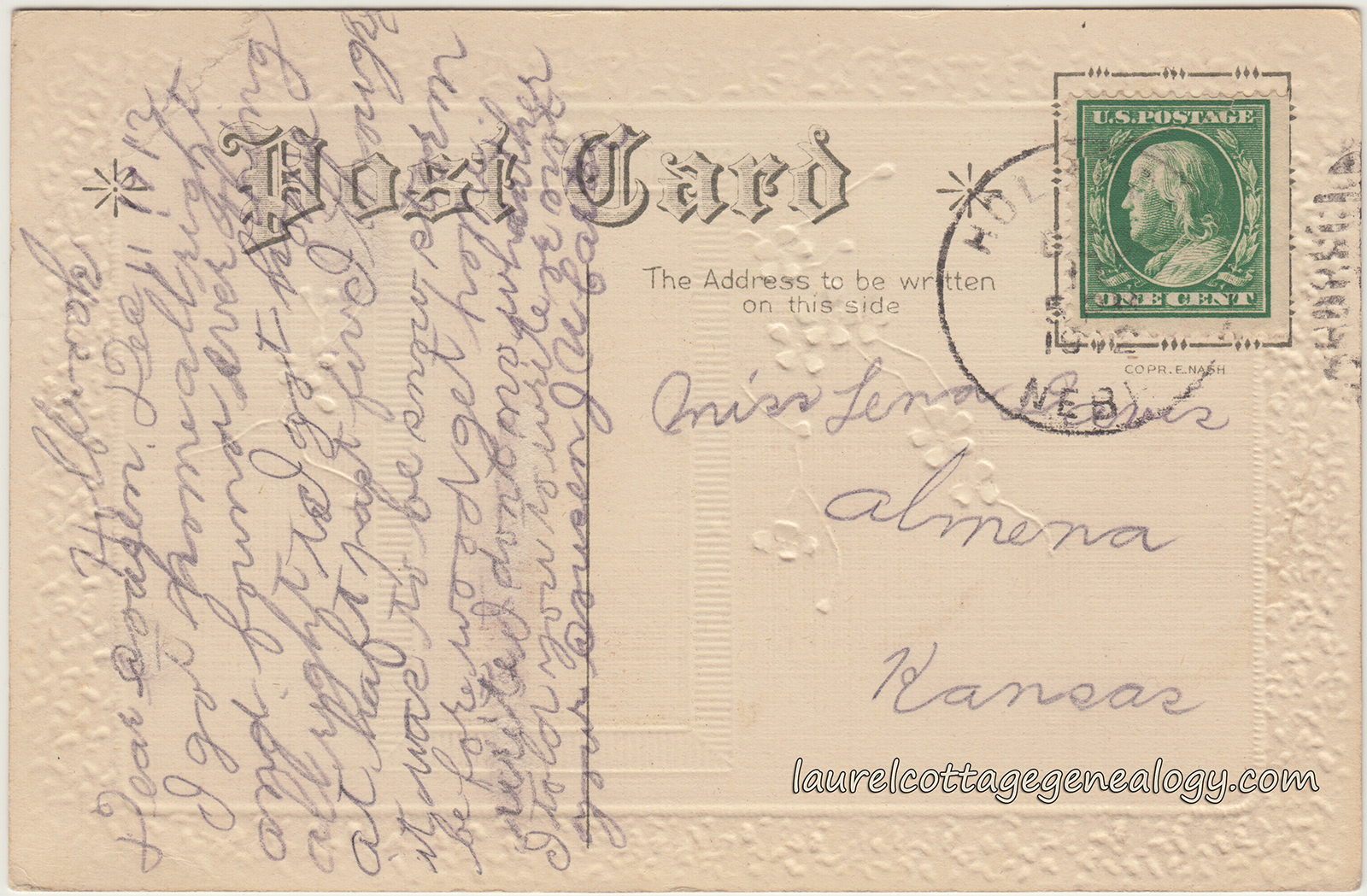
“Holbrook Dec. 11, 1912. Dear cousen. I got home all right and found ever thing all right to. I got home at haft past five. I thought it was to be snow storm be fore wood get home. I dont no wheather I told you to write or not. your cousen   J W Carter”

Addressed to:  “Miss Lena Davis, Almena, Kansas”

You can see where J. W. had started to put something like “write soon”  but then changed his mind while wondering whether he had already asked that of cousin Lena before he left.

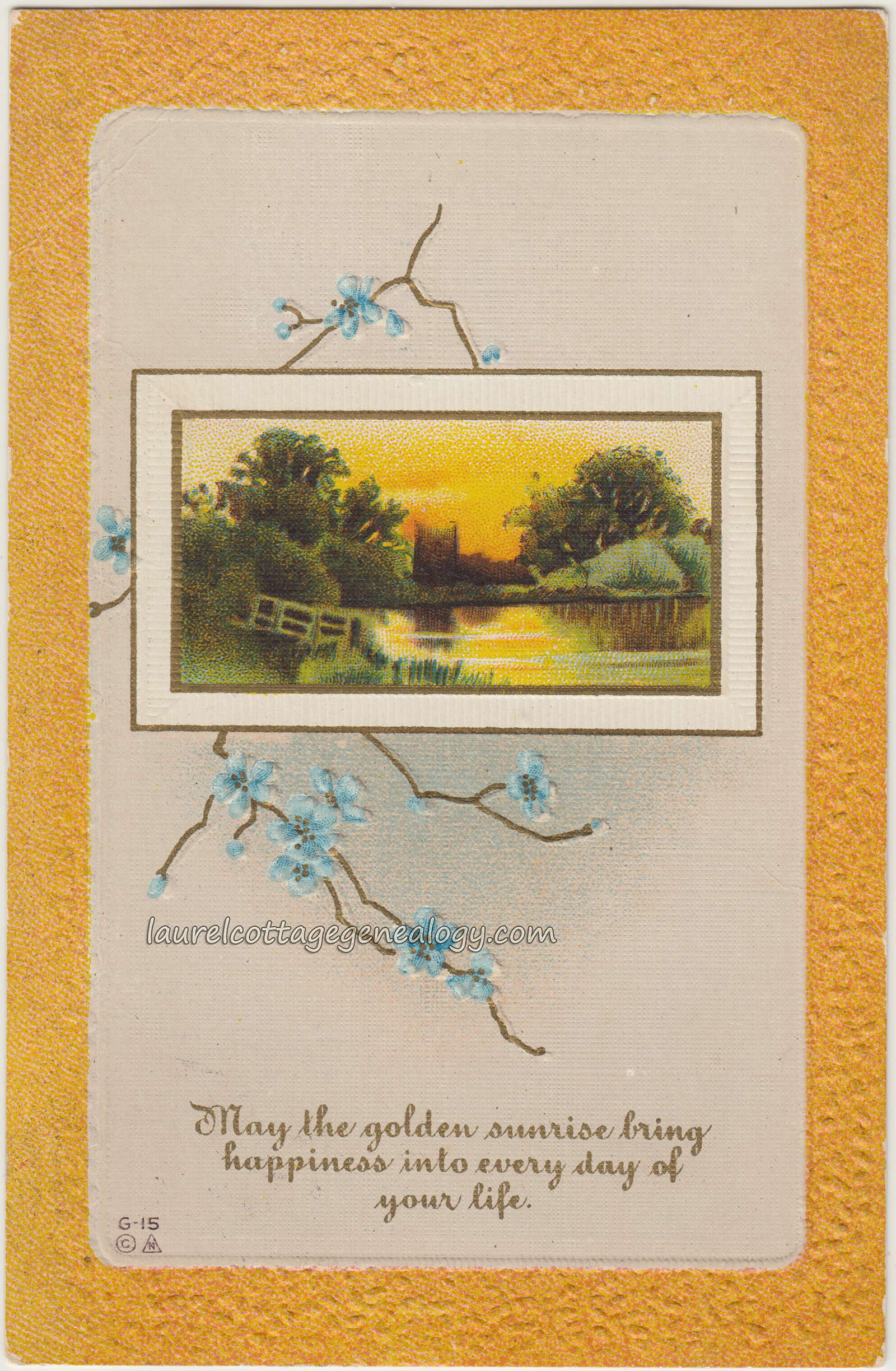
On the front is a small, muted country scene of a golden sunrise reflected off of a lake or pond, a rustic fence in the foreground and a castle ruin type building in the background. There is a branch with blue forget-me-not type flowers artistically displayed behind the “painting.”  The card has a gold border, and shows the lovely sentiment below:

“May the golden sunrise bring

happiness into every day

of your life.”

Divided back, embossed, used postcard. Postmarked December 11, 1912 in Holbrook, Nebraska. Publisher:  E. Nash. Series G-15.

Price:  $5.00

Serious Lady In Upturned Straw Hat

Serious Lady In Upturned Straw Hat pc1Serious Lady In Upturned Straw Hat pc2

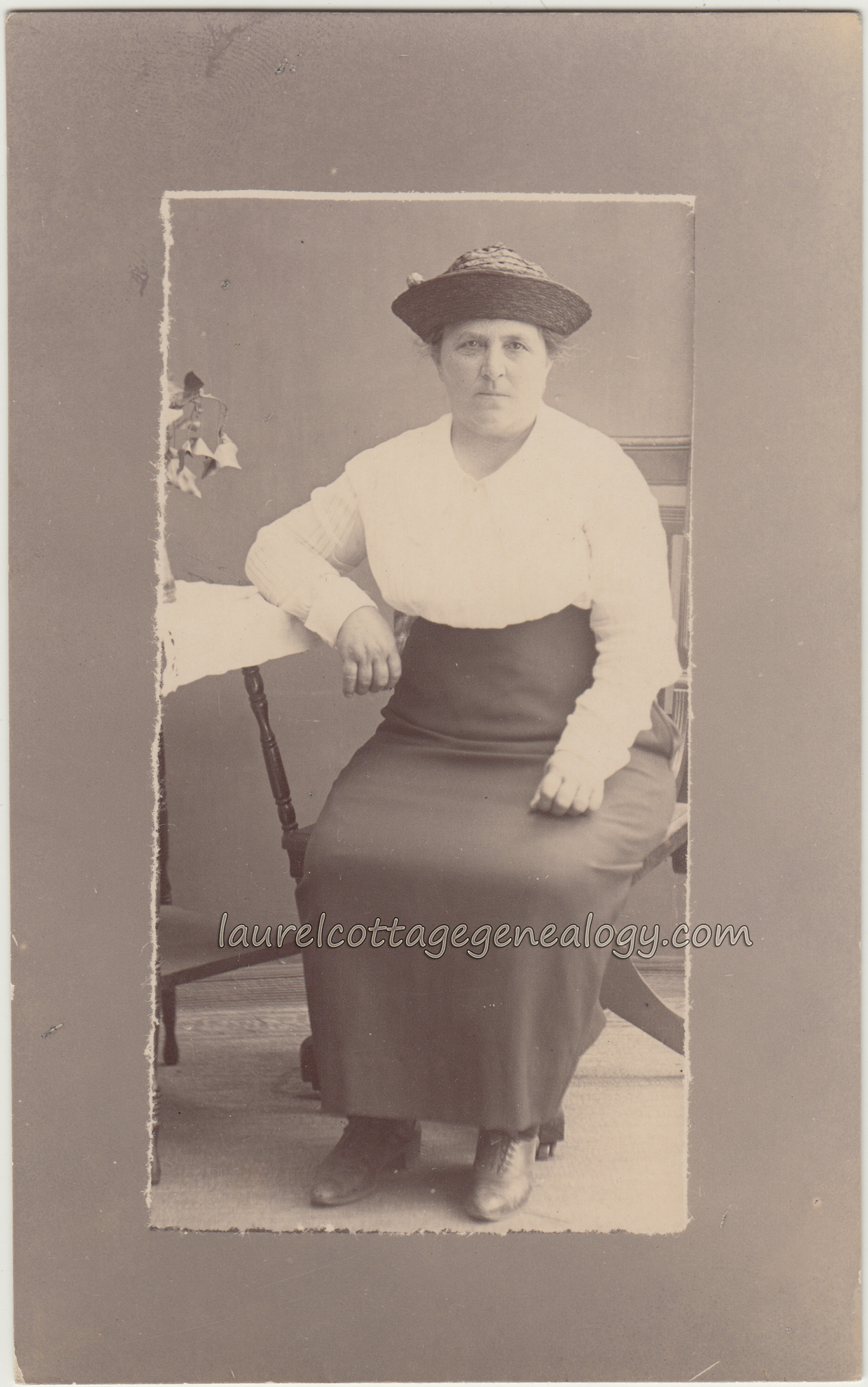
I love this one and every time I look at this woman’s photo I imagine that she is from Montréal or Québec. I don’t know why. Maybe she has French Canadian heritage. The Solio stamp box dates the card in the broad time period of about 1903 – 1920s, but I would place it at around 1913 or so, after searching for examples of high-waisted skirts, and ladies blouses. The hat appears to be made of straw, and has a little decoration that is appearing above the brim. It is probably best labeled as a Breton, sometimes called Bretonne. From the excellent Shappos website, this style is described as a  “women’s hat with ample round crown and brim turned-up all around.”  What looks to be an ivy plant on the left in the photo, is looking rather wilted, to the point of wanting to reach in and water it.

Solio is a type of what’s called “printing-out” paper that was used by photographers and produced by the Eastman Kodak Co.

Real Photo Postcard, circa 1913. Solio stamp box.

Price:  $5.00

Sources:  Pacific Coast Photographer. Vol. II, February, 1893, No. 1, pg. xxiv (books.google.com)

Hat Terminology, Shappos. Web accessed October 13, 2013. [http://www.shappos.com/blogs/how-to/9021445-hat-terminology]