Genealogy Services, Old Photos, Postcards, Trade Cards, Etc.

Dutch Girl and Boy Valentine

Dutch Girl and Boy Valentine

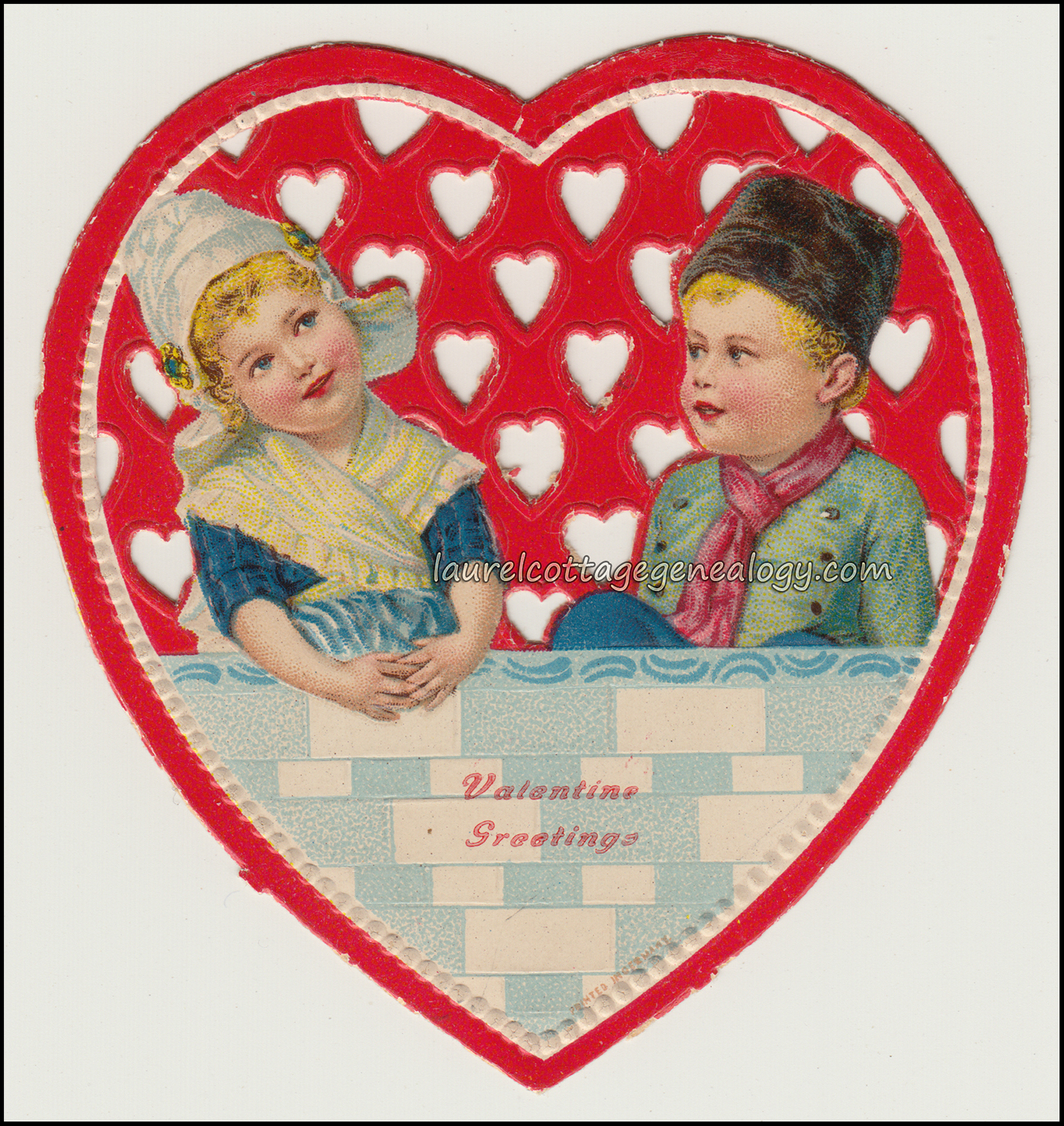
Die-cut, embossed valentine, circa 1910. Publisher unknown. Size:  about 3 x 3″

Price:  $1.00

Heart-shaped valentine of Dutch girl and boy in traditional regional costume. The young couple is shown sitting behind a blue and white wall, that shows the printing “Valentine Greetings.”  Behind them is a background of red with heart shapes cut out of the card. Embossed white border on red. A beautiful little valentine.

St. Valentine Greeting

St. Valentine Greeting pc1St. Valentine Greeting pc2

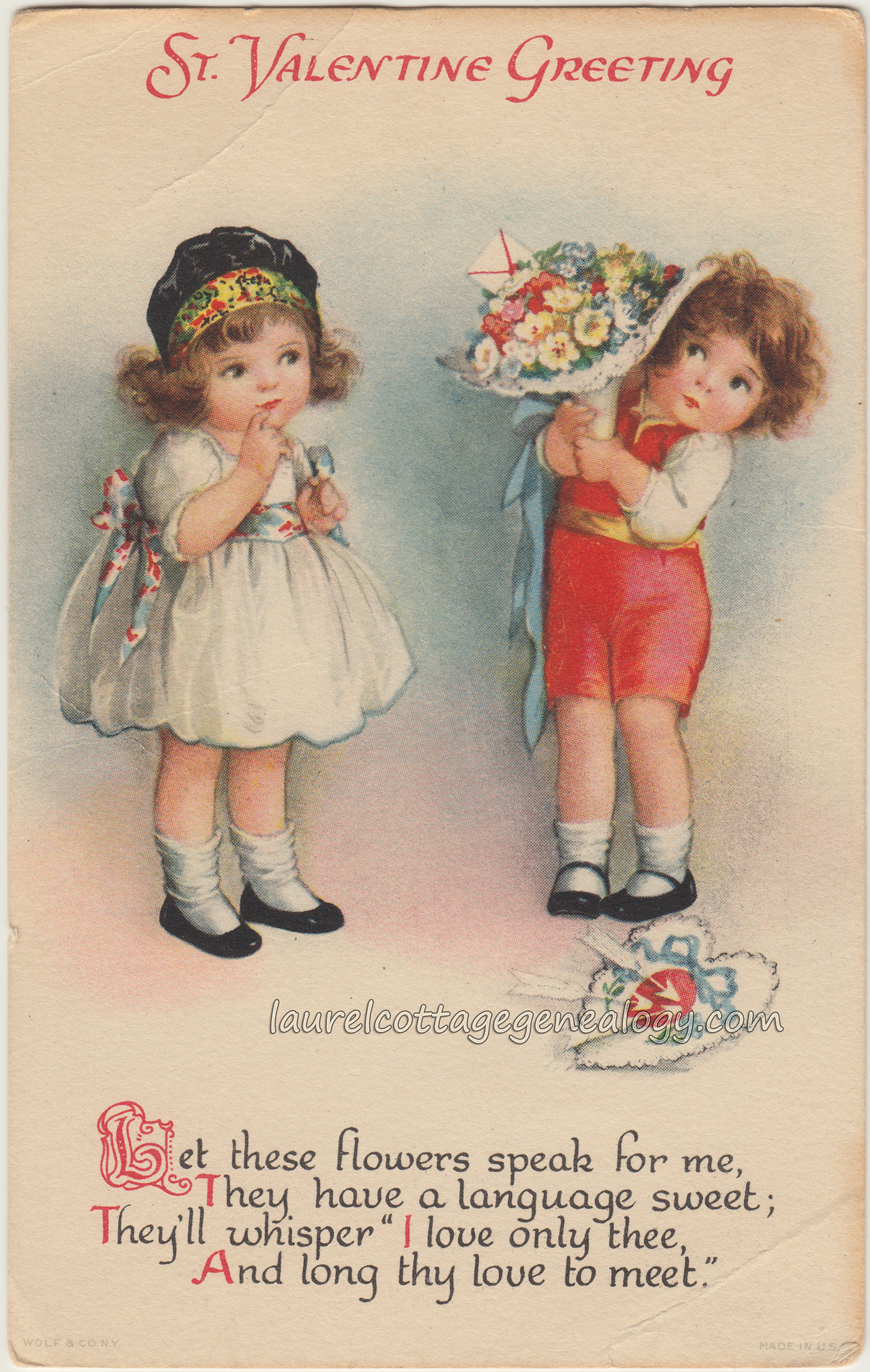
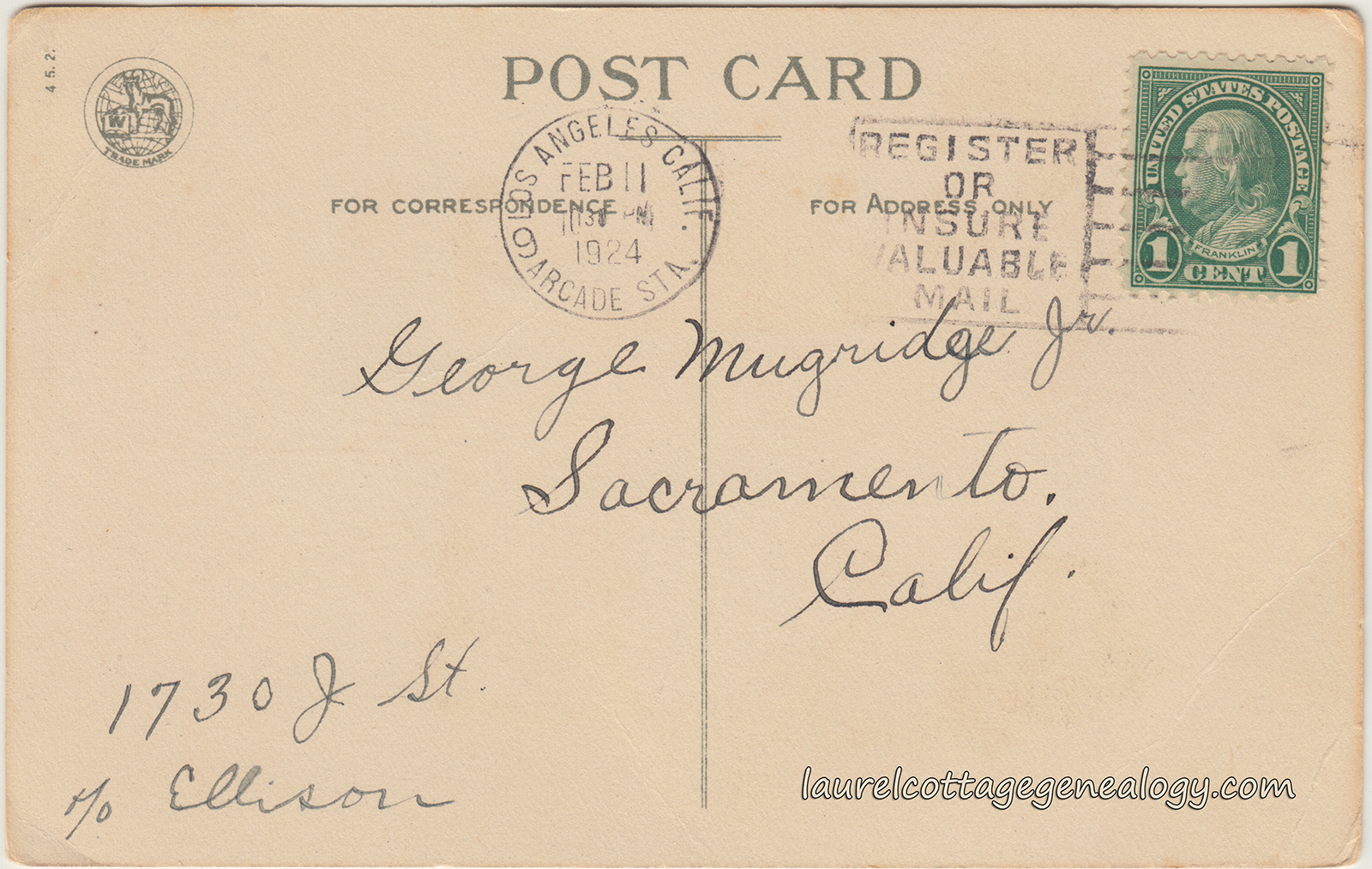
Divided back, used postcard. Unsigned but attributed to artist Ellen H. Clapsaddle. Postmarked February 11, 1924. Publisher:  Wolf & Company, New York. Made in the U.S.A.

Price:  $10.00

Let these flowers speak for me,

They have a language sweet;

They’ll whisper “I love only thee,

And long thy love to meet.”

Beautiful St. Valentine’s postcard from 1924 showing the above verse and a little boy about to give a bouquet of flowers with a note and trailing blue ribbon to a little girl. At the bottom right of the scene is a lace valentine with three arrows that have found their target.

The card is addressed to “George Mugridge, Jr., Sacramento, Calif., 1730 J St. % Ellison”  This postcard is the first of a large private collection from a friend’s family.

A Shady Lane At Fordhook

A Shady Lane At Fordhook pc1A Shady Lane At Fordhook pc2

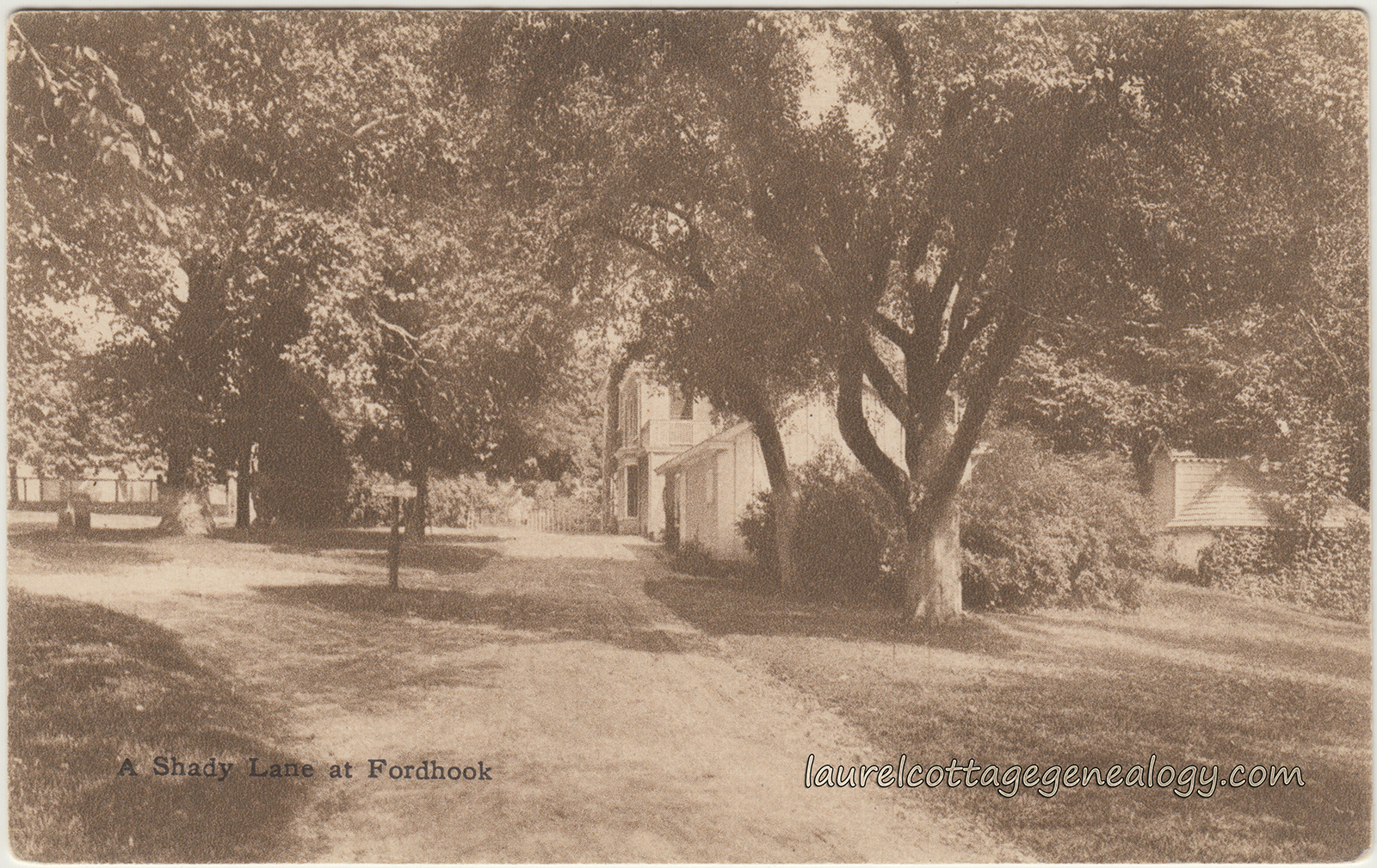
The logo on the back of this postcard shows the initials W A B and the words “Registered Trade Mark” inside of a circle. These initials stand for Washington Atlee Burpee, (1858-1915)  founder of the famous seed company, W. Atlee Burpee and Co., better known as just Burpee Seeds. This publisher logo was in use at least as early as 1898 and at least as late as 1914, as confirmation on the logo can be found at the bottom right corner of the covers of two vintage farm and seed annuals that are displayed on the Burpee website (see the last source listed below). Fordhook is the fifty-plus acre historical farm of the Burpee Company, located in Doylestown, Pennsylvania.

The name Fordhook is also well known as the variety of lima bean developed by Burpee. The Fordhook lima is from the prolific bush type plant, which produces the larger beans, rather than the baby limas. My own dear mother-in-law, Pamela, (who never cooked from a recipe) taught me to simmer frozen limas with butter, garlic, salt, pepper, and plenty of water, as they need to cook down to tender in what becomes a beautiful lima-ish garlic butter sauce. Pam was from West Virginia and grew up in a coal mining area, where beans were a staple. She preferred the Fordhook variety, and on my way to the grocery store, always made sure to tell me to “get the larger ones, those are the best.”

On a last but not least note, if you’ve ever wondered where the Burpee name came from, according to the aforementioned website, the Burpee Family, well-established in Philadelphia, were descended from French Canadian Huguenots. The original name was Beaupe (Beaupé?) before having evolved into the anglicized name that it is today.

Undivided, unused postcard. Publisher the W. Atlee Burpee Co. Circa 1907.

Sources:  http://en.wikipedia.org/wiki/Washington_Atlee_Burpee

http://www.burpee.com/gardening/content/the-legacy-of-w.-atlee-burpee/legacy.html

Cordial Good Wishes

Cordial Good Wishes pc1Cordial Good Wishes pc2

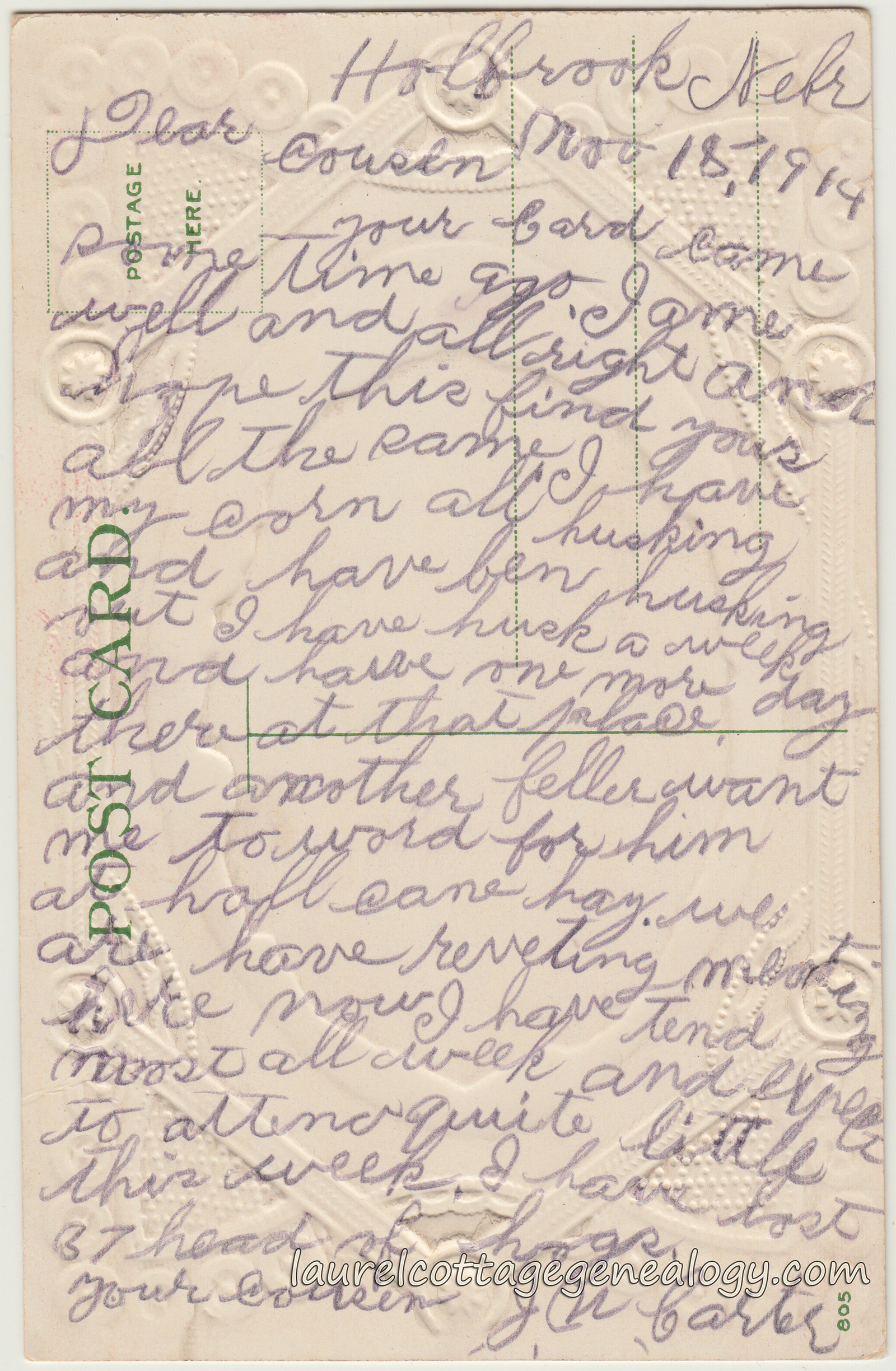
“Holbrook Nebr, Nov 15, 1914. your card came some time ago. I ame well and all right and hope this finds yous all the same. I have my corn all husking and have ben husking out. I have husk a week and have one more day there at that place. and another feller want me to word for him at holl cane hay. we are have reveting meeting here now I have tend most all week and expect to attend quite little this week. I have lost 37 head of hogs. your cousen  J. W. Carter”

The date on the card is either the 15th or the 18th. And I think J. W. was saying “hawling cane hay” with the phrase “holl cane hay” and of course, he meant “work” not “word.” As for “reveting,” this sounds like it might of been a Christian revival meeting. (Too bad about the poor hogs.) This is the last card in the series, unless we ever come across more. It’s been lovely getting to know J. W. (I love the way he says “I am well and all right”) and in getting a small glimpse into rural life in Holbrook, Nebraska in the early 1910s.

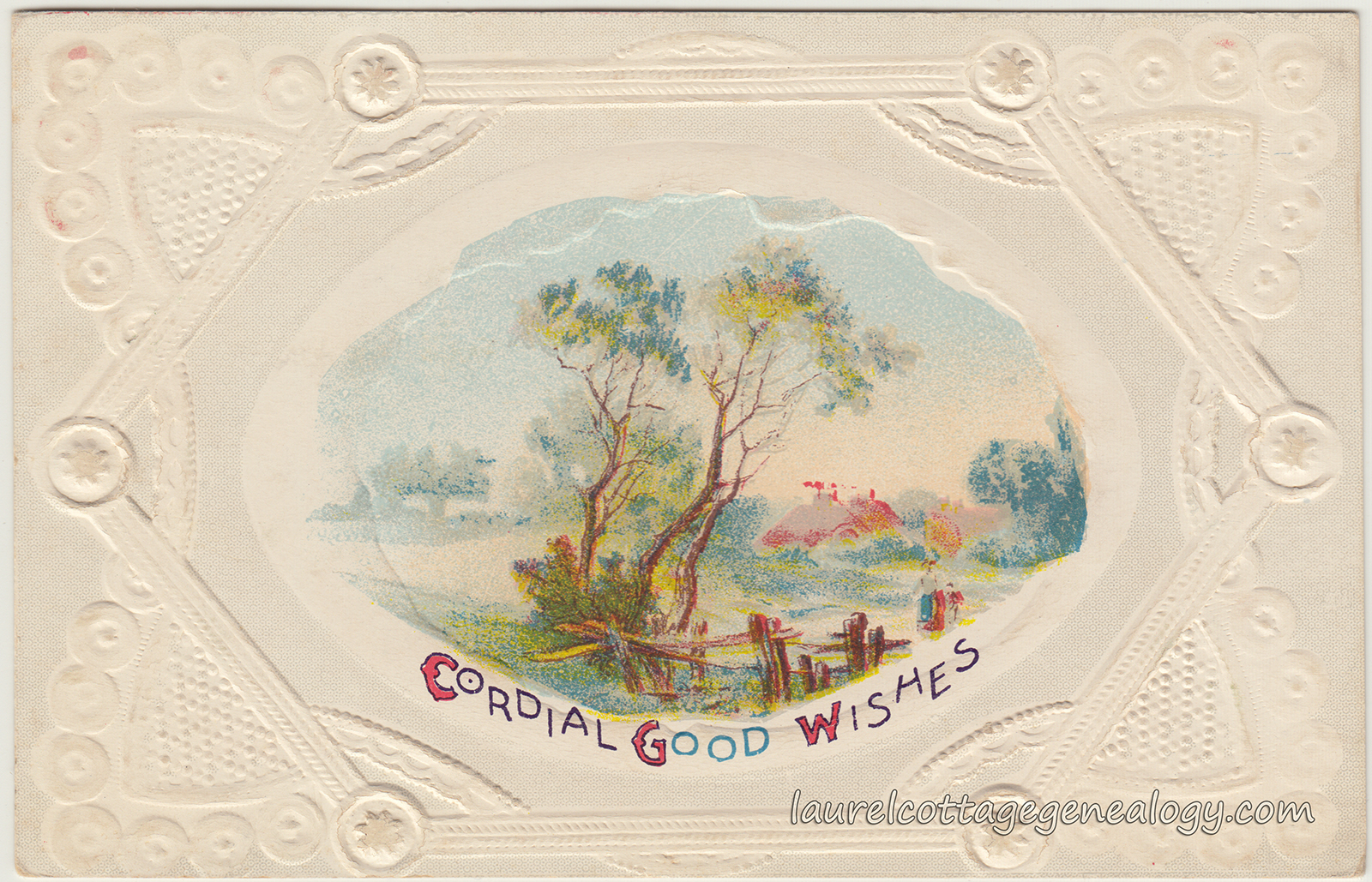
Country scene centered within an embossed hexagonal, lace-type white design. The scene shows a couple of trees next to a rustic wooden fence. A woman and child are walking up the path from the cottage-like home in the background. Underneath is the lettering “Cordial Good Wishes.”

Divided back, embossed, unused with writing. No. 805 from an unknown publisher. Circa 1914.


Peder Hansen Hadrup

P. Hadrup Logo

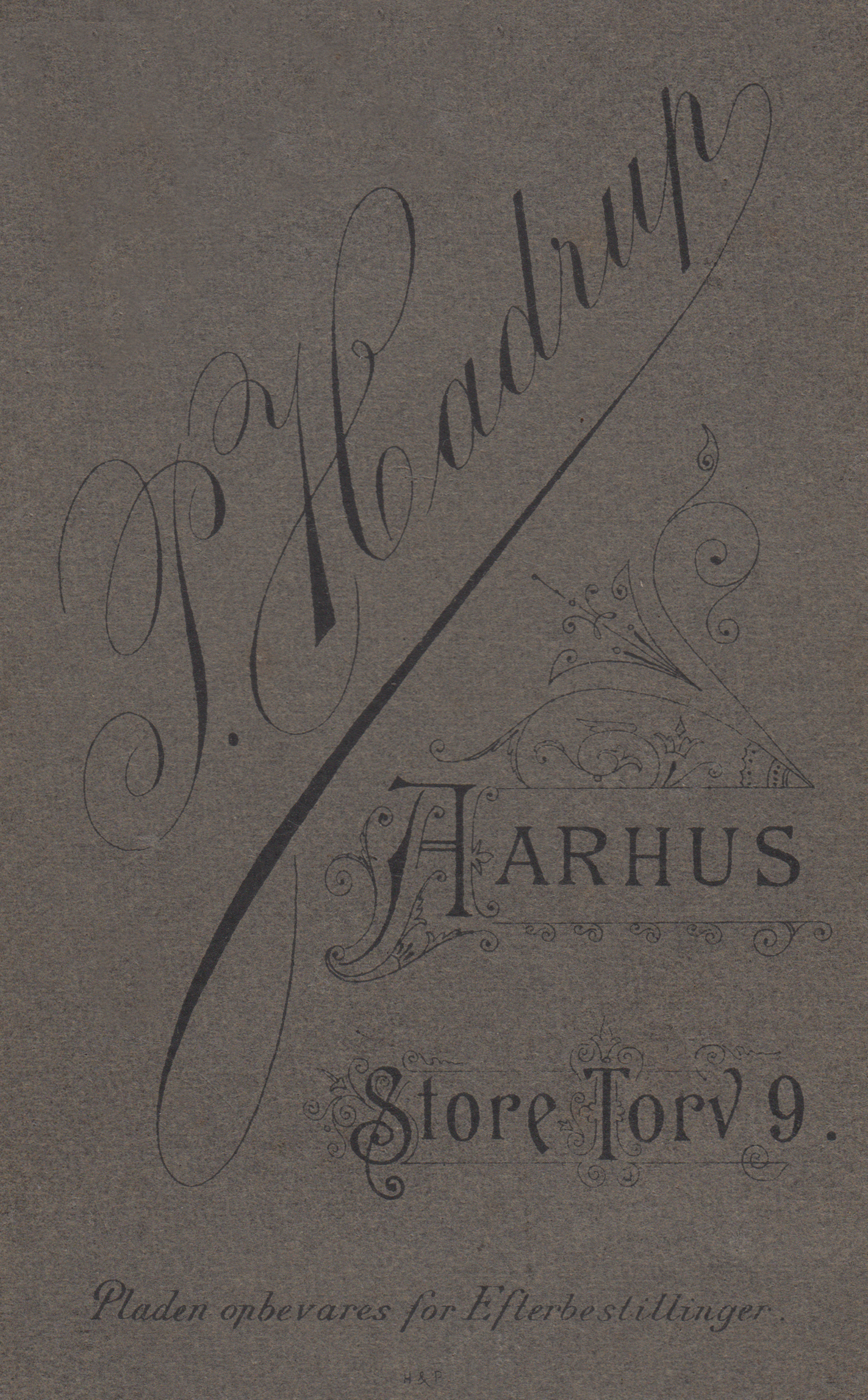
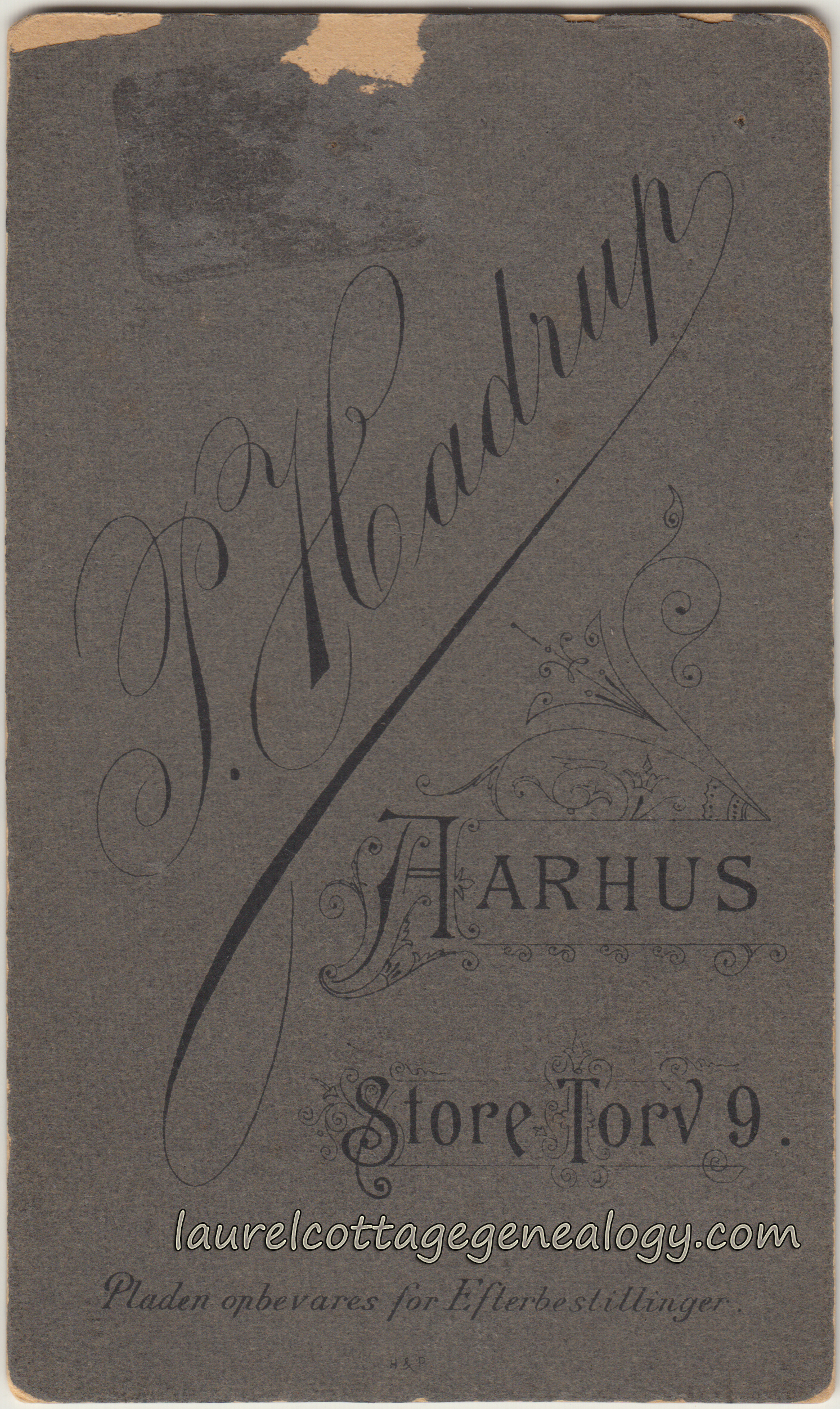
This is a cropped and cleaned up version of the back of the Carte de Visite photo we have. (See post under Bearded Man, Aarhus, Denmark.) This is only one version of the studio logo, as there is another found online that includes a drawing of the building that he was located in. The address, as you can see from the image, was Store Torv 9, in Aarhus. The phrase at the bottom on the back of the CDV, “Pladen opbevares for Efterbestillinger”  means the studio kept the original plate or negative for any possible future reorders.

Not much was found for this photographer. However, a key bit of information was located online in a (thankfully for researchers) lengthy list of Danish photographers that did “calling card” or Carte de Visite type work for years 1860 – 1920. There are four listings there with the address or name and the city:  1. Hadrup (Peder Hansen) Nørregade 30(31)/ Algade 49, overfor Museet. City is Skive/Aalborg; 2. Hadrup, P. (Peder Hansen) Hj. AfVolden og Klostergade/Store Torv 9. City is Aarhus; 3. Hadrup, P. (Peder Hansen) Nørrebrogade 12/H.C. Ørstedsvej 4 (Lige ved G1 Kongevej). City is København; 4. Hadrup, P. H. (Peder Hansen) Ringstedgade. City is Næstved. So the photographer we’re searching for is the third entry which shows the same address we have. (I’m not sure whether these are four different photographers or if any of them could be the same.)

In searching the database at Ancestry.com, we find two entries related to Peder Hansen Hadrup and Aarhus. The first is a marriage record for Peder Hansen Hadrup, age 22, born about 1831, who married Kirsten Andersdr Torup on October 21, 1853. Their place of marriage was Hundslund, Aarhus County, Denmark, Per a Wikipedia entry, this county was abolished on Jan. 1, 2007, having mostly merged into Region Midtjylland, with a small portion having merged into Region Nordjylland. The city of Aarhus is about 39 kilometers north of today’s city of Hundslund. The second entry is a baptismal record for Svend Morits Hadrup, born October 5, 1893 in Aarhus, with parents names given as Peder Hansen Hadrup and Karen Dorthea Sørine Petra Gormsen. So, we don’t know if either record pertains to our photographer or any of his family, but either or both are possible.

Sources:  Danske Fotografer fra 1860 til 1920, som fremstillede visitkortbilleder. udarbejdet af Ole Hesager. (Danish Photographers 1860-1920, which produced business card images. prepared by Ole Hesager)  http://www.objektiv.dk/hesager

Denmark, Marriages, 1635-1916. Salt Lake City, Utah: FamilySearch, 2013. (Ancestry.com)

http://en.wikipedia.org/wiki/Aarhus_County

Denmark, Select Baptisms, 1618-1923. Salt Lake City, Utah: FamilySearch, 2013. (Ancestry.com)

Bearded Man, Aarhus, Denmark

Bearded Man, Aarhus Denmark cdv1Bearded Man, Aarhus Denmark cdv2

Size:  About 2 and 1/2 x 4″

Price:  $12.00

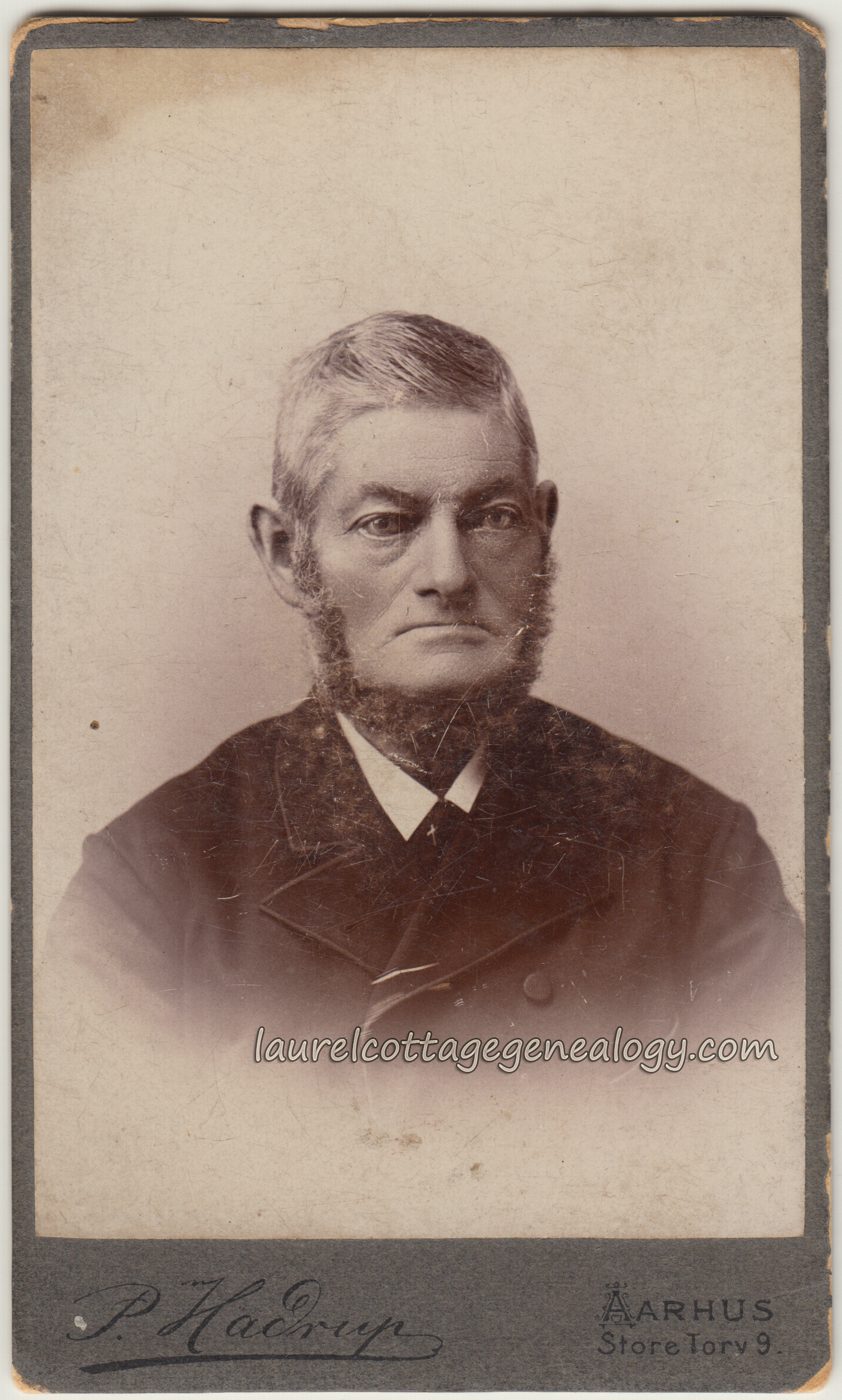
Carte de visite style photo of a bearded gentleman, possibly in his late 40s or early 50s. The beard type seems to most closely resemble the “Chin Curtain.” We also take note of his suit which shows lapels with trimming along the edges, and is that a pin in the shape of a cross that is showing on his cravat? The date for the CDV is estimated at circa 1875-1880.

The photo was taken at the P. Hadrup studio in Aarhus, Denmark, which was located at the address of Store Torv 9. The phrase at the bottom on the back of the CDV, “Pladen opbevares for Efterbestillinger”  means the studio kept the original plate or negative for any possible future reorders. The photographer is likely Peder Hansen Hadrup. See separate post under the Photographer category for more information.

Cowen Park, Seattle, Big Snow of 1916

Cowen Park Seattle pc1Cowen Park Seattle pc2

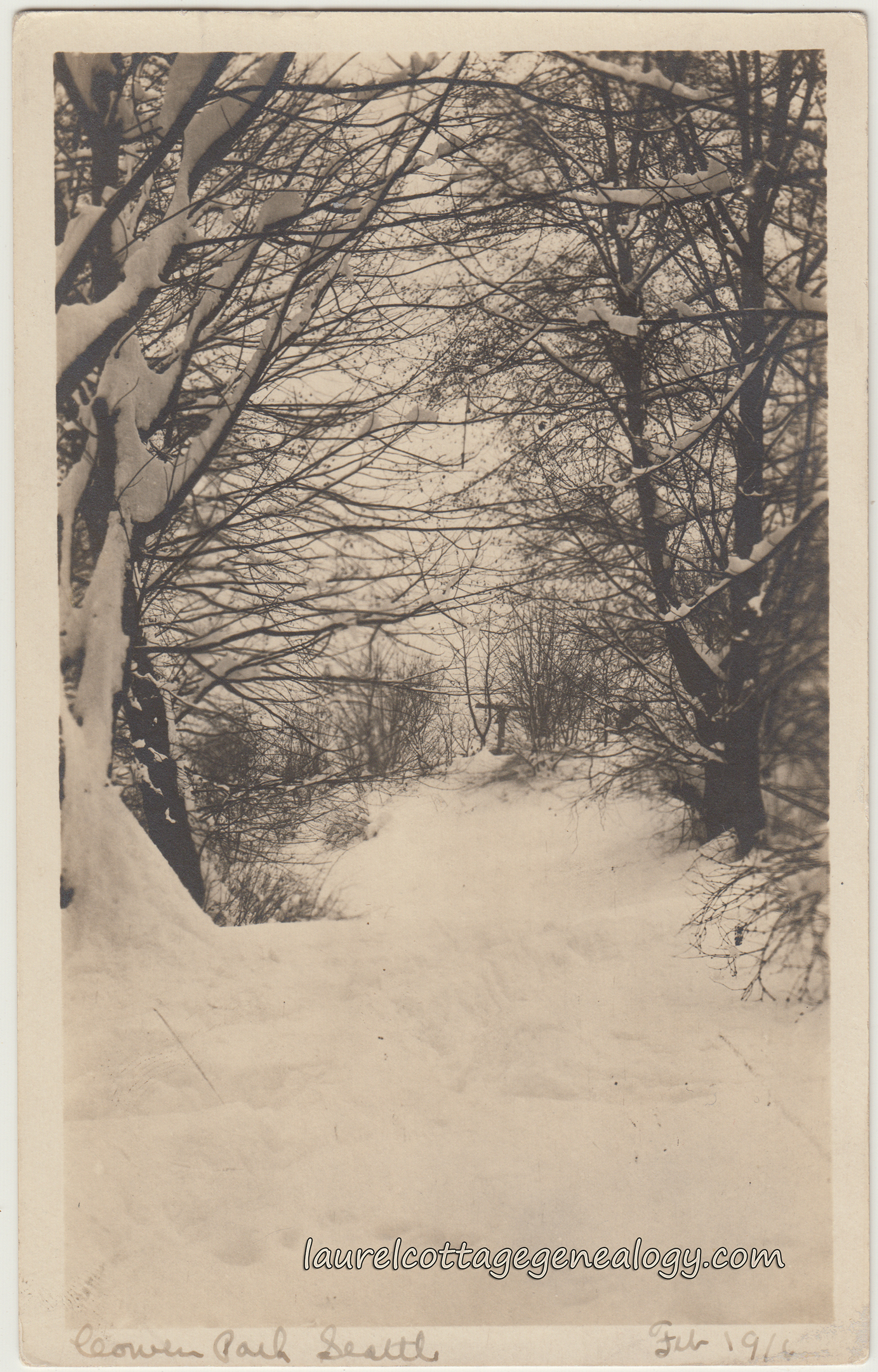
Real Photo Postcard from a photo taken in Cowen Park, Seattle, Washington. In the white border at the bottom of the card is written, “Cowen Park Seattle Feb 1916.”  From this shot we are looking down what seems to be a wide snow-covered pathway, flanked by deciduous trees, their branches laden with snow. What looks like the top of a utility pole appears in the background, and this is what clues us in to the fact that there was a “big snow” that winter.

In searching for confirmation on the weather I found a great vintage Seattle website that has other photos that were taken after the snowstorm. From this site I learned that the blizzard of 1916 was 21.5 inches and fell between February 1st and 2nd. As of the date of this post, this is the record for Seattle’s largest snowfall.

Divided back, Real Photo Postcard, unused. Stamp box shows AZO with the four triangles pointing up. February 1916.

Price:  $7.00

Source:  http://www.vintageseattle.org/2008/02/22/seattles-great-storm-of-1916/

The Feathers Hotel, Ludlow, England

Feathers Hotel pc1Feathers Hotel pc2

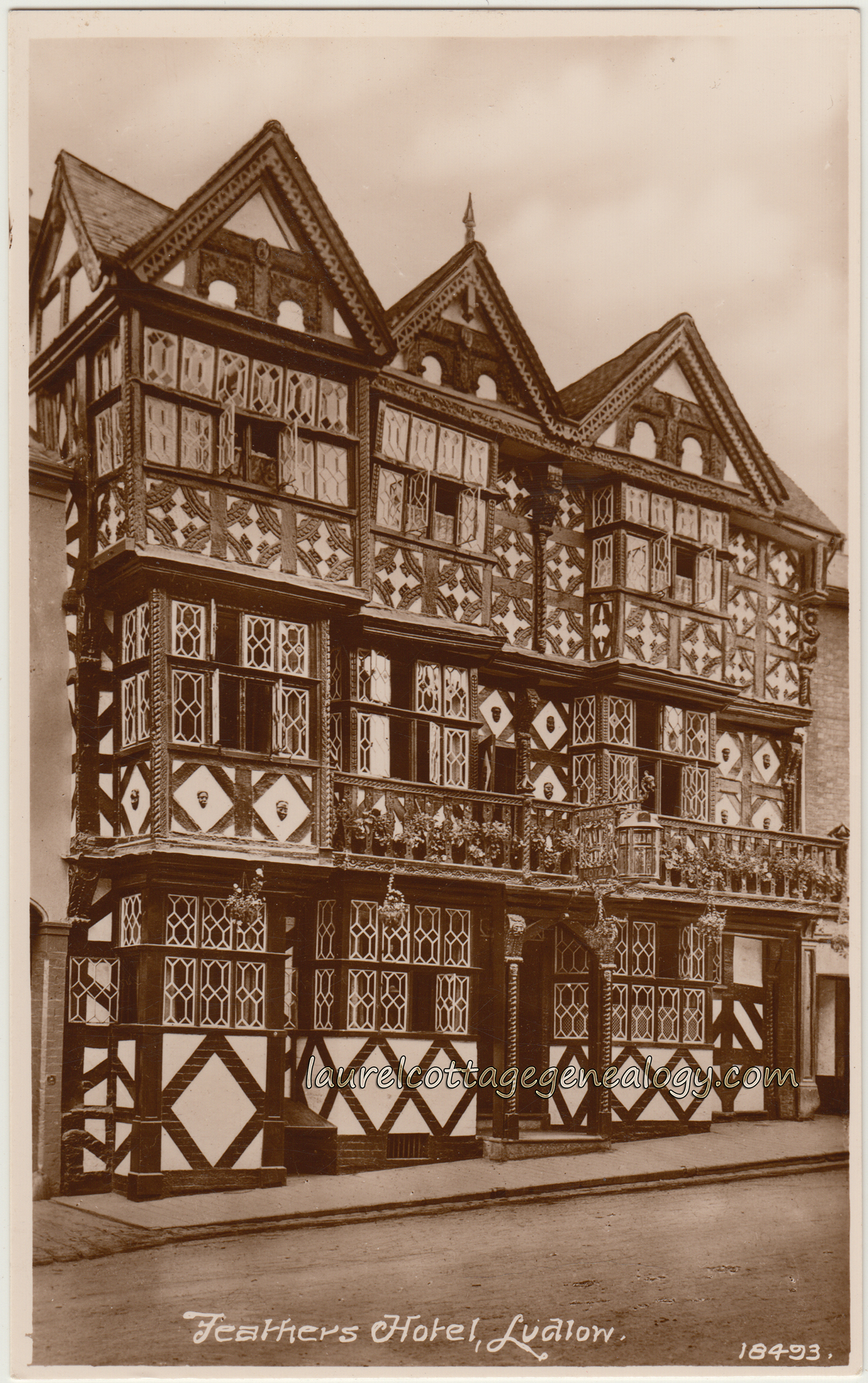
Divided back, unused postcard, sepia tone, white border, glossy finish. Printed in England. Publisher unknown. No. 18493. Date unknown, possibly circa 1950s.

Price:  $5.00

The Feathers Hotel in Ludlow, Shropshire, England is famous worldwide for it’s half timbered façade and Jacobean furnishings. The oldest part of the inn, including the façade, was built in 1619 by Rees Jones, a successful attorney. It was designed as a residence but converted to an inn by the builder’s son, Thomas. The name comes from the ostrich feather motif that appears as part of the half timbered design. The feathered motifs are located “on the collars of the three street gables,” according to their website. Although the feathers are not really discernible in this photo, you can easily see another interesting detail: that of the “faces” that are centered between the diamond shapes on the second floor.

Sources:  The Feathers Hotel at Ludlow. http://www.feathersatludlow.co.uk/ (accessed February 6, 2014).

The Feathers Hotel, Shropshire. n.d. http://en.wikipedia.org/wiki/Feathers_Hotel,_Ludlow (accessed February 6, 2014).

Sweetest Girls in New Mexico

Sweetest Girls in New Mexico pc1Sweetest Girls in New Mexico pc2

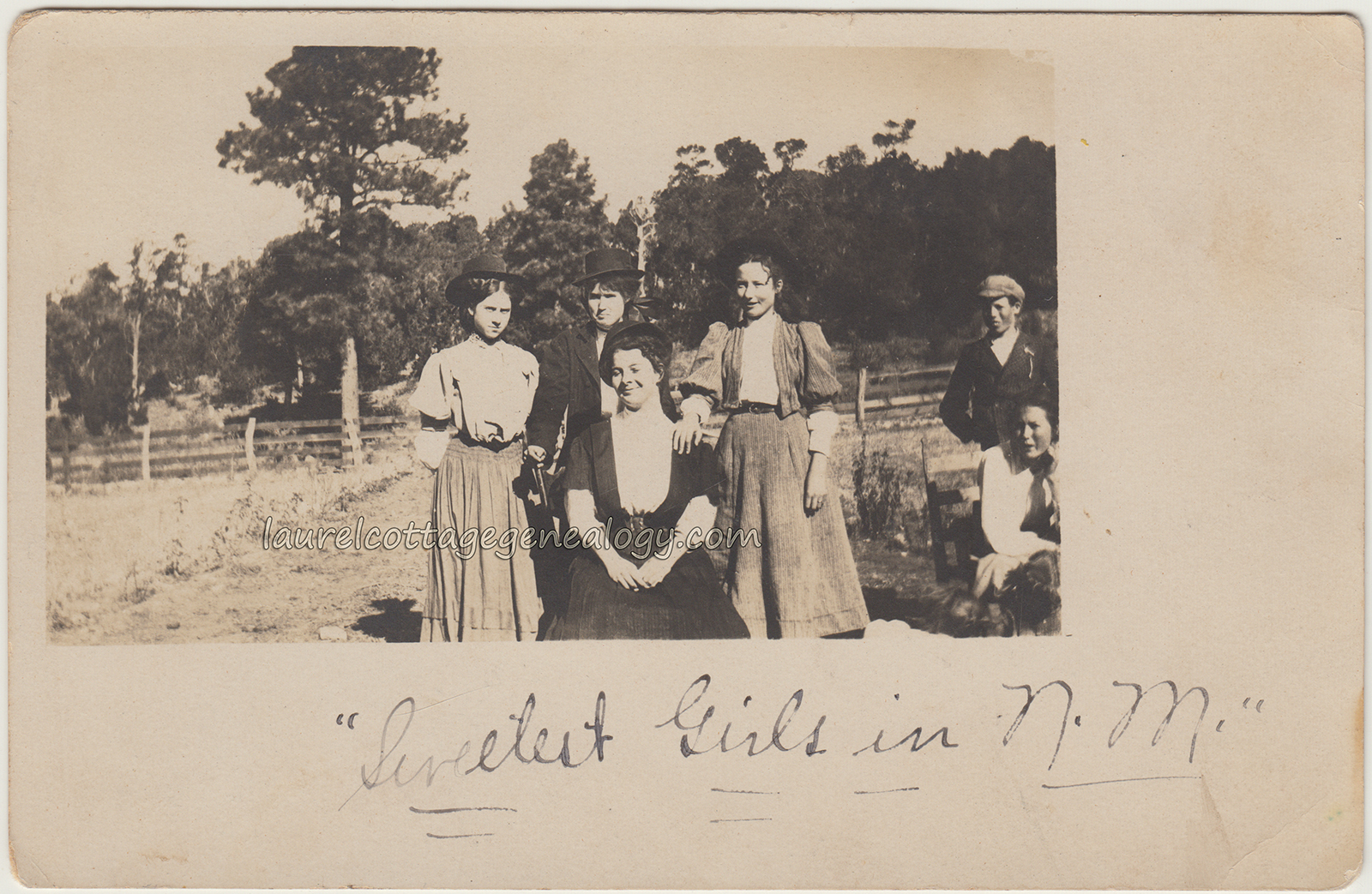
Divided back, Real Photo Postcard, unused with writing. Circa 1910-1920.

Price:  $10.00

Real Photo Postcard of the “Sweetest Girls in N. M.” This caption may have been written by their father (Or possibly the man’s wife appears in the photo with their three daughters.) The girls appear to be wearing man’s hats and posing for the camera. The girl on our right wears a wedding ring. Were the hats the normal attire of the day? Or maybe they were putting on a skit for entertainment, or just clowning for the camera. The hats don’t necessarily seem to fit them, and the coat the woman in the center wears appears to be a man’s coat, a little too big (look at the sleeves.) On our far right we see a young boy standing, and sitting in front of him a youngish looking woman. (This woman’s pose is so funny because she looks like she’s talking on a cell phone.) In front of her it looks like there may be at least one other person but it’s hard to tell what we’re looking at here (backs of heads or is that a part of a blanket in the right corner?) In any case, this an awesome photo, and it’s nice to have one from New Mexico.

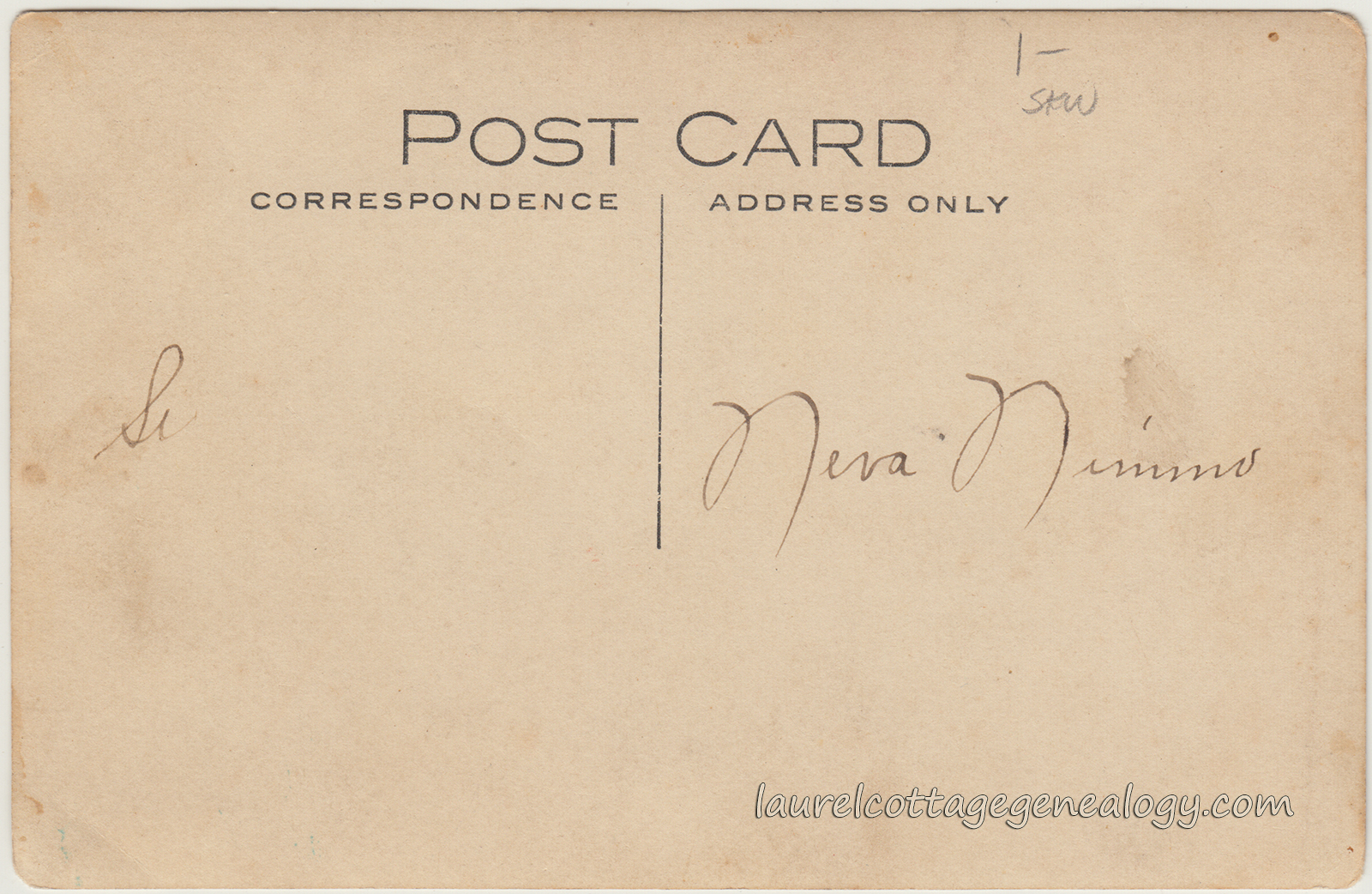
The back of the postcard shows what appears to be “Neva Nimmo,” as the name of the person to whom it was given. With the S and what looks like the beginning of a W on the left side of the card looking like the writer was going to put the caption here again, but didn’t. Neva Nimmo does come up in Ancestry searches. The 1900 Federal Census taken in Rindoso, New Mexico, shows Samuel Nimmo, born about 1860, his wife Sarah, born about 1863, son George born about 1888, daughters Neva, born about 1892, Ruby born about 1896, and Ethel born about 1898. All are natives of Texas. Based on this and other census records and Ancestry family trees linking Neva to the Monterey County area (where this photo was found), I think this photo is from the family that appears on this census.

Source:  Year: 1900; Census Place: Rindoso, Lincoln, New Mexico; Roll: 1001; Page: 14B; Enumeration District: 0064; FHL microfilm: 1241001. (Ancestry.com)

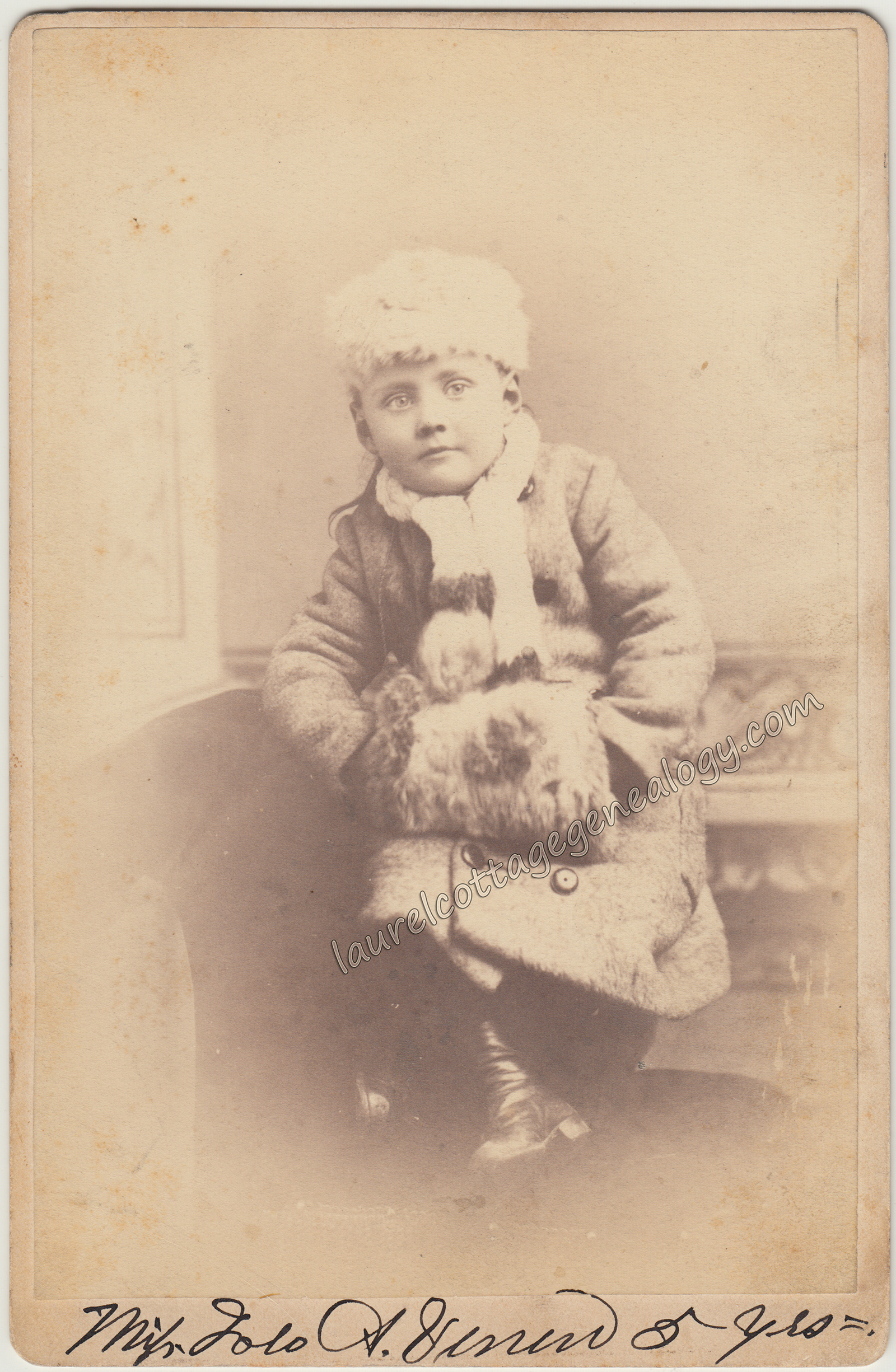
Miss Venen, Age 5

Miss Venen

Cabinet Card, circa 1880 – 1890s.

Price:  $10.00         Size:  about 6 and 1/4 x 4 and 1/8″

Cabinet Card photo of beautiful little girl, age five, posed for the camera and dressed for the outdoors, in overcoat, fur hat, fur scarf, and carrying a fur muff. There is no photographer information on either the front or the back, but we are lucky to have the child’s name written at the bottom of the card. The first name is hard to decipher, possibly Iolo (as in capital I not L) or Jolo (both names do come up for girls). Her middle initial is A, and the last name appears to be Venen. Though Vinin is a possibility there are no dots over what would be the i’s, as opposed to the i in the very first word which is dotted. This word looks like it would be Miss. If it is indeed Miss, then the writer used the old-fashioned (well, to us) practice of the Ss which is often mistaken for an fs. In any case this is a stunning photograph of a gorgeous girl.