Genealogy Services, Old Photos, Postcards, Trade Cards, Etc.

Sincere Wishes From Sophia Hubbard

Sincere Wishes From Sophia Hubbard pc1Sincere Wishes From Sophia Hubbard pc2

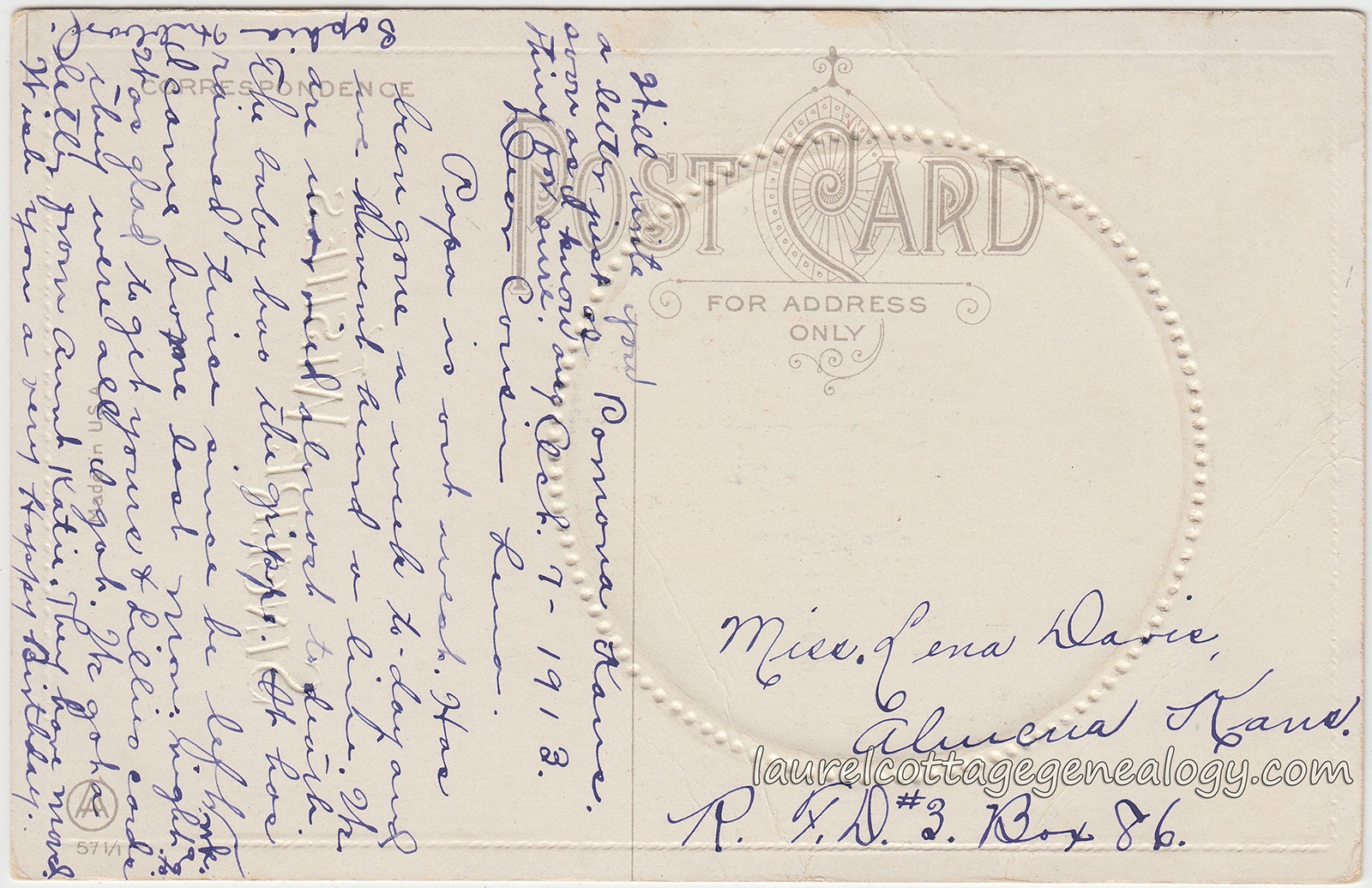
This one is part of what I’m starting to think of as the E. Nash and pre – E. Nash publisher mystery. E. Nash was a postcard publisher about whom not much is known. Oh boy, one of those type. 😉 So, the next posting after this will be an organization of what we have so far for Nash and the possible prior publisher. They both used the same beautiful spiral design in the back header, but Nash used a capital “N” in a triangle for his logo and the prior person used a capital or two capital “A”s in a circle. The publisher logo on this card shows a subtle variation in the circle.

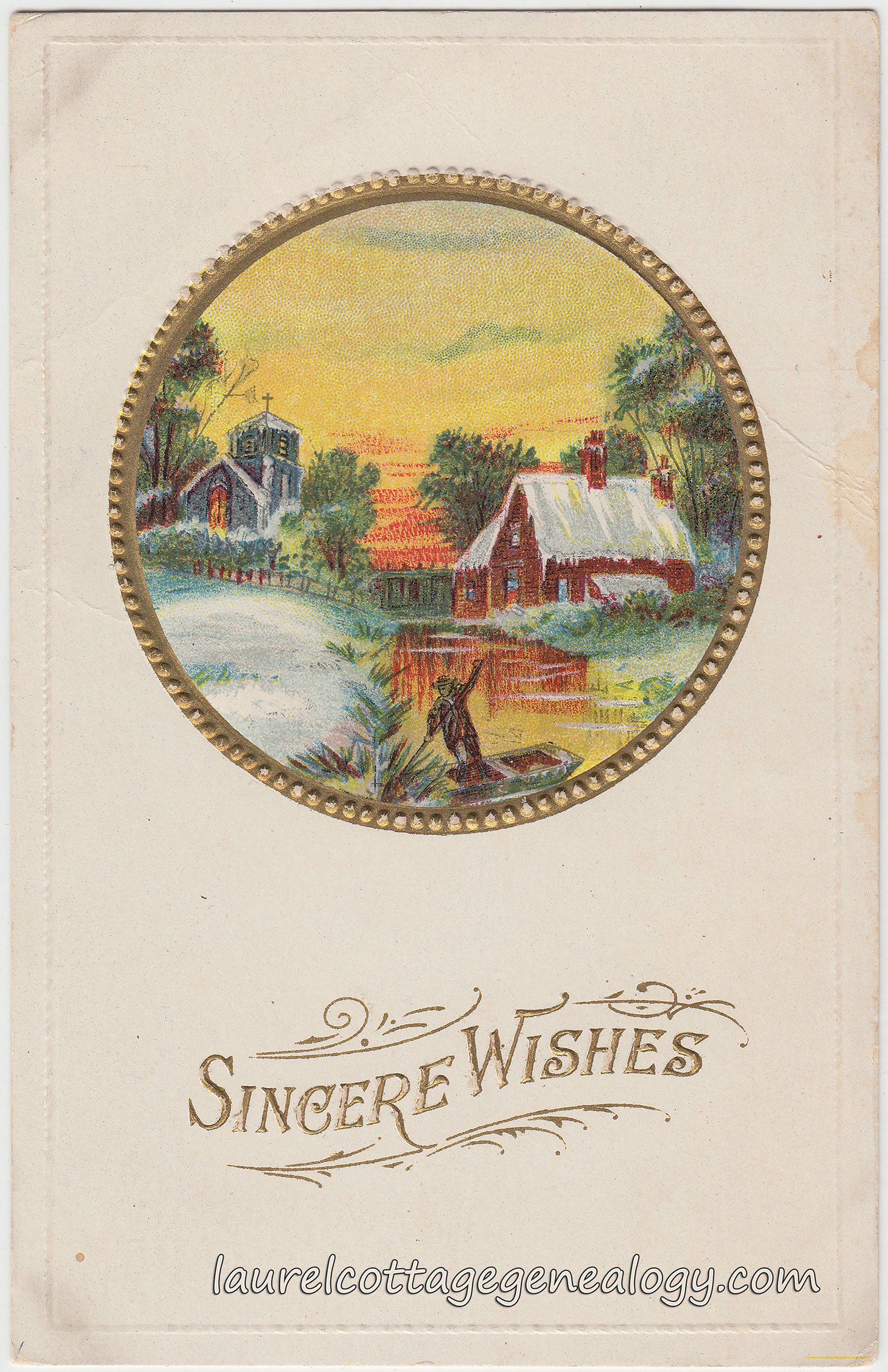
Anyway, this beauty shows a nice winter scene at sunset or sunrise, of a guy in a skiff (easy to miss unless you click on the image to enlarge. You can click again to enlarge one more time.) He is using the skiff’s pole to navigate the little stream, and in the background on the right is (presumably!) his house and on the left, across the stream (very handy) the church he attends (again presumably 😉 ). This is another addressed to Lena Davis of Almeria, Kansas and is from Lena’s cousin, Sophia Hubbard. Sophia writes:

“Pomona Kans.  Oct. 7 – 1913. Dear Cousin Lena. Papa is out west. Has been gone a week to-day and we haven’t heard a line. We are worried almost to death. The baby has the grippe. It has rained twice since he left. I came home last Mon. night. wk. ago. Was glad to get yours & Lillies cards they were all I got. We got a letter from Aunt Katie. They have moved. Wish you a very Happy Birthday. Sophia Hubbard.   Will write you a letter just as soon as I know any thing for sure.”

Yikes! We hope everything turned out fine for Sophia and her family. There are more postcards that we’ll be adding later on to the Lena Davis Collection, so we’ll sort out the different family relations at that time.

Divided back, embossed postcard. Unused with writing. Dated October 7, 1913. Publisher unknown. Possible E. Nash connection. Nash may have obtained the rights to the postcard back header from this unknown publisher.

Price:  $5.00

Christmas Greetings From Mrs. Graham

Christmas Greetings From Mrs Graham c1

       Christmas Greetings

“To-day across the winding miles

This card is flying fast.

To wish you matchless Christmas  joys,

And a new year unsurpassed!”

I’m becoming fascinated with seasonal cards that don’t have any of the traditional images. Do we send many out today like that? This one is a great example:  a Christmas card just showing an adorable barn swallow (I think) bringing Christmas greetings with the above lovely verse. The bird is flying fast to bring you the message on time, so that makes sense, but the card is not traditionally decorated with trimmed trees, Santa Claus, holly, the manger scene, etc. Come to think of it, I guess we do send out similar ones nowadays, as I have a set of Christmas cards of a bunny in winter scene. But some of the other old ones are quite unusual. Click here for the example I’m thinking of.

Getting back to the subject of barn swallows, an interesting (and very relevant to Laurel Cottage) fact from the website All About Birds, relates that,  “…it was the millinery (hat-making) trade’s impact on Barn Swallows that prompted naturalist George Bird Grinnell’s 1886 Forest & Stream editorial decrying the waste of bird life. His essay led to the founding of the first Audubon Society.” 

Christmas card with sender’s signature, and thin gold-tone border. Circa 1900 – 1930.  Size:  4 and 1/2 x 3 and 1/2″

Price:  $5.00

Source:  “Barn Swallow.”  The Cornell Lab of Ornithology All About Birds. Web accessed December 6, 2014. [http://www.allaboutbirds.org/guide/barn_swallow/lifehistory]

Reward Of Merit To Katie Stearns

Reward Of Merit To Katie Stearns m1Reward Of Merit To Katie Stearns m2

Reward of Merit, embossed card from unknown artist or publisher. Circa late 1890s.  Size:  About 4 and 1/16 x 6 and 1/16″.

Price:  $15.00

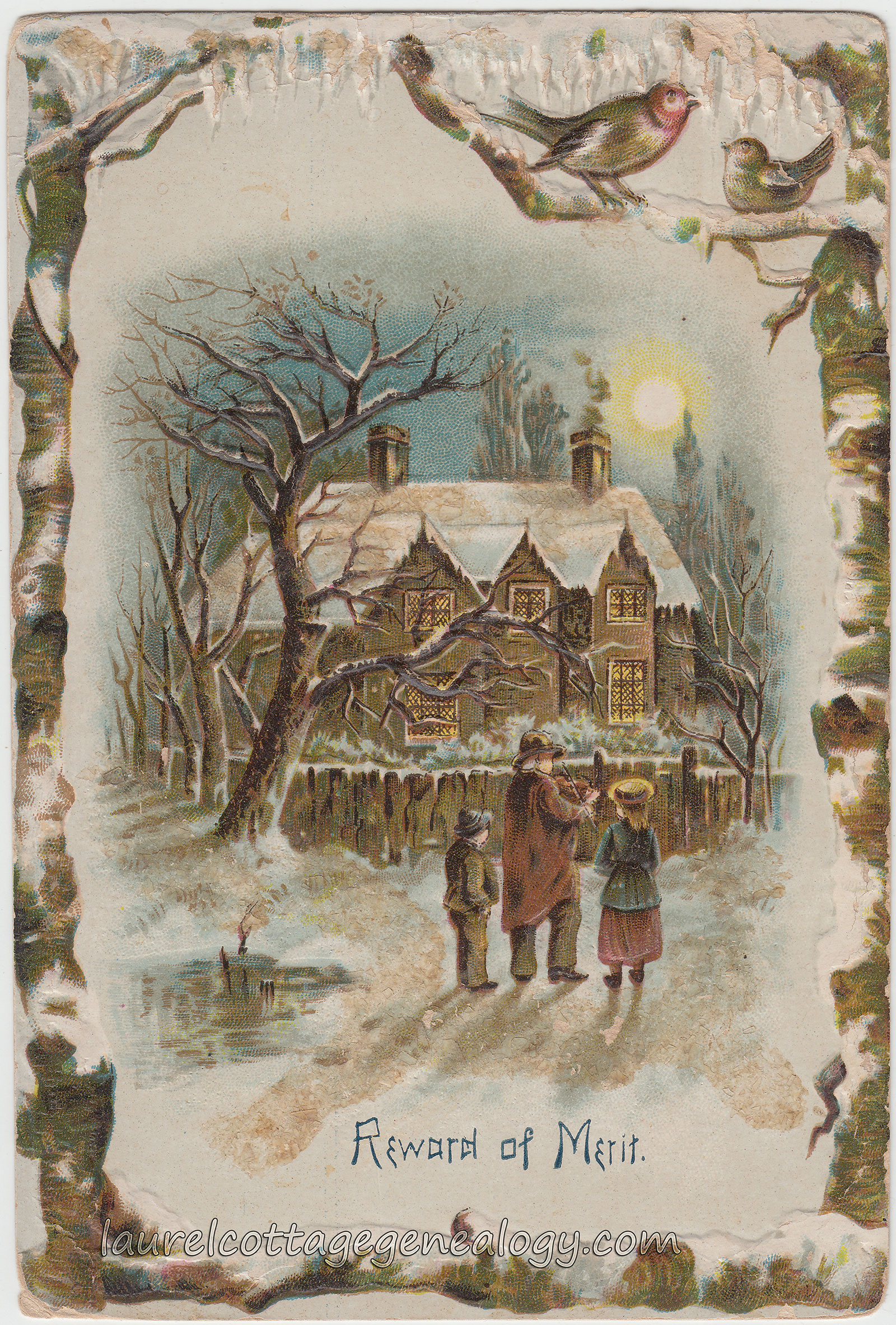
Here’s a nice one for the season, though it doesn’t look like this in California at the moment, at least not where we are! It’s a Reward of Merit, embossed and showing a beautiful winter scene of three children, or perhaps one adult and two children. They are standing in front of a large home, or maybe it was a school, which appears inside a rustic wooden fence, and has a line of trees to its right. It must be a daytime scene since the sky shows blue, the scene is well enough lit; therefor that is the sun we are seeing rather than the moon, but a wintery-looking sun. Not sure what the taller person is holding but what comes to mind is a bird’s nest, as he seems to be carrying it carefully. The card is bordered by mossy, snowy branches, maybe birch, with two adorable birdies at the top right, and a row of icicles at the top – a nice touch. The artist has blurred the border a little in order to focus our attention on the scene itself. And you can’t see it in the scanned image here, but if you turn the card at an angle, you can see a sparkly snow effect.

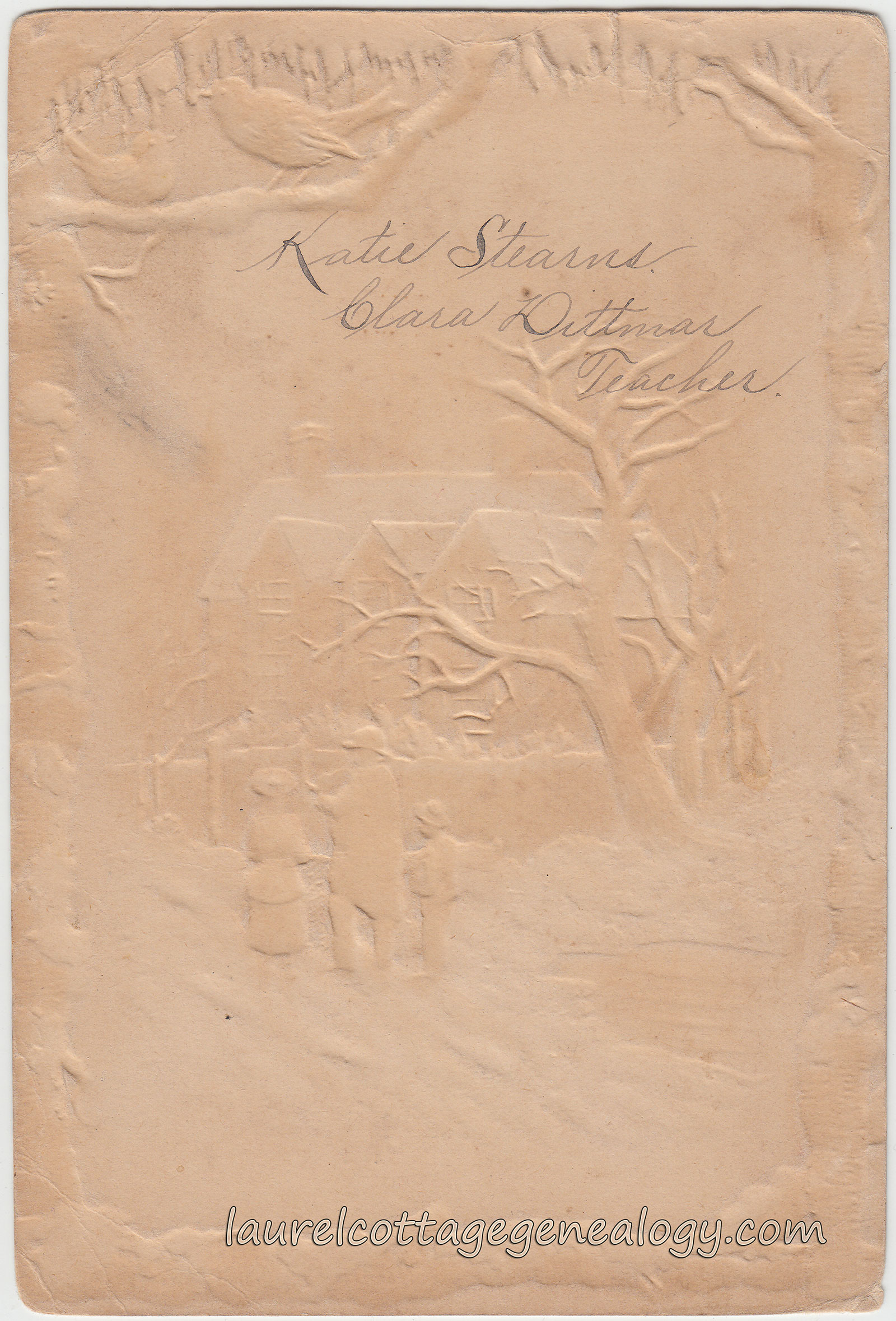
The town of Derinda, Jo Daviess County, Illinois is less than six miles west of the town of Pleasant Valley, as the crow flies. Though there is no location named on the back of the card, it’s a pretty sure bet that the following student and teacher combo is correct. (Other searches were done online without finding any other possibilities) So, as indicated on the back, this Reward of Merit was given to Katie Stearns by her teacher Clara Dittmar. The 1900 Federal Census records show that Katie lived in Pleasant Valley, and Clara in Derinda.

Katie (spelled Kattie) Stearns, age 11, was born November 1888 in Illinois. Her parents are Robert and Betsey Nash. Robert born July 1861 in Iowa, his occupation day laborer; and Betsey, born January 1867 in Iowa. Katie’s younger siblings are Martin, age 9; Lillian, age 7; William S., age 5; and Susan, age 9 months.

Clara Dittmar, age 24, was born September 1875, in Illinois. She is single, living with her widowed father and siblings, and her occupation is public school teacher. Her father is Albert Dittmar, age 53, born April 1847, in Germany, occupation farmer. Clara’s siblings are Julia B., age 26; Lottie A., age 18; Emma E., age 16; William A., age 14; and Lydia M., age 10. Living with the family is Lillian E. Kringle, age 24, also a public school teacher. According to an Ancestry.com family tree, Clara’s mother was Anna Maria Praeger.

Sources:  Year: 1900; Census Place: Derinda, Jo Daviess, Illinois; Roll: 310; Page: 7B; Enumeration District: 0031; FHL microfilm: 1240310 (Ancestry.com)

Year: 1900; Census Place: Pleasant Valley, Jo Daviess, Illinois; Roll: 310; Page: 9A; Enumeration District: 0038; FHL microfilm: 1240310 (Ancestry.com)

“Iowa, Marriages, 1809-1992,” index, FamilySearch (https://familysearch.org/pal:/MM9.1.1/XV93-6LH : accessed 6 December 2014), Robert Sterns and Elizabeth Nash, 19 Dec 1887; citing Clayton, Iowa, reference ; FHL microfilm 1,255,483.

A Handsome Bearded Gentleman

A Handsome Bearded Gentleman pc1A Handsome Bearded Gentleman pc2

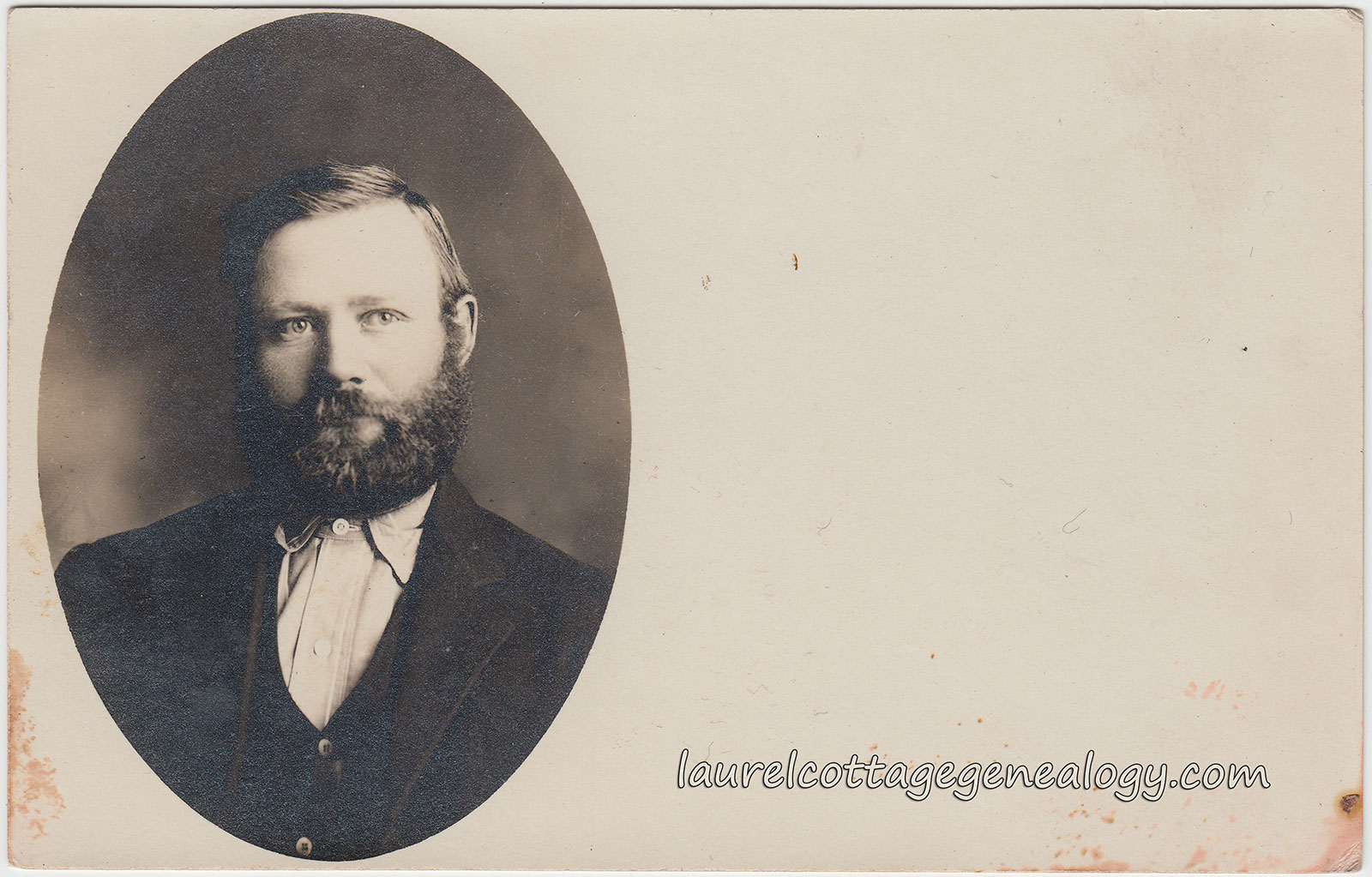
Here’s a Real Photo Postcard showing an oval studio portrait of a handsome guy, maybe in his thirties or early forties, in a dark suit coat and vest, and light colored shirt. This was not fancy attire. We see that the edge of one of the collars is slightly turning up, by accident, and the shirt itself looks to be of a heavier cotton, or even possibly a linen, but that’s an uneducated guess. (Not for the first time, nor will it be the last, I find myself wishing that I were a historical clothing expert!) The gentleman does not wear a tie. We get the impression that he could have been a working man, dressed up in his Sunday best for a photo, or perhaps a college professor. In any case he has a nice demeanor and is very distinguished looking.

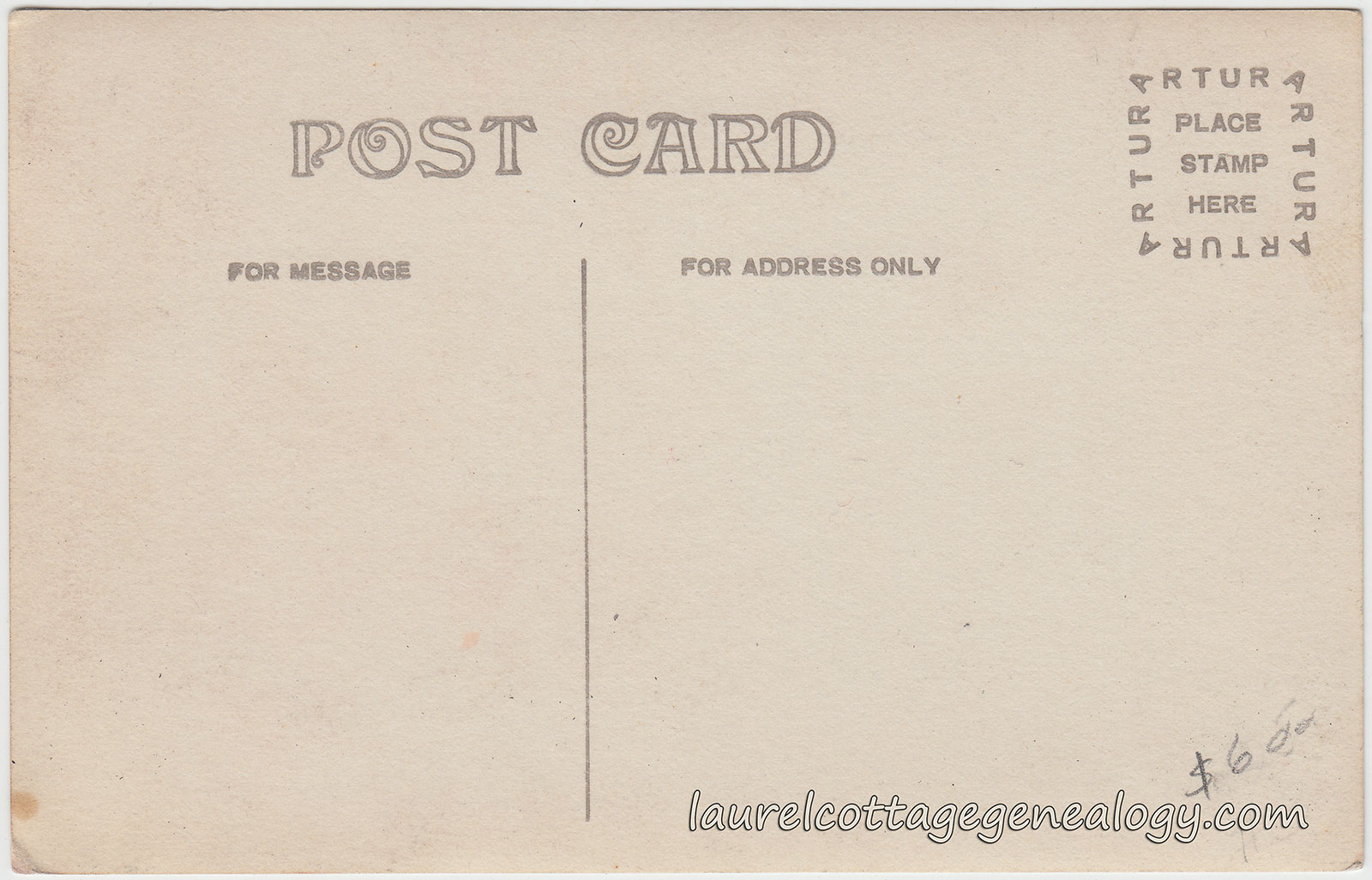
Too bad there is no identifying information on this one, as we would love to know his name, or at least where the photo was taken. Besides trying to pin down the date of the postcard from the beard and clothing, a time-consuming endeavor if there ever was one, we have the Artura stamp box to go by. But according to Playle’s, (the excellent website we visit often for stamp box estimates) this Artura style was used between the broad range of about 1908 – 1924. I’d guess it is on the earlier end of these dates though; just a feeling.

Divided back, unused, Real Photo Postcard. Artura stamp box 1908 – 1924. Estimated date circa 1908 – 1915.

Price:  $8.00

Kunstverlag J. Goldiner – Art Publisher J. Goldiner

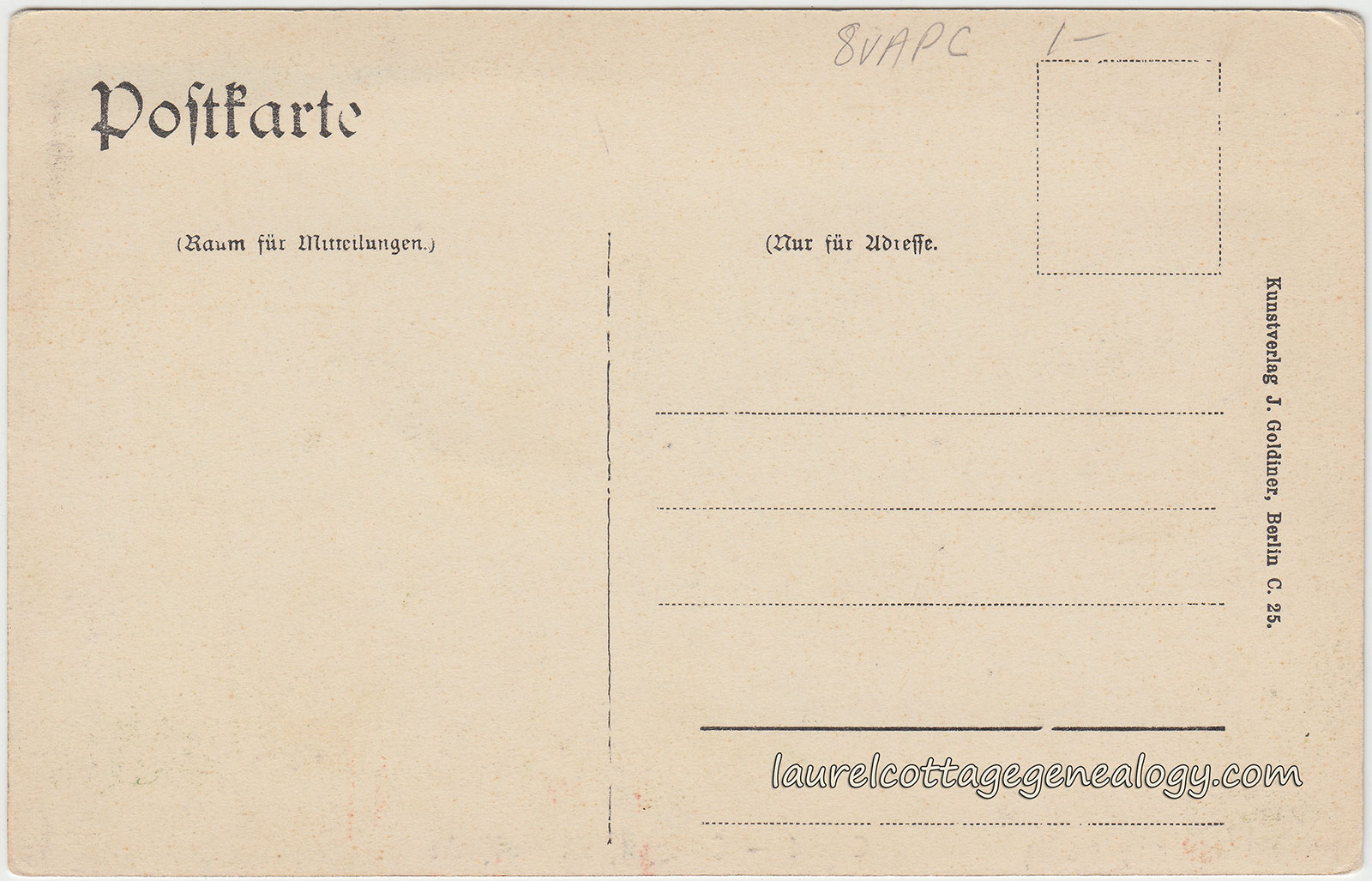
According to the excellent website Güstrow for historical photos and postcards and a Wiki entry in German, this publishing company was originally started by Julius Goldiner (1852 – 1914) who began publishing postcards in about 1895. After his death, his wife, Auguste (Bock) Goldiner (1856 – 1941) and daughter Elisabeth Goldiner (1879 – 1945) continued the company under the name of Kunstverlag J. Goldiner, and made it one of the great German postcard publishers. Kunstverlag translates as “art publisher.” After Elisabeth died the company ran as a family business under Charlotte (Goldiner) Kröger, Erna (Kröger) Quiring and Lore Kröger until 1977.

We have one postcard at this time from this publisher. See the post entitled Gruss Aus Berlin.

Sources:  “Julius Goldiner.” Güstrow. Web accessed November 27, 2014. [http://www.guestrow-history.de/index.php/j-goldiner]

Julius Goldiner. n.d. http://de.wikipedia.org/wiki/Julius_Goldiner (accessed November 27, 2014).

Gruss Aus Berlin

Gruss Aus Berlin pc1Gruss Aus Berlin pc2

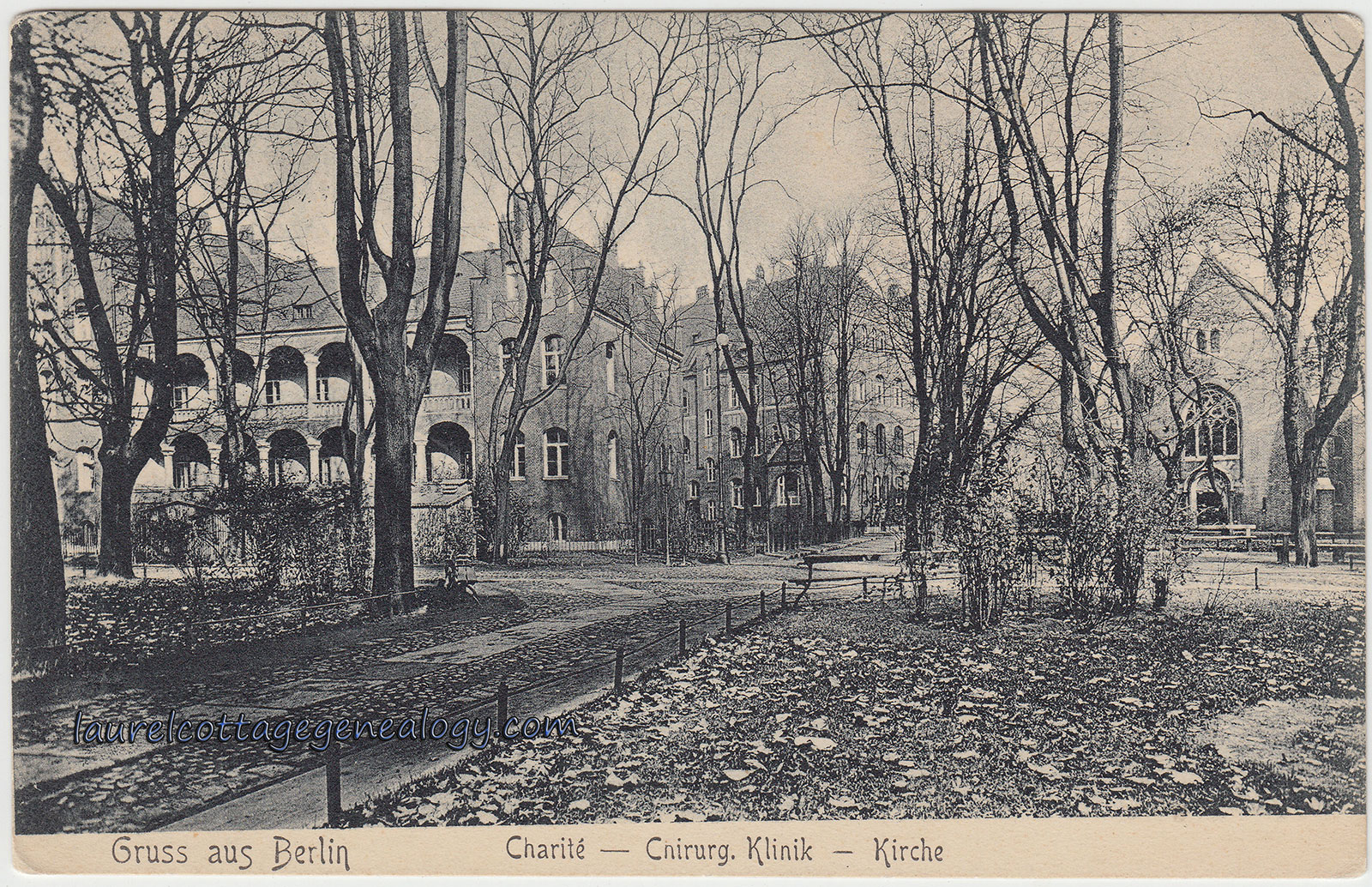
An autumn scene in Berlin, Germany with the caption:   “Gruss aus Berlin. Charité – Chirurg. Klinik – Kirche.”

Gruss aus Berlin translates as Greetings from Berlin. This postcard shows what appears to be a Charity hospital or surgeon’s clinic with a church on the right. There may be other old postcards of this scene online but as of the date of this post, I am not seeing any. The exact location of this building is in question, other than that it is, or was located in the city of Berlin, Germany.

According to the excellent website Güstrow for historical photos and postcards, this publishing company was originally started by Julius Goldiner (1852 – 1914) who began publishing postcards in about 1895. After his death, his wife and daughter continued the company under the name of Kunstverlag J. Goldiner, and made it one of the great German postcard publishers. Kunstverlag translates as “art publisher.” The company ran as a family business until 1977.

Divided back, unused German postcard. Publisher:  Kunstverlag J. Goldiner, Berlin. C. 25. Date unknown, circa 1920s.

Price:  $10.00

Source:  “Julius Goldiner.” Güstrow. Web accessed November 27, 2014. [http://www.guestrow-history.de/index.php/j-goldiner]

Autumn Time

Autumn Time pc1Autumn Time pc2

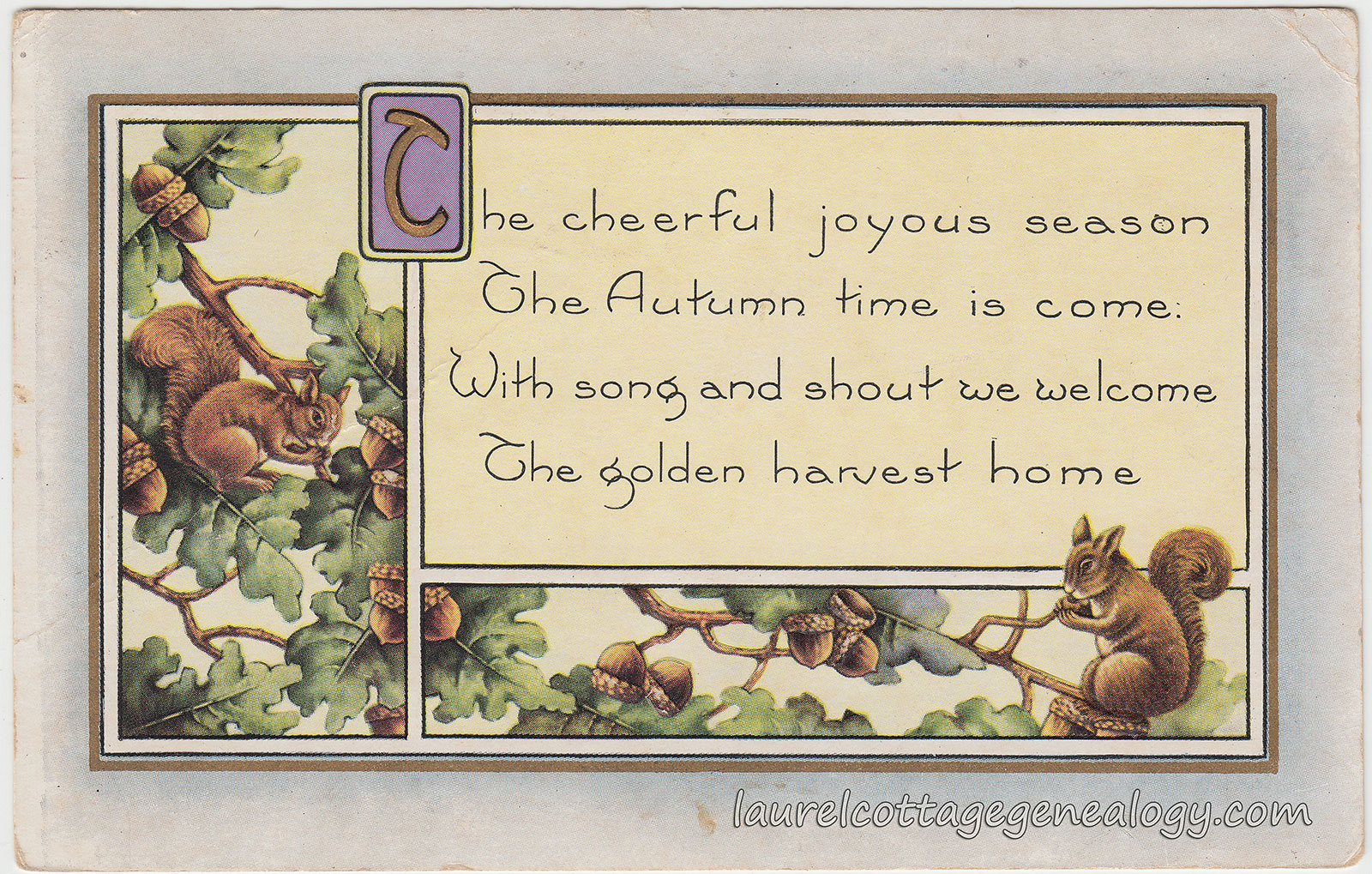
“The cheerful joyous season

The Autumn time is come

With song and shout we welcome

The golden harvest home.”

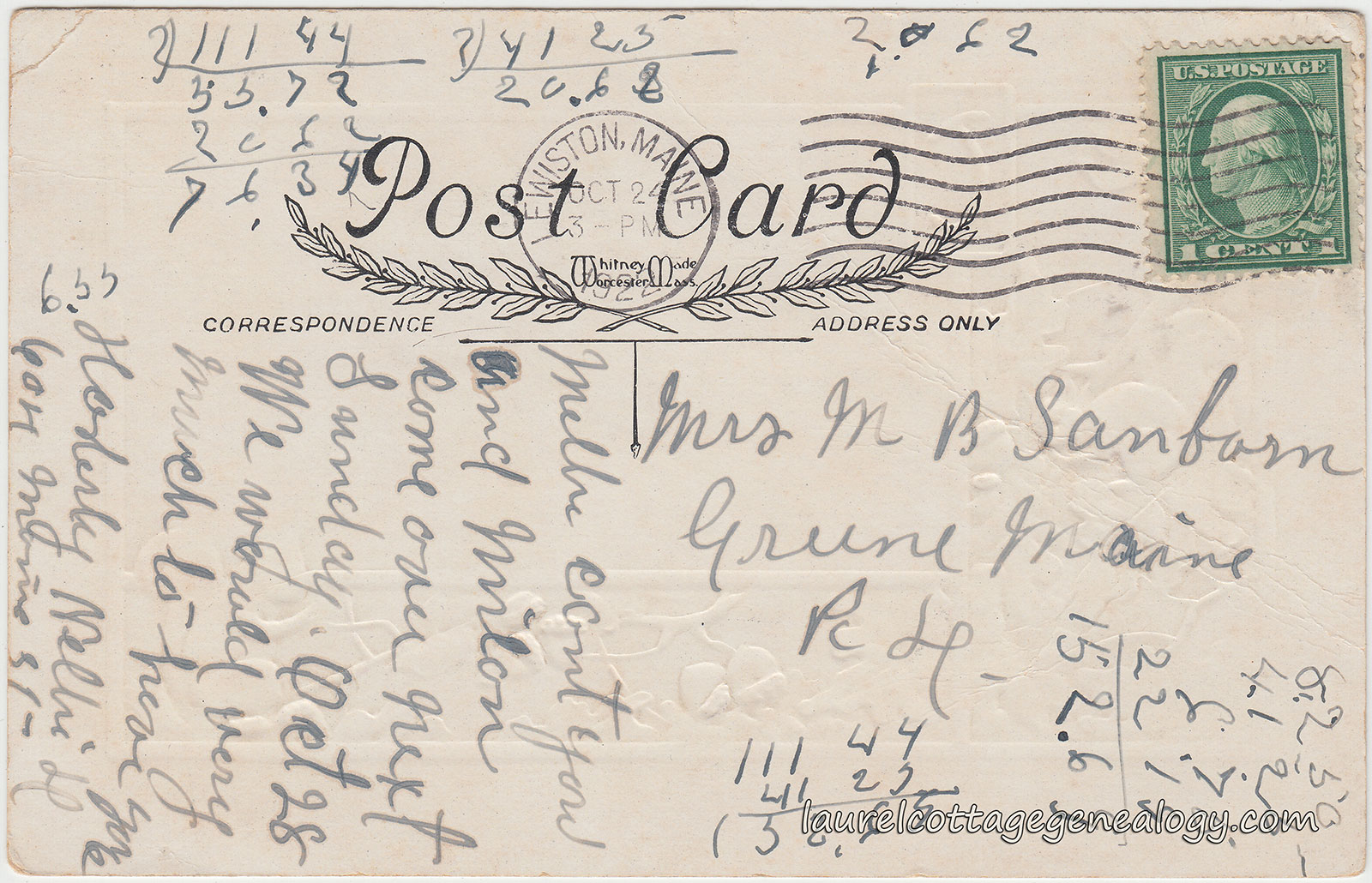
In keeping with the season, here’s a nice one showing the above verse and a couple of adorable squirrels in an oak tree. The card is addressed to:   “Mrs. M.B. Sanborn, Greene, Maine…?…” 

The sender’s writing is quite difficult to read at the end of their message which is:   “Millie cant you and Milon come over next Sunday. Oct 28 We would very much to have you….?…Nellie?…?”

From the 1920 Federal Census taken in Greene, Androscoggin County, Maine, Mrs. M.B. Sanborn is Mellie J., wife of Milan B. Sanborn. He was born about 1863, and she about 1867. Living with them are their son, Jesse L., born about 1893, his wife Theo B., born about 1898, Jesse and Theo’s daughter Veda M., born about 1919, and Ethel L. Sanborn, single daughter of Milan and Mellie. All are born in Maine. Milan and son Jesse are farming, and Ethel is a schoolteacher.

The 1900 census in Greene shows the Sanborn parents with son Jesse and as of yet unnamed Ethel (one month old) and mother-in-law to Milan, Bethiah Thompson, born May of 1827 in Maine. So, Mellie’s maiden name of Thompson is pretty much confirmed by the marriage record we find for her and Milan. They were married on September 18, 1886, in Wales, Androscoggin, Maine.

Since Jesse’s wife’s name is a little unusual – Theo – we couldn’t resist looking for her as well, in order to confirm the spelling. Other census records and the couple’s marriage record do show the same. They were married on September 1, 1917 in Leeds, Maine. Theo’s maiden name is Buckley. Though census records list Theo’s middle initial as B., her marriage record shows G. The change of the middle initial to one indicating the maiden name is very commonly seen on older census records.

Divided back, embossed, used postcard. Postmarked October 24, 1922 from Lewiston, Maine. Publisher unknown.

Price:  $12.00

Sources:  Year: 1920; Census Place: Greene, Androscoggin, Maine; Roll: T625_637; Page: 7B; Enumeration District: 15; Image: 467. (Ancestry.com)

Year: 1900; Census Place: Greene, Androscoggin, Maine; Roll: 587; Page: 10B; Enumeration District: 0010; FHL microfilm: 1240587. (Ancestry.com)

“Maine, Marriages, 1771-1907,” index, FamilySearch (https://familysearch.org/pal:/MM9.1.1/F4NS-W9Q : accessed 27 Nov 2014), Milan B. Sanborn and Millie J. Thompson, 18 Sep 1886; citing Wales,Androscoggin,Maine, reference ; FHL microfilm 12320.

“Maine, Marriage Index, 1892-1966, 1977-1996,” index, FamilySearch (https://familysearch.org/pal:/MM9.1.1/KCNC-86K : accessed 27 Nov 2014), Jessie L Sanborn and Theo G Buckley, 01 Sep 1917; citing Marriage, Maine, United States, State Archives, Augusta.

Thanksgiving Greetings

Thanksgiving Greetings pc1Thanksgiving Greetings pc2

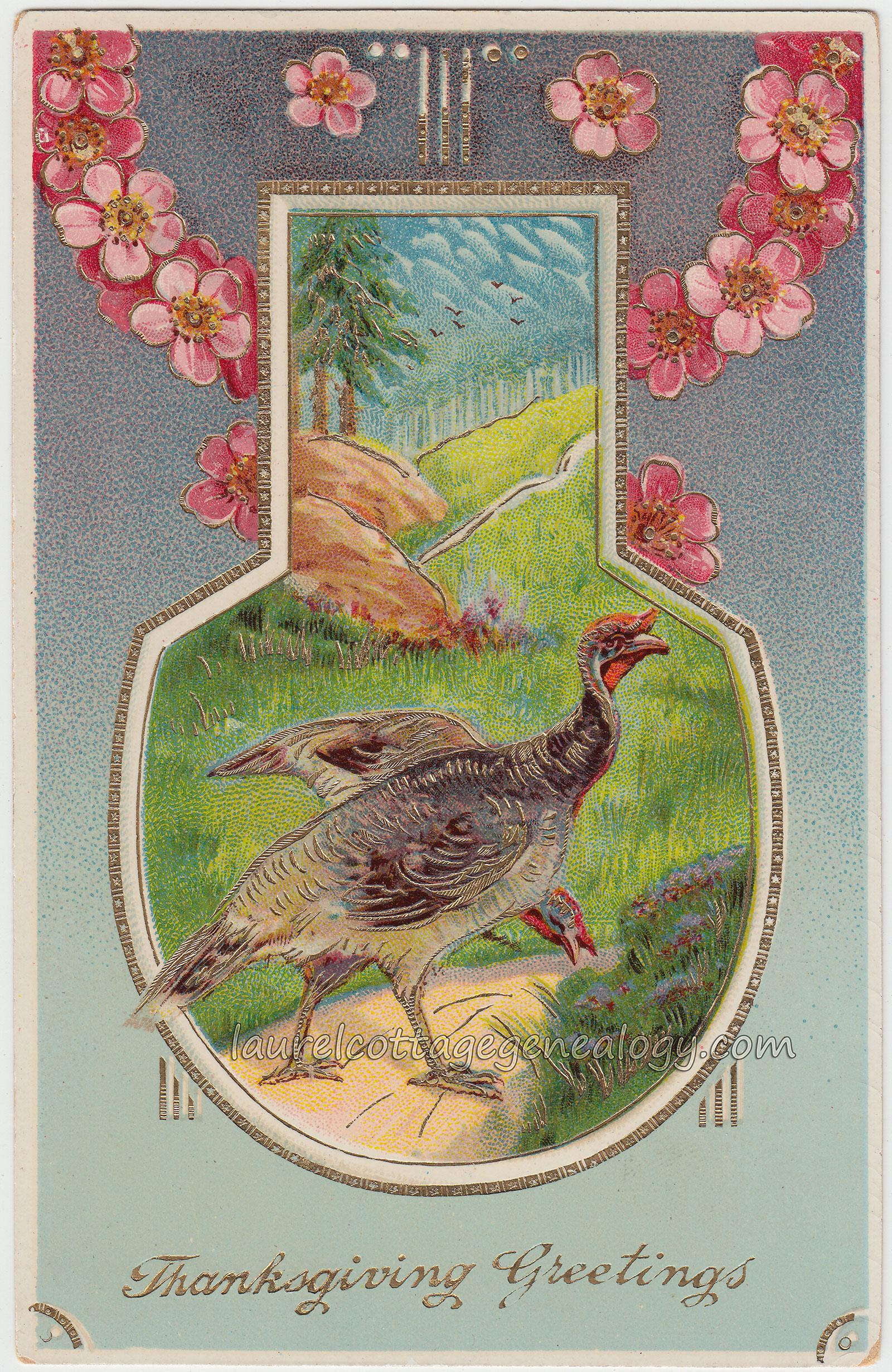
Happy Thanksgiving to all! Here’s a beautiful postcard showing a design of two turkeys on a little path out in the country. (Well, with scrutiny, the turkey in the background is just next to the path.) I like the stand of evergreens in the distance. This is from an unknown publisher, printed in Germany, embossed and with gold tones, with a blue-gray background and pink flowers, and narrow white border. The tail feathers of the turkey in the foreground run a little outside the sort of upside-down keyhole shaped “window.” My friend tells me this is always on purpose; from the artist’s perspective, it lends a sense of “flow” for the eye to travel over the card.

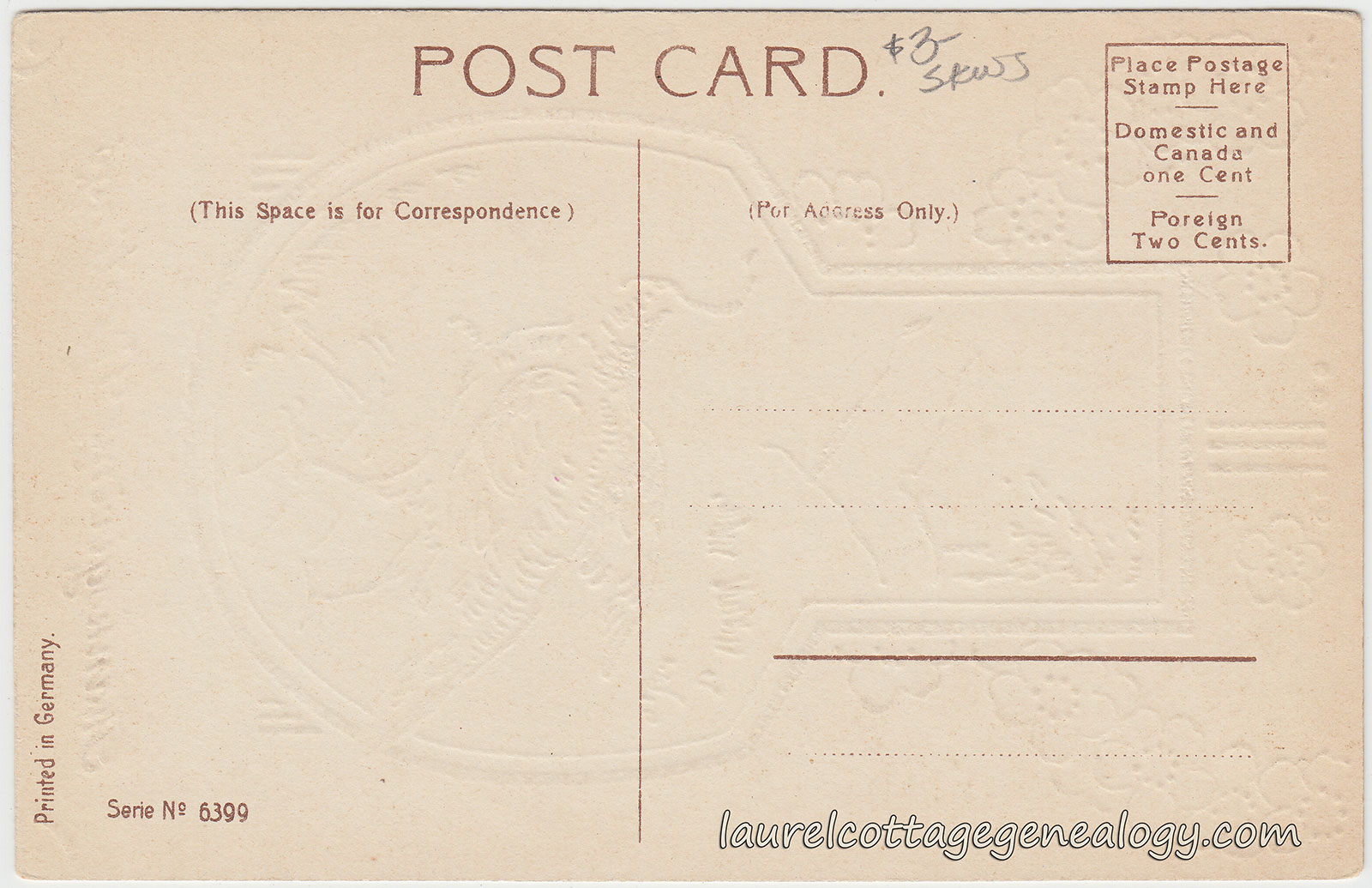
Divided back, embossed, unused postcard. Publisher unknown. Printed in Germany. Series 6399. Circa 1907 – 1914.

Price:  $10.00

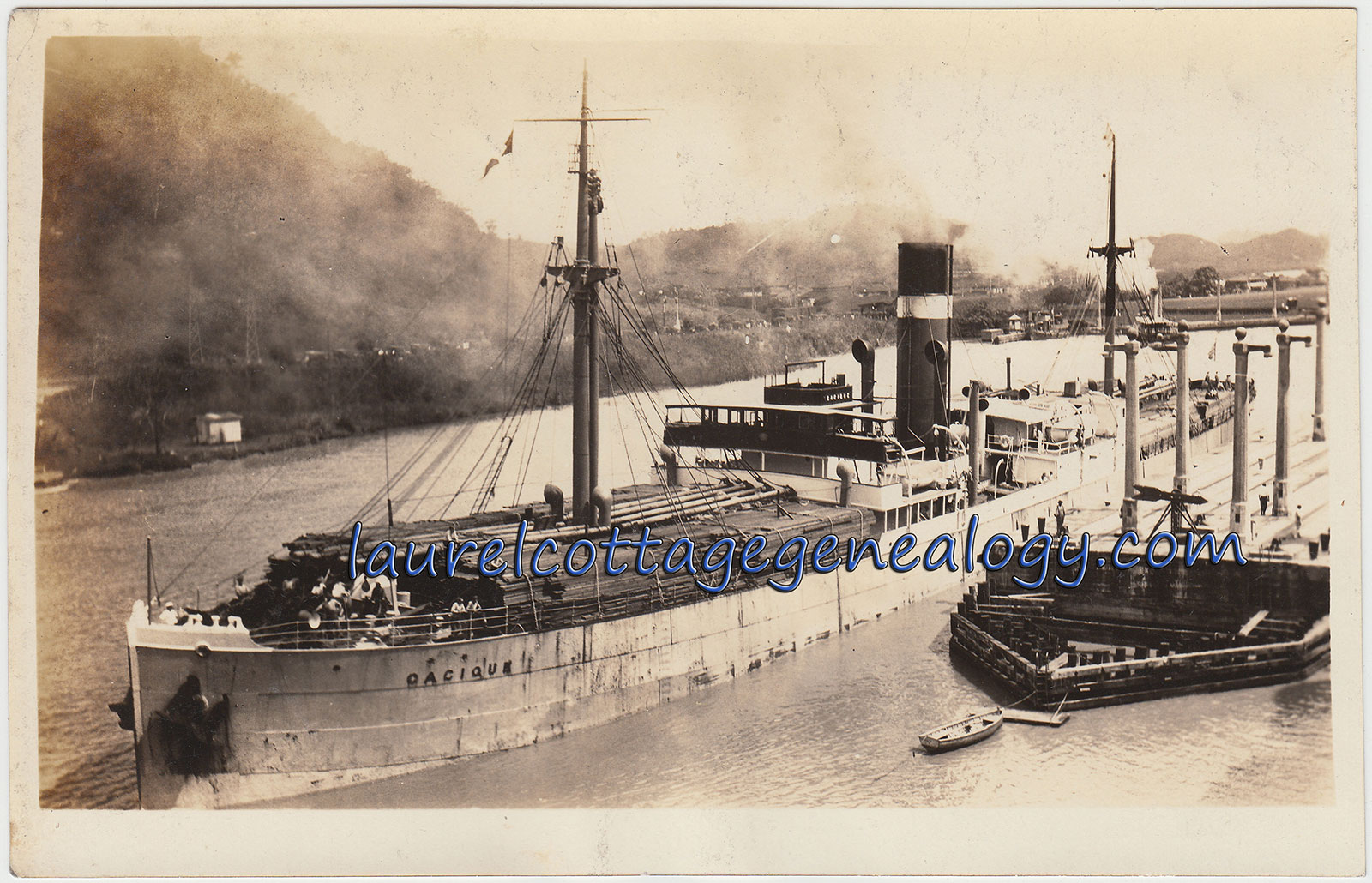
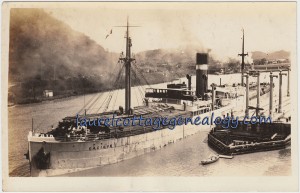
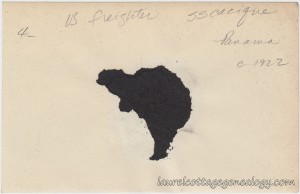
S.S. Cacique At Panama

SS Cacique bwm

Old snapshot, sepia-toned, white border. Circa 1922.    Size:  5 and 1/2 x 3 and 1/2″

Condition:  Good though “wavy” overall (does not lay flat). This photo was taken from someone’s photo album or scrapbook. Small crease in top left corner of white border. Click on image to enlarge for details.

Availability status:  SOLD

S.S. Cacique:  built in 1910 by the Short Brothers of Sunderland, England; 6,202 gross tonnage; owned by W.R. Grace & Co., purchased in 1914 from New York & Pacific Steamship Co. (Ltd.) a subsidiary of W.R. Grace & Co.; requisitioned by the United States Navy 1918-1919; returned to her owner after her navy service, scrapped in 1934 at Osaka, Japan.

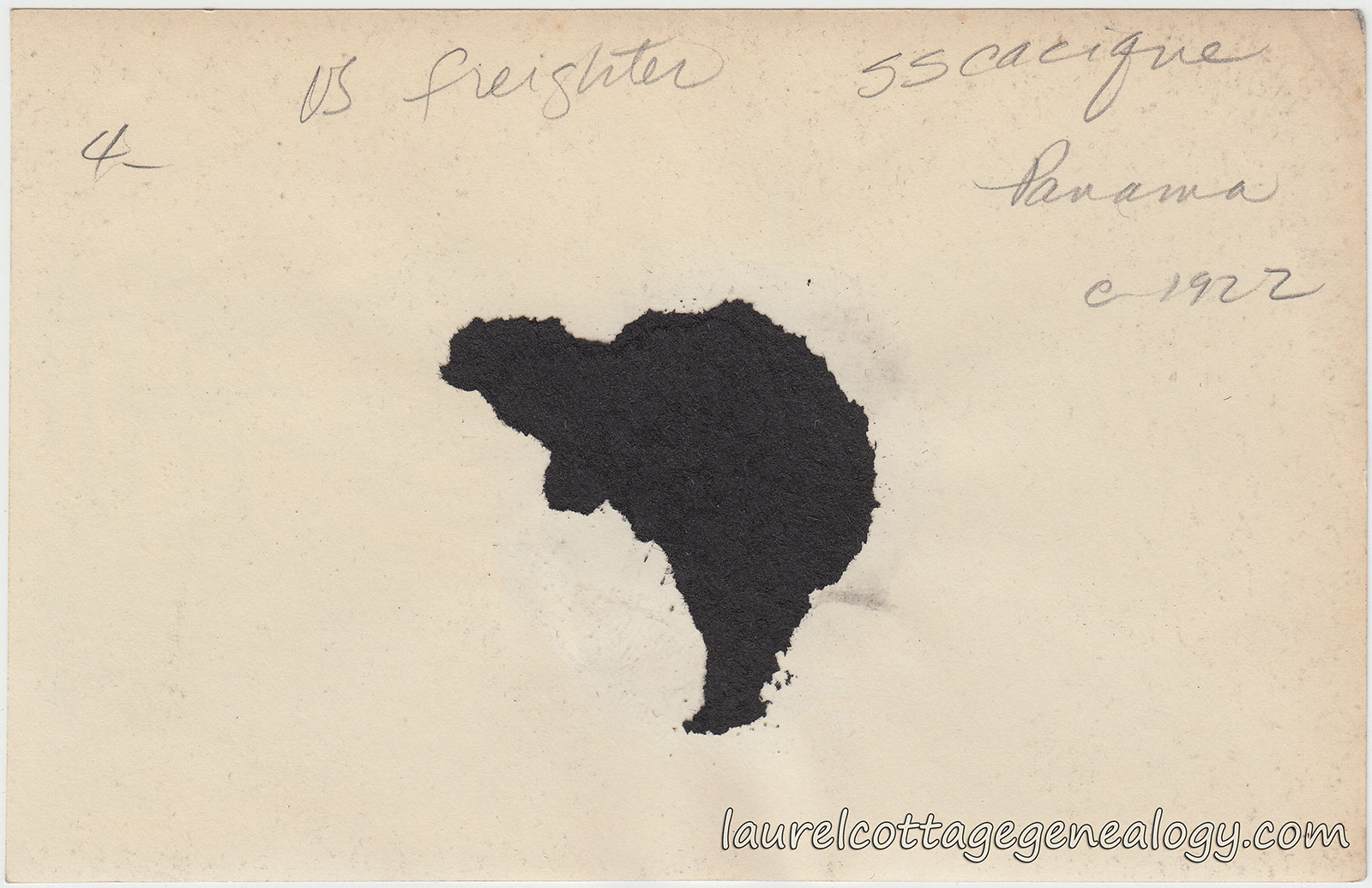
This photo was an exciting and rare find at an antique and vintage paper fair in California. As of the date of this post, it appears to be only the second one in existence of Cacique, (the other is a US Navy photo) and if so, the only one with the view of her name on the hull! The clarity and details are incredible. On the back is written, in pencil:  “US freighter, SS Cacique, Panama, c. 1922.”  Update:  (See the comments on this page from Alan G. and Alan R. There are other photos still in existence.)
SS Cacique p2

S.S. Cacique was owned by W.R. Grace & Co., a company founded in Peru by Irish brothers, William Russel Grace (1832-1904) and Michael Paul Grace (1842 – 1920). The brothers got their start in the mid-19th century using sailing ships to transport guano (among other items), after initially working as chandlers (dealers in ship supplies). While their Peruvian based ventures prospered Michael Grace stayed in Callao to look after the company’s interests, and brother William went to New York, establishing W.R. Grace & Co. in 1865. William R. Grace became the first Catholic Irish-born mayor of New York City, elected in 1880, and was elected a second time in 1884. It was during his second term that the Statue of Liberty was received as a gift from France. A philanthropist and humanitarian, William R. Grace, with the help of his wife and brother, founded the Grace Institute in New York City in 1897, an educational and vocational school for immigrant women, whose legacy continues today. (As per usual, we see how one photo, postcard, trade card or whatever leads us down some totally unexpected paths!)

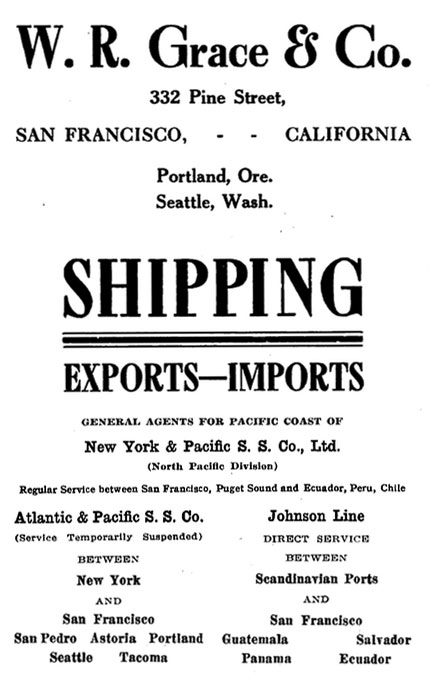
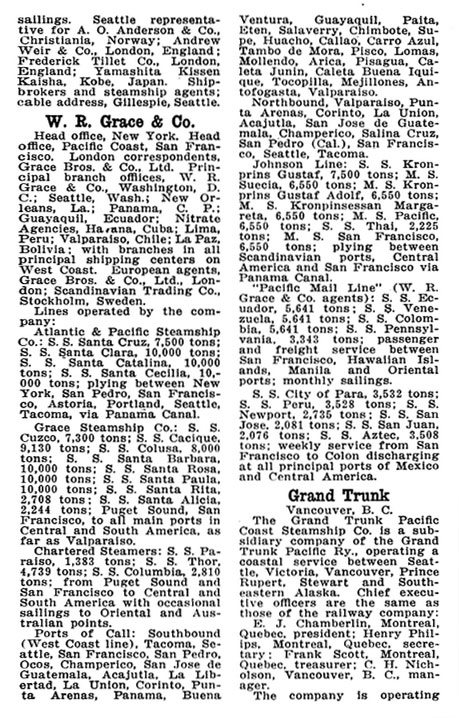
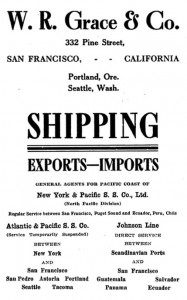
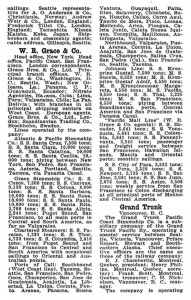
To follow the history of a shipping company can be understandably a bit of a complicated process; it’s a topic not easily researched within a week or two, what with ship name changes, subsidiaries, chartered ships, etc. all interwoven and interdependent with trade and shipping law, and in general influenced by and influencing the political, economic and social scene of the day. For a fascinating and in-depth look at the earlier Grace years, see author Lawrence A. Clayton’s Grace:  W.R. Grace & Co., the Formative Years, 1850 – 1930.  But just to clarify one point on Cacique’s ownership:  According to a Who’s Who In America entry, William R. Grace established the New York & Pacific Steamship Co. (Ltd.) in 1891. A separate source, a 1915 U.S. Congress publication regarding Foreign Vessels Admitted To American Registry, under the Act of August 18, 1914 shows Cacique:  Rig:  Steam Screw. Service:  Freight. Gross tons:  6206. Net tons:  4543. When built:  1910. Home port:  New York, NY. Present owner:  W.R. Grace & Co. Former owner:  New York & Pacific Steamship Co. (Ltd.) Former flag:  British.”  So, while Cacique changed flags and the official ownership name in 1914, as evidenced by the ad and text below from the Frank Waterhouse & Co. publication, the vessel’s parent company had not changed.

1917 advertisement and entry shown in Frank Waterhouse & Company’s Pacific Ports. A Commercial Geography, Commercial Dictionary, Transportation Guide and Marine Manual of the Pacific Ocean, with Full Information for Importers and Exporters.
Note the subsidiary companies (specifically New York & Pacific S.S. Co.)
WR Grace & Co AdWR Grace

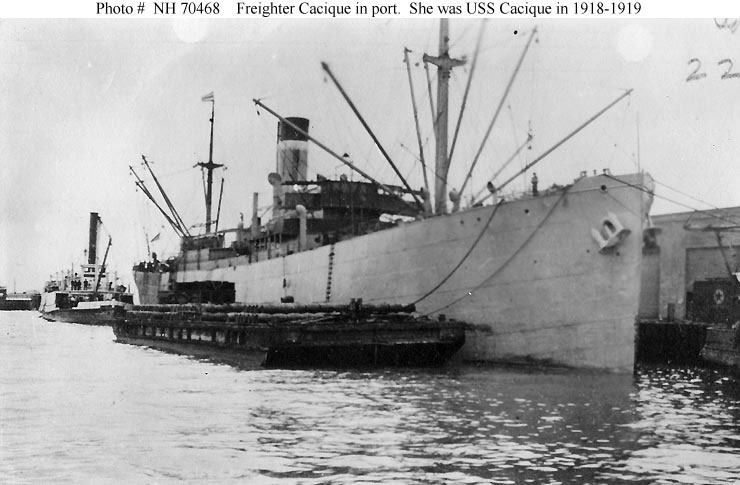
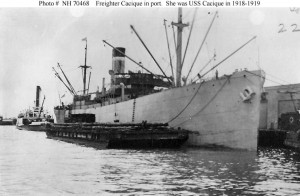
United States Navy photo of U.S.S. Cacique (ID 2213) during her WWI service. This photo may have been taken at the time of her inspection by the 12th Naval District on December 27, 1917. Cacique made two round-trip voyages between the United States and France during the remainder of World War I and the first months after the Armistice in November 1918.
US Navy photo of USS Cacique

Regarding the smokestack colors:  The Grace line’s steamship colors changed in 1913 from green with a black top to the smokestack that we see in the top photo which, if we could see it in color, would show what became known as Grace’s signature stack colors (used from 1913-1969) of green with a white band and black top. The excellent The Ships List website contains detailed entries for the numerous vessels in the Grace Line. Cacique in these photos here is not to be confused with two other Grace ships under the same name. The first was a vessel built in 1893 that was lost to fire in 1908 off of the Ecuador coast; (owned by New York & Pacific Steamship Co., Ltd. and listed as chartered by W.R. Grace & Co. at the time of her unfortunate demise, which tragically included lives lost); the other Cacique being the ship Garfield, built in 1918, renamed Nosa Chief in 1929 and then Cacique in 1935, and scrapped in 1946. Also, not to be confused with another Cacique:  built by Swan, Hunter & Wigham Richardson, Ltd. in Newcastle, England 1908, sunk by a torpedo from a German submarine on February 20, 1917, (21 lives lost) and owned at the time of her loss by Cie. Générale Transatlantique. (Cie. is the french abbreviation for company.)

Sources:  USS Cacique (ID-2213). n.d. http://en.wikipedia.org/wiki/USS_Cacique_%28ID-2213%29. (accessed November 1, 2014).

“Grace Line (W. R. Grace & Co.), New York, 1882 – 1869.”  The Ships List. Web accessed November 10, 2014. [http://www.theshipslist.com/ships/lines/grace.shtml]

William Russell Grace. n.d. http://en.wikipedia.org/wiki/William_Russell_Grace. (accessed November 2, 2014).

Michael P. Grace. n.d. http://en.wikipedia.org/wiki/Michael_P._Grace. (accessed November 2, 2014).

Clayton, Lawrence A. Grace:  W.R. Grace & Company. The Formative Years, 1850-1930. Ottawa, Illinois:  Jameson Books, 1985. Web accessed Nov. 1, 2014. (Google eBooks.)

United States. Cong. House of Representatives. Foreign Vessels Admitted To American Registry. 63rd Cong., 3rd sess. Washington:  GPO, 1915. Web accessed Nov. 2, 2014. (Google eBooks.)

Frank Waterhouse & Company’s Pacific ports. ed. Welford Beaton. 3rd ed. Seattle:  Terminal Publishing Company, 1917. Web accessed Nov. 2, 2014. (Google eBooks.)

Baltimore. The Merchant’s and Manufacturers Association of Baltimore. Vol. 15, No. 11 (September 1922):  p. 25. Web accessed November 10, 2014. (Google eBooks.)

Moody, John. Moody’s Analyses of Investments, Part 2. Moody’s Investors Service. (1917):  p. 2013. Web accessed November 10, 2014. (Google eBooks.)

Who’s Who in America. A Biographical Dictionary of Notable Living Men and Women of the United States, 1901-1902. ed. John W. Leonard. Chicago:  A.N. Marquis & Company, 1901. Web accessed Nov. 2, 2014. (Google eBooks.)

The New York Lumber Trade Journal, Vol. 60. (March 1, 1916):  p. 33. Web accessed November 10, 2014. (Google eBooks.)

Naval History Heritage Command. Department of the Navy – Naval Historical Center. US Navy photo of USS Cacique. Web accessed November 10, 2014. [http://www.history.navy.mil/photos/sh-civil/civsh-c/cacique.htm]

“Cacique.” Tyne Built Ships.  Web accessed November 23, 2014. [http://www.tynebuiltships.co.uk/C-Ships/cacique1908.html]

Taking Care Of What He Has

This is the first post in a new category here at Laurel Cottage, under the heading of Unusual Occupations. I’ve been meaning to do this for awhile; there are some eye-catching entries out there on old census records, city directories and that type of thing.

Taking Care occ1

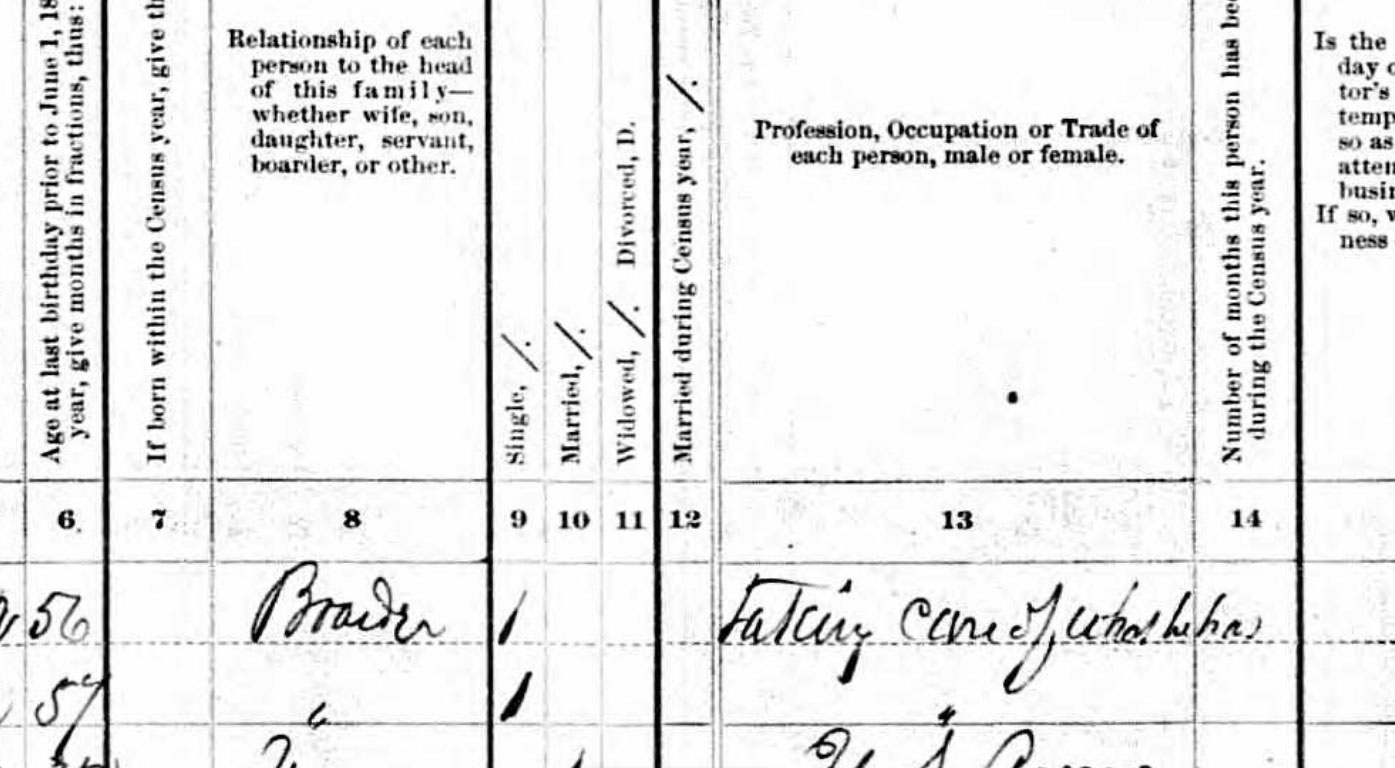
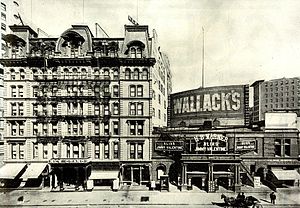
This one could be interpreted a couple of different ways, and shows John J.[?] Duryea, age 57, along with (one assumes) a brother or cousin or some other male relative, S. Duryea, age 56. Their occupations were listed as  “taking care of what he has.”  How funny to see an occupation transcribed as such! This 1880 Federal Census for New York City shows that the two Duryea men were boarding with S. M. Tweed, age 30, occupation printer. Perhaps the Duryeas were caretakers working for Mr. Tweed; on the other hand, perhaps the entries meant they were taking care of their own things, in which case, one might wonder if they were unemployed. The address is given on the census as the Grand Hotel, at 1226 Broadway, and the several census pages for this location show 115 occupants at that time. This building was designated as a city landmark in 1979 and added to the National Register of Historic Places in 1983. Below is a 1910 photo from Wikipedia showing the hotel on the left.

Grand Hotel in 1910

Taking a quick look at the next available Federal Census, the 1900, shows a listing for a John J. Duryea, age 70 and wife Julia, age 49, living in Middletown, New York. This may or may not be the same John J., but his occupation is listed as landlord. So, that is the third possibility for what was meant on the 1880. That “taking care of what he has” could have meant landlord.

Sources:  Year: 1880; Census Place: New York City, New York, New York; Roll: 880; Family History Film: 1254880; Page: 289C; Enumeration District: 289; Image: 0519. (Ancestry.com)

Grand Hotel (New York City). n.d. http://en.wikipedia.org/wiki/Grand_Hotel_%28New_York_City%29. (accessed November 23, 2014).

Year: 1900; Census Place: Middletown, Orange, New York; Roll: 1140; Page: 4A; Enumeration District: 0025; FHL microfilm: 1241140. (Ancestry.com)