Genealogy Services, Old Photos, Postcards, Trade Cards, Etc.

George’s Handmade Card

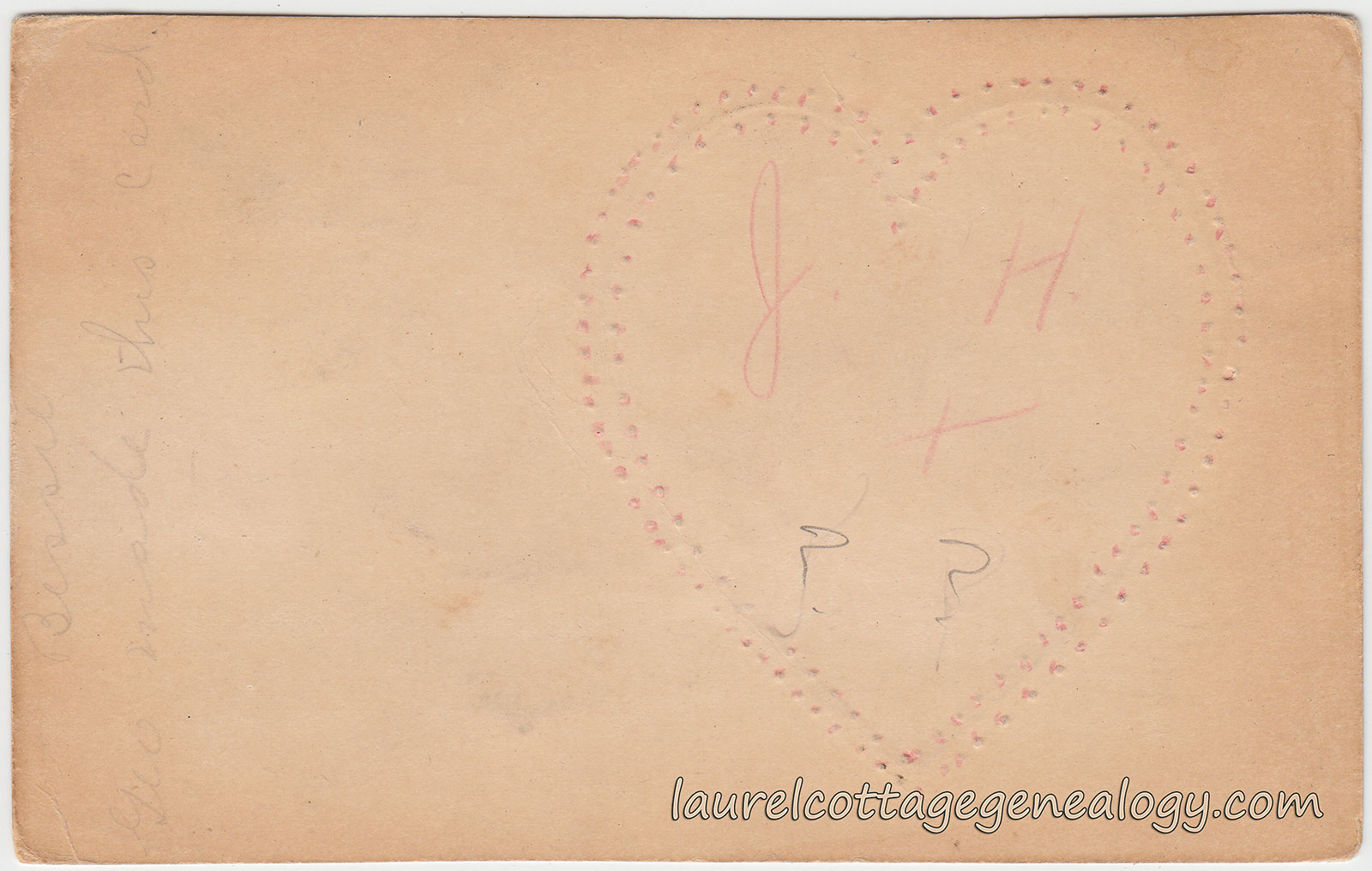
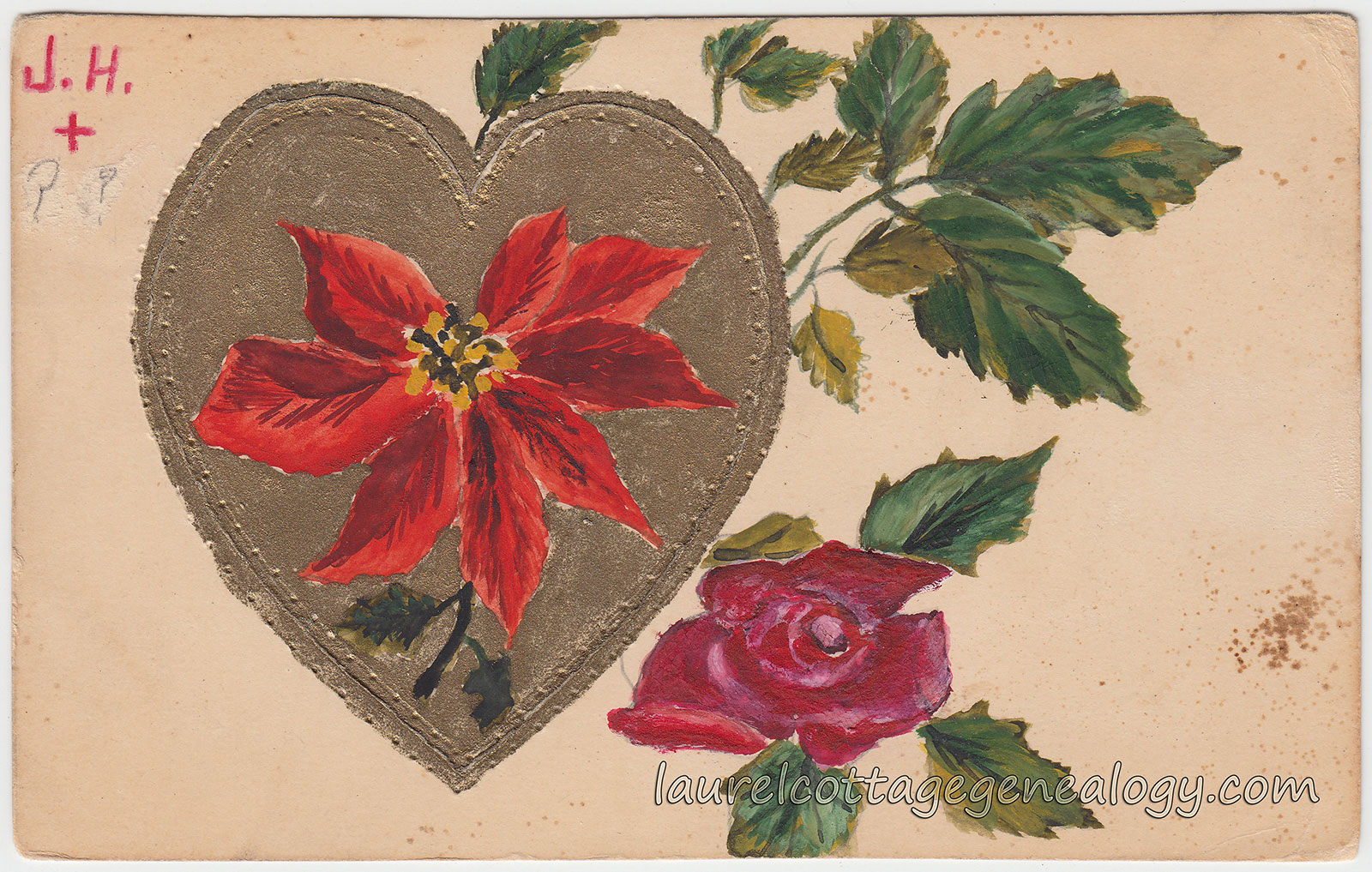
Georges Handmade Card c1Georges Handmade Card c2

Handmade card. Circa early 1900s. Size:  About 3 and 1/2 x 5 and 1/2″

Price:  $7.00

On the reverse:   “Bessie   Geo made this card.”       “J. H. + ? ?”

It’s not often that you come across handmade cards and here’s a nice one, kind of funny, too. The artwork is pretty good, the leaves at the top, in particular. That would be a poinsettia in the gold heart, and of course a rose. If you can imagine one possibility for the life of this card: It gets made, maybe for Christmas, but not sent, handed off to some family member who’s going to use it later for Valentine’s Day. That person puts their initials and their sweetheart’s initials on it,  “J. H. + “whoever.” Then the boyfriend or girlfriend falls out of favor, the initials get erased, (top left front) and J. H. decides he or she will leave this sweetheart question to be determined in the future. Later, another family member comes across it and sends it to Bessie. (See the writing on the left side of the back.) And how about that embossing, pretty good, eh?

Lydia M. Wickline

Lydia M Wickline cc2 (2)Lydia M Wickline cc2

Price:  $15.00 

Size:  About 2 and 1/2 x 3 and 3/4″

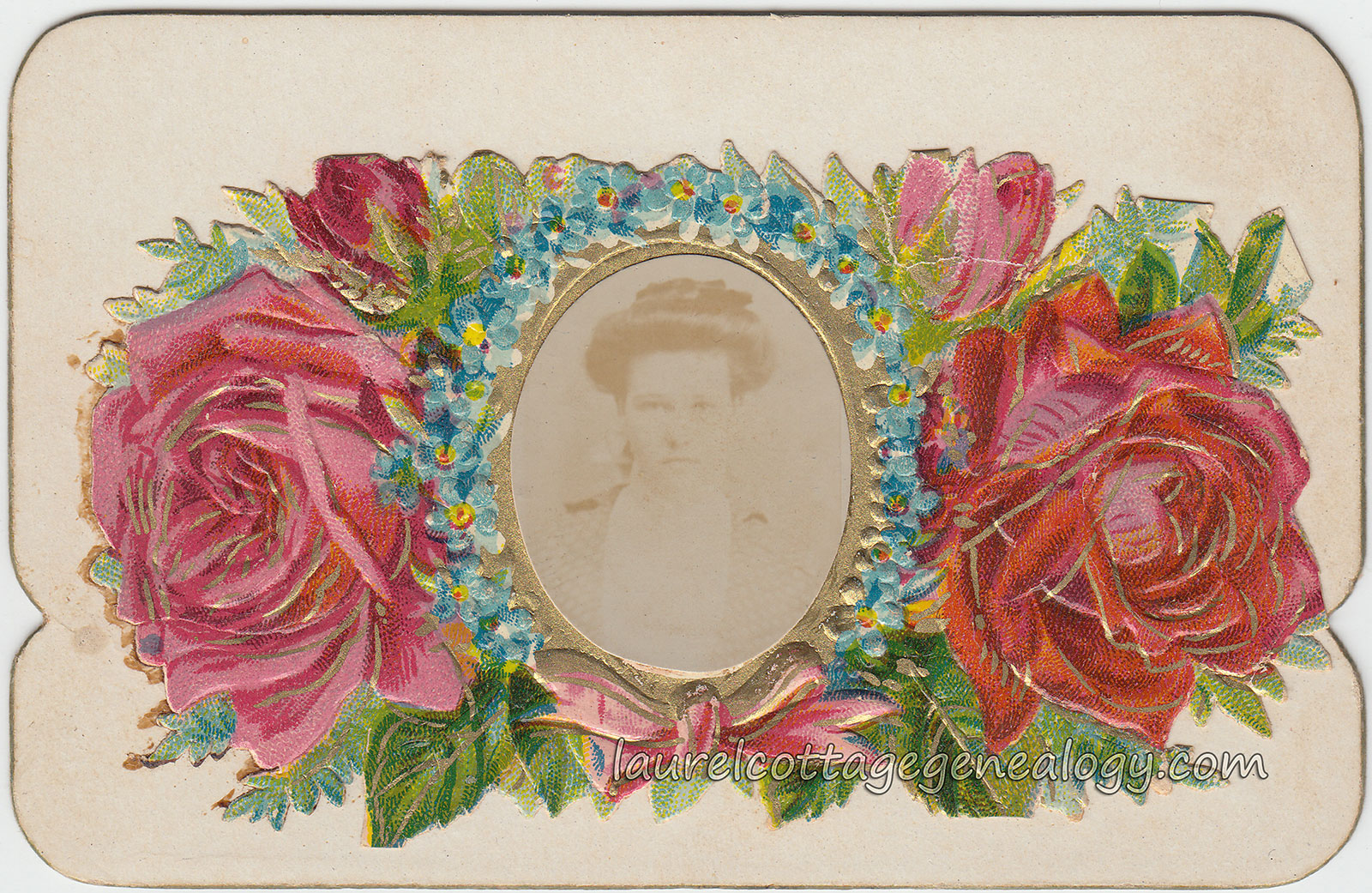
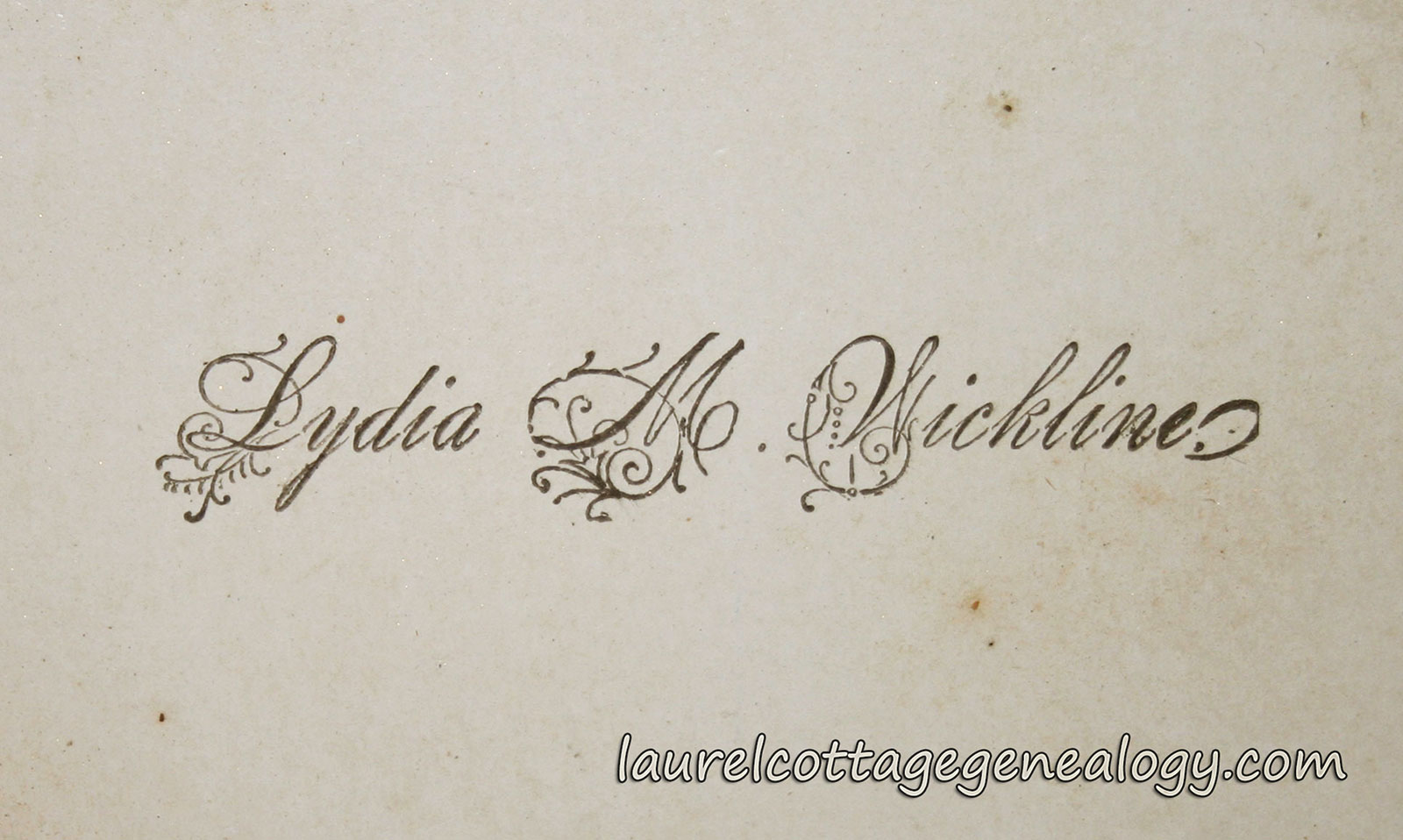
This was a great find:  A calling card with a photo! The card bearer’s name appears as Lydia M. Wickline, and her photo, which was glued onto the top part of the card, shows a beautiful young woman in a “Gibson Girl” hairstyle. The expression is open to interpretation, as always. Does she have a little bit of a sadness about the eyes? Maybe, maybe not, in any case it’s a lovely image, even though quite faded, and is surrounded by forget-me-nots and roses with a bow underneath the oval. For me, the contrast between the faded portrait appearing in the center of the brightly colored flowers and greenery enhances the “looking back in time” feel. This is the type of calling card consisting of two parts, where the top die-cut of embossed flowers with photo, is glued to the bottom heavier card containing the name. It opens about three quarters of the way. So as not to damage the card, a photo was taken of the name and cropped as shown above. (The color on the second image is incorrect – in reality it’s the same as the background on the top one. My Photoshop expert was out the door already.)

As to the identify of the young lady, this was not verified but the most likely candidate is Lydia M. Kirby who married Henry A. Wickline in Summers County, West Virginia December 24, 1903. The marriage record shows both were born in Monroe, West Virginia; Henry is age 21, and Lydia age 17; Henry is the son of John Wickline, the mother’s name is not readable (Va?); Lydia is the daughter of James C. and Eliza Kirby. The Wickline name seems to come up most frequently in West Virginia, and others were looked at, of course, but the age or middle initial or spelling of first name did not coincide. So, if this is the correct Lydia, then this photo could have been taken just before or after her marriage, and the calling card made around 1904.

Source:  “West Virginia Marriages, 1780-1970,” index, FamilySearch (https://familysearch.org/pal:/MM9.1.1/FTV8-12S : accessed 22 Jul 2014), Henry A Wickline and Lydia M Kirby, Summers, West Virginia, United States; citing ; FHL microfilm 589346.

Bon Voyage

Bon Voyage p1

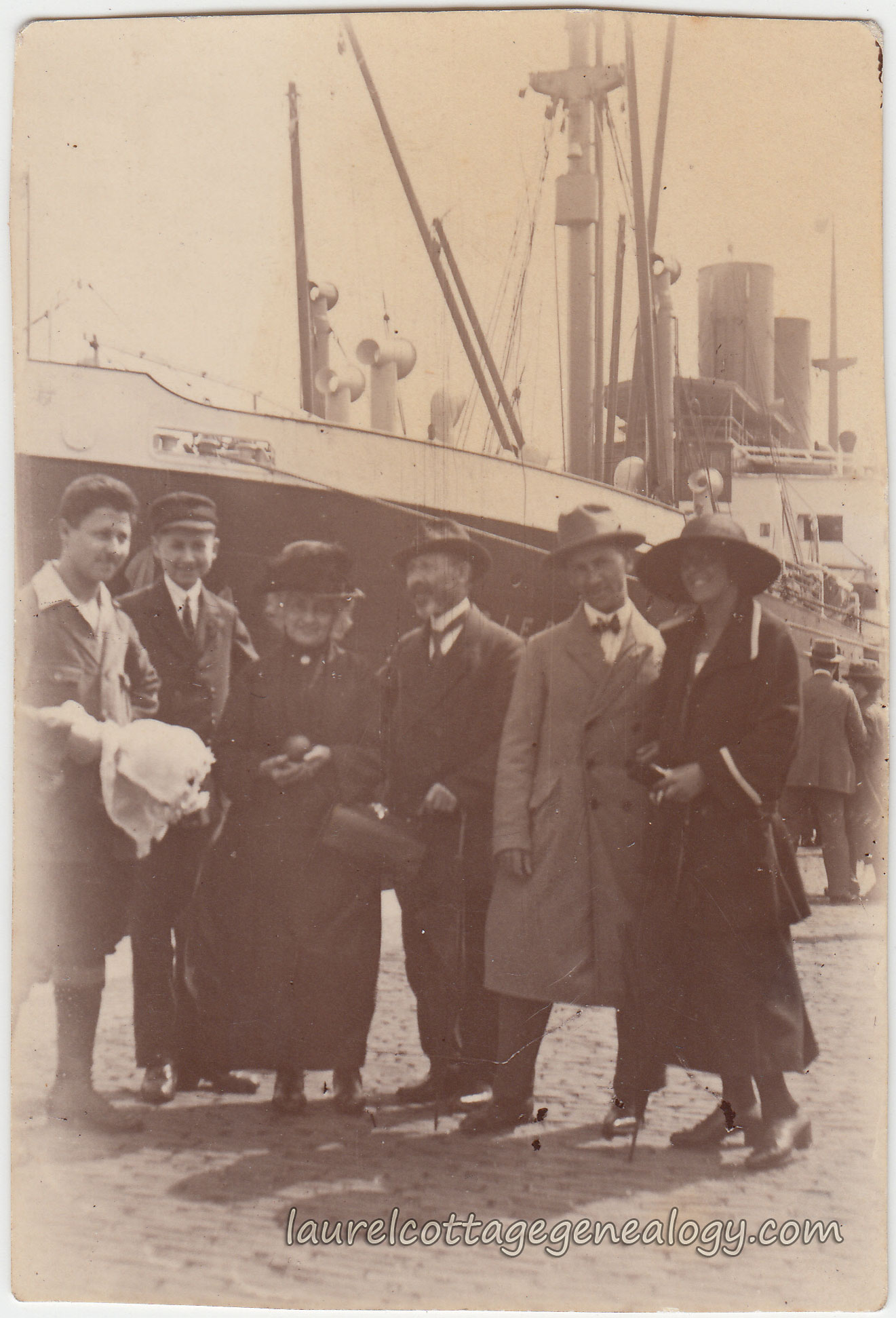
Photo, circa early 1900s. Size:  About 3 and 1/8 x 2 and 1/8″

Price:  $10.00

Sepia-toned old photograph from approximately the early 1900s, showing a group photo of six persons who appear to be about ready to board a steamer. There is an older couple in the center, a younger couple on the right, a young gentleman second from the left who looks to be in uniform (perhaps he is a crew member) and a young gentleman on the far left in knickers. In the photo we also see a couple of umbrellas, some different style ties for the men (one is a small bow tie), two different style hats for the ladies, a broad brimmed hat for the younger woman and a more compact style for the older woman. All in the group are smiling. What is the guy on the left holding? And what is the older woman holding? (An apple?) And it looks like the pavement the people are standing on is of brick or stone.

We can see part of the lettering for the name of the boat. It looks like L-E-R? And we can see two smoke stacks, and notice the portholes. There’s a couple in the background who appear to be about to board the ship, and this is why my guess is that this is a photo taken before the voyage. Maybe the guy on the left was the driver for the two couples, and to his left a member of the crew.

If anyone can provide any details about this photo, please let me know.

From Menaggia, Italy To Honolulu, Hawaii

Mennagia Italy pc1Menaggia Italy pc2

Photos above from Bishop’s Reminiscences of Old Hawaii

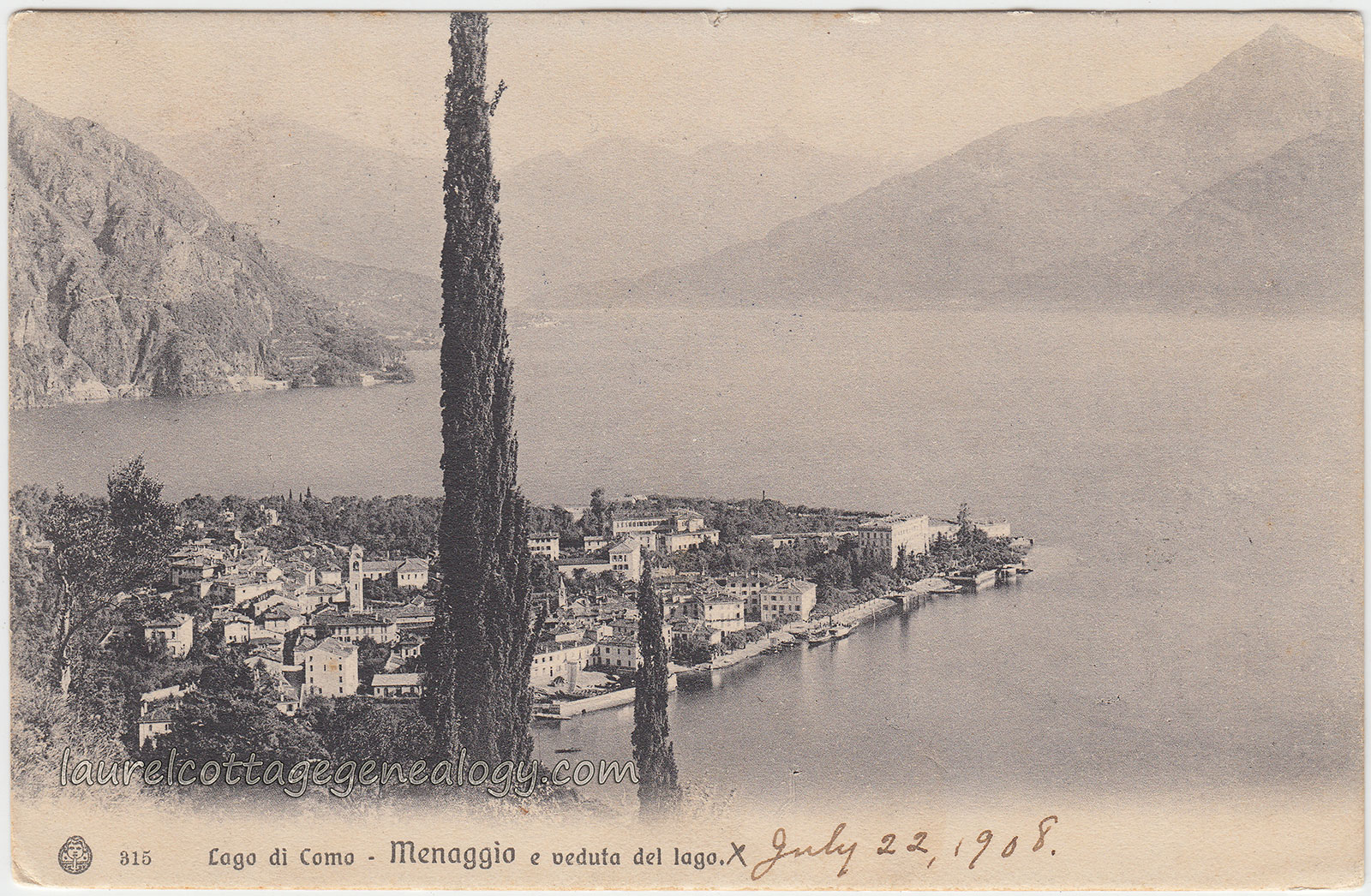
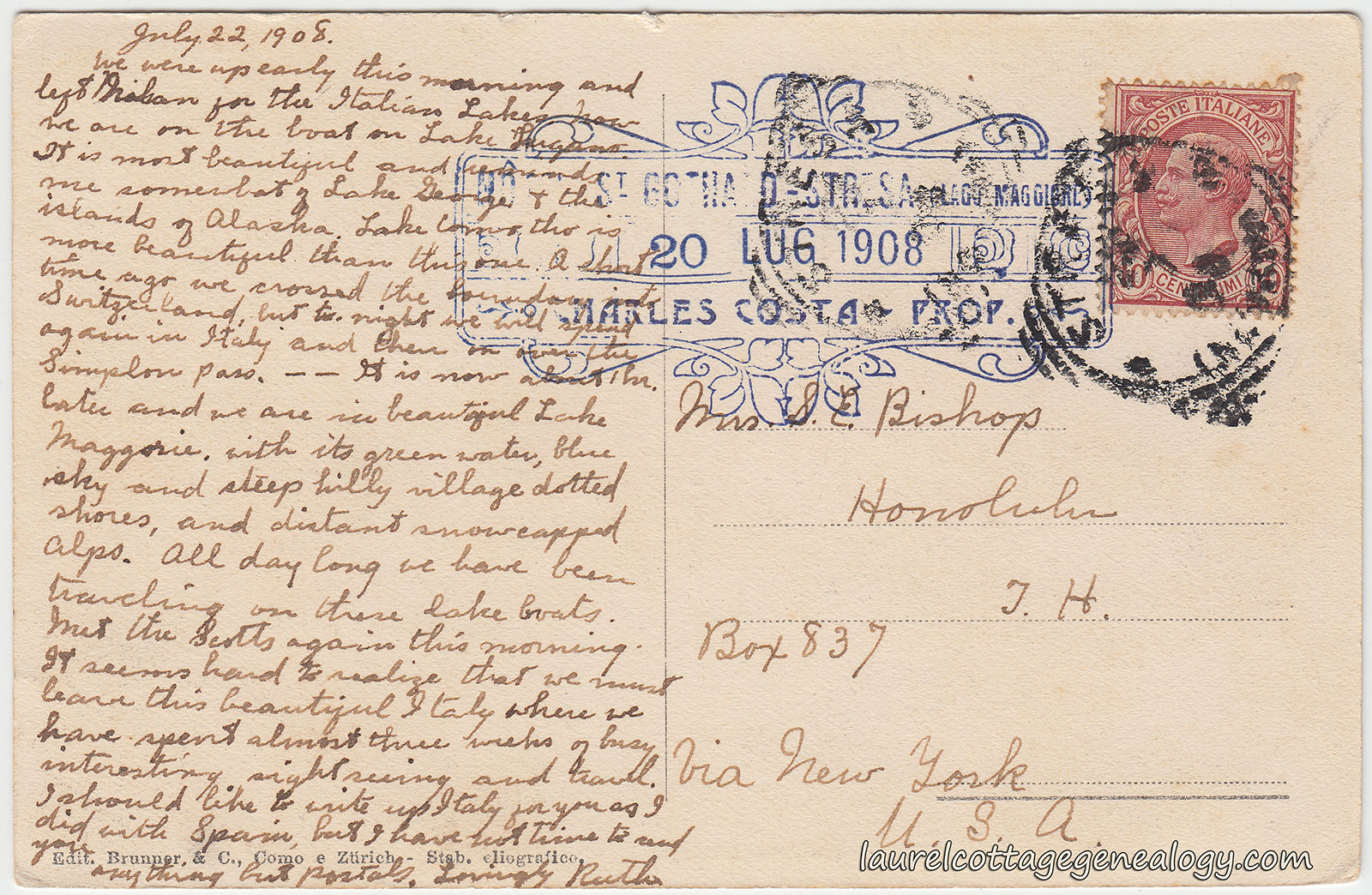
Divided back, used postcard. Postmarked Stresa, Piedmont Region, Italy, July 1908. Publisher: Brunner & Co. Como and Zurich.

Price:  $30.00

Here’s an Italian postcard with a major Hawaii connection:

“Lago di Como – Menaggio e veduta del lago”   Lake Como – Menaggio and the view of the lake.

This 1908 postcard in black and white shows Lake Como and the town of Menaggio, Italy with lovely verse by the sender:

“July 22, 1908. We were up early this morning and left  [?] for the Italian Lakes. Now we are on the boat on Lake Lugano. It is most beautiful and reminds me somewhat of Lake George & the islands of Alaska. Lake Como tho is more beautiful than this one. A short time ago we crossed the boundary into Switzerland, but to night we will spend again in Italy and then on over the Simplon Pass. – – It is now about 1 hr. later and we are in beautiful Lake Maggorie with its green water, blue sky and steep village dotted shores, and distant snow capped Alps. All day long we have been traveling on these lake boats. Met the Scotts again this morning. It seems hard to realize that we must leave this beautiful Italy where we have almost three weeks of busy interesting sightseeing and travel. I should like to write up Italy for you as I did with Spain, but I have not time to send anything but postals. Lovingly Ruth.”

Addressed to:  “Mrs. S. E. Bishop, Honolulu, T. H. Box 837 via New York”

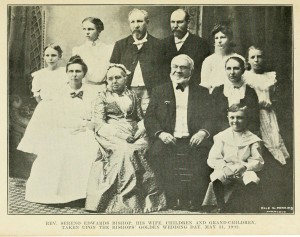
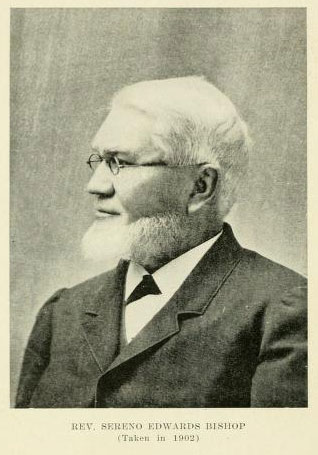
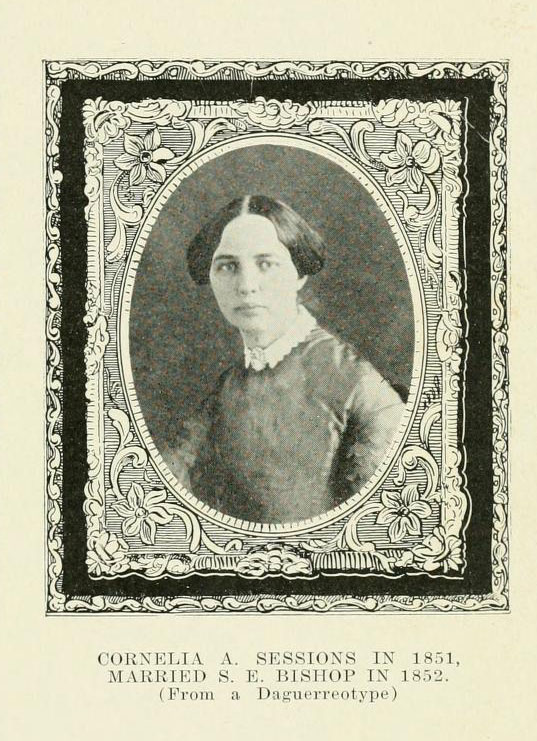
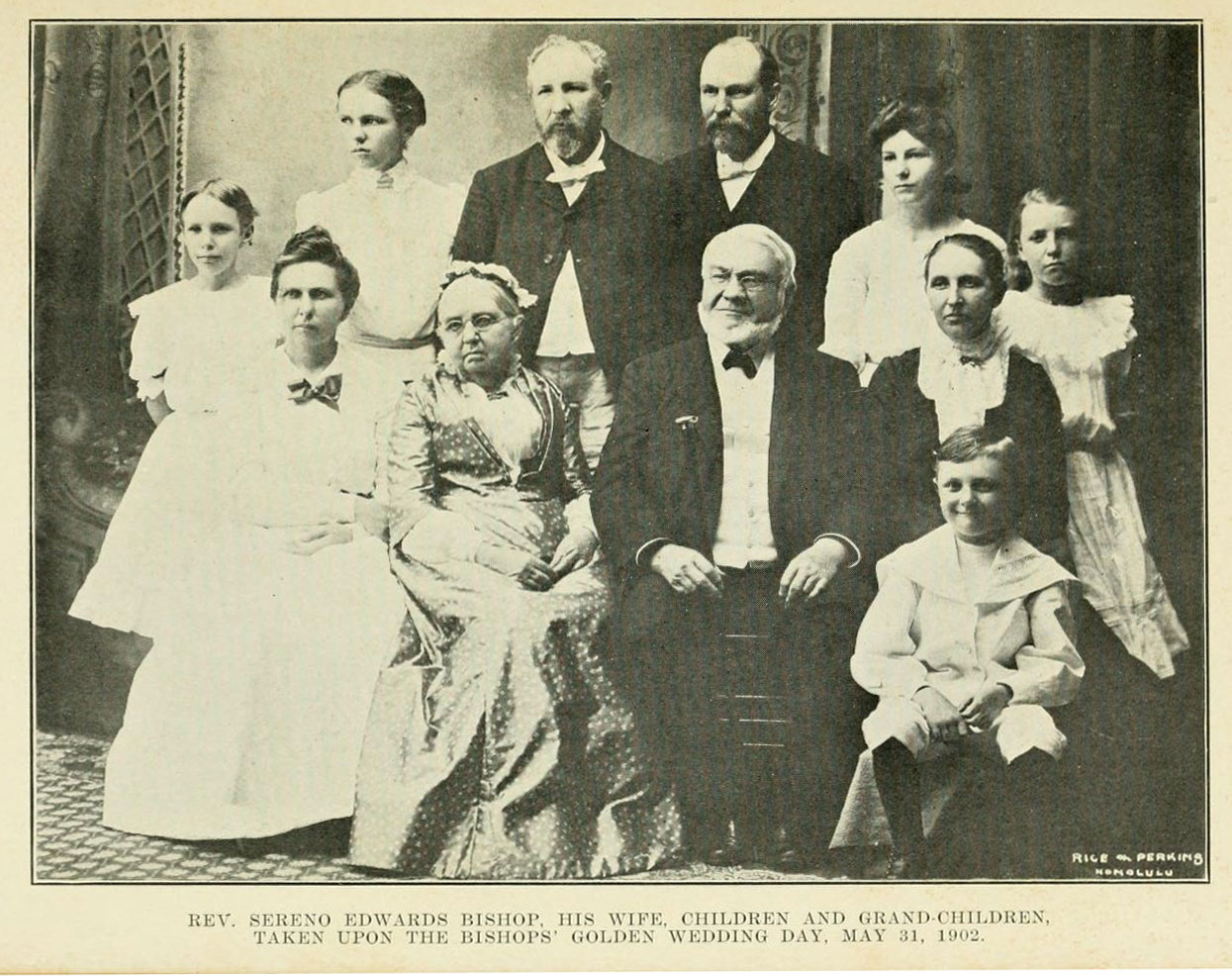
After looking through a number of online records, I believe the sender to be Ruth Cornelia Shaw, and the addressee her grandmother Cornelia Ann (Sessions) Bishop, wife of the Rev. Sereno Edwards Bishop. S. E. Bishop was a Protestant missionary, born February 7, 1827, Kaawaloa, Hawaii of missionary parents Artemas Bishop and Elizabeth (Edwards) Bishop, the parents being part of the “second wave” of early missionaries to come to the Islands. A fascinating account by S. E. Bishop appears online, entitled Reminiscences of Old Hawaii, which includes photographs of himself, his wife, the couple on their anniversary with their children and grandchildren, his father Artemas Bishop, and the mission residences. S. E. Bishop, according to the norm for missionary children, was sent outside of the Islands, in his case back to the U.S., for his formal education, where he met his future wife (the addressee of this postcard) Cornelia Ann Sessions. They were married May 31, 1852. Cornelia Ann was the eldest daughter of the Rev. John Sessions and Eliza (Winne) Sessions. Cornelia was born in New York, January 12, 1826, and died in Honolulu, February 29, 1920.

Bishop’s Rings

Many references can be found online for Sereno E. Bishop. One of the most interesting things about him though, is that he is the person that became internationally famous for correctly identifying the reason for the “circles around the sun” which appear after a volcanic eruption. These circles were named after him and are called “Bishop’s Rings.” Lorrin A. Thurston writes the preface for Bishop’s Reminiscences of Old Hawaii, and gives a wonderfully colorful first-hand account of the “halo-like rings possessing a metallic glitter, around the sun” and how “the whole western heavens glowed with the intensity of an incandescent electric light” because of which Thurston and the baseball team he was on at the time, were able to play ball later into the evening than normal. These, at the time unexplained, phenomena were the result of the August 26-27, 1883 Krakatoa eruption.

Granddaughter, Ruth Cornelia Shaw is the eldest daughter of Elizabeth Della (Bishop) Shaw and Jonathon Shaw, born May 27, 1885 and died January 23, 1932, both in Honolulu. She was a graduate of Columbia University in New York. Some quick city directory searches show her working as a teacher in Honolulu and later as having received her Masters Degree in Education in 1930 from the University of Hawaii. The online record for a Ruth C. Shaw, student, age approx. 21, in the Boston Passenger Lists is very likely our postcard sender. This record shows she traveled on S.S. Saxonia, from Liverpool, England on September 8, 1908, and arrived in Boston on September 17, 1908. This must have been the journey taken after having (reluctantly from the sound of it) had to leave the European trip that she so eloquently describes here, in part. Her grandmother Cornelia, would have been 82 years old when she received the card and probably not doing much traveling by that time. One imagines, from reading the postcard, that Ruth enjoyed writing, as much as Cornelia must have enjoyed receiving the prior “virtual tour” of Spain and the postcards she received like this one.
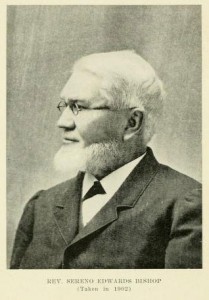
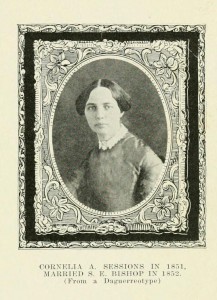
Soreno E BishopCorneliaBishop Family

Sources:  Bishop, Sereno E., “Reminiscences of Old Hawaii,” The Advertiser Historical Series, No. 1. Hawaiian Gazette Co., Ltd. (1916) Accessed 14 Jul 2014 (openlibrary.org).

Husted’s Directory of Honolulu and Territory of Hawaii. Honolulu Hawaii City Directory, 1903 and 1904, pp. 118 and 117. (Ancestry.com. U.S. City Directories, 1821-1989)

Ancestry.com. Honolulu, Hawaii Directory, 1890 [database on-line]. Provo, UT, USA: The Generations Network, Inc., 2000.Original data: Honolulu, HI, 1890. Honolulu, HI, USA: The Pacific Press Publishing Company, 1890.

“Hawaii, Deaths and Burials, 1862-1919,” index, FamilySearch (https://familysearch.org/pal:/MM9.1.1/FWZ8-PVM : accessed 30 Jun 2014), Sereno E. Bishop in entry for Cornelia Sessions Bishop, 29 Feb 1920; citing Honolulu, Honolulu, Hawaii, reference 2565; FHL microfilm 1712149.

Ancestry.com. Boston, Passenger and Crew Lists, 1820-1954. Original data: Boston, Massachusetts. Passenger Lists of Vessels Arriving at Boston, Massachusetts, 1891-1943. Micropublication T843. RG085. 454 rolls. National Archives, Washington, D.C.

“Directory of Officers and Students 1930-1931.” University of Hawaii Quarterly Bulletin, Vol. IX, Number 3. University of Hawaii (1930) p. 24. Accessed 20 Jul 2014. (evols.library.manoa.hawaii.edu).

Polk-Husted Directory Co.’s Directory of Hawaii and the Territory of Hawaii 1918, Vol. XXV. p. 707. (Ancestry.com U.S. City Directories, 1821-1989.)

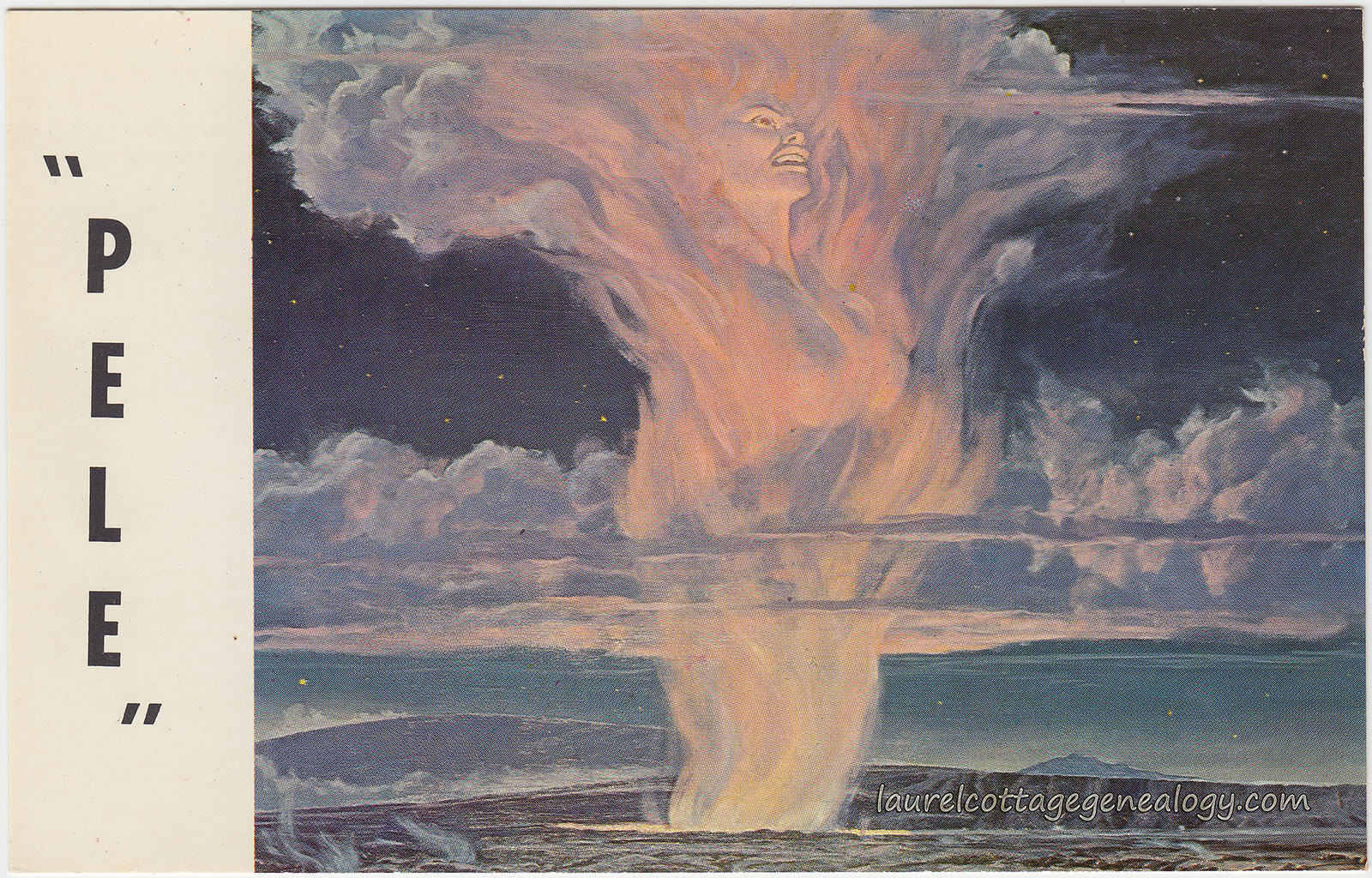
Pele By Artist Paul Rockwood

Pele pc1Pele pc2

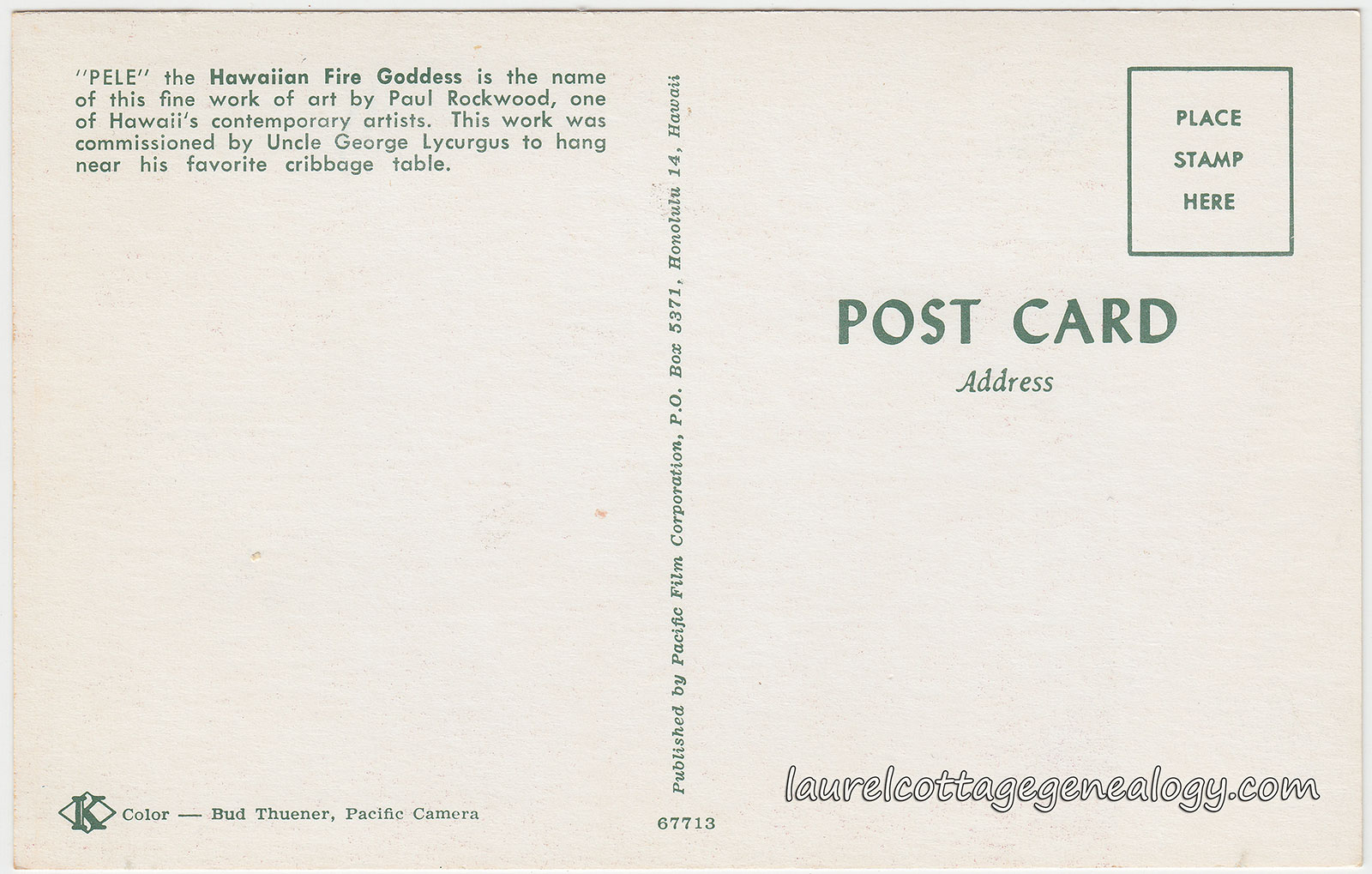
Divided back, unused postcard. Publisher:  Pacific Film Corporation, Honolulu, Hawaii. Series or number 67713. Color – Bud Thuener, Pacific Camera. Circa mid-1950s – 1960s.

Price:  $5.00

” ‘Pele’ the Hawaiian Fire Goddess is the name of this fine work of art by Paul Rockwood, one of Hawaii’s contemporary artists. This work was commissioned by Uncle George Lycurgus to hang near his favorite cribbage table.”

California-born artist, Paul Clark Rockwood (1895-1972) created some wonderful works of art, such as the one shown here on this postcard. (Check out the first link in sources below for three examples of his paintings of Mount Mazama.) There are numerous online references for his work, including a mention of him creating cartoons in Hollywood for a time.

And if you didn’t already know, you might have guessed, from the reference in the postcard caption above, that George Lycurgus (1858-1960), was a well-known figure (businessman) connected with Hawaii. Born in Greece, he came to the United States around age nineteen, and made his first trip to the Islands in 1889 – accidentally it is said, by way of a poker game. (While supervising on the loading docks, George was invited on board ship by some members of the Spreckles family, and hadn’t realized that the ship had set forth by the time they were out in the Pacific Ocean.) A great story, and evidently one of many, for this colorful man who had lived to be 101, and had played a very influential role in the early Hawaiian tourist industry.

Sources:  Rockwood Paintings. National Park Service. http://www.nps.gov/media/photo/gallery.htm?id=F2699A00-155D-4519-3EBD76C2749BD03C (accessed July 18, 2014).

George Lycurgus. n.d. http://en.wikipedia.org/wiki/George_Lycurgus (accessed July 19, 2014).

Fort Shafter, Honolulu

Fort Shafter Honolulu pc1Fort Shafter Honolulu pc2

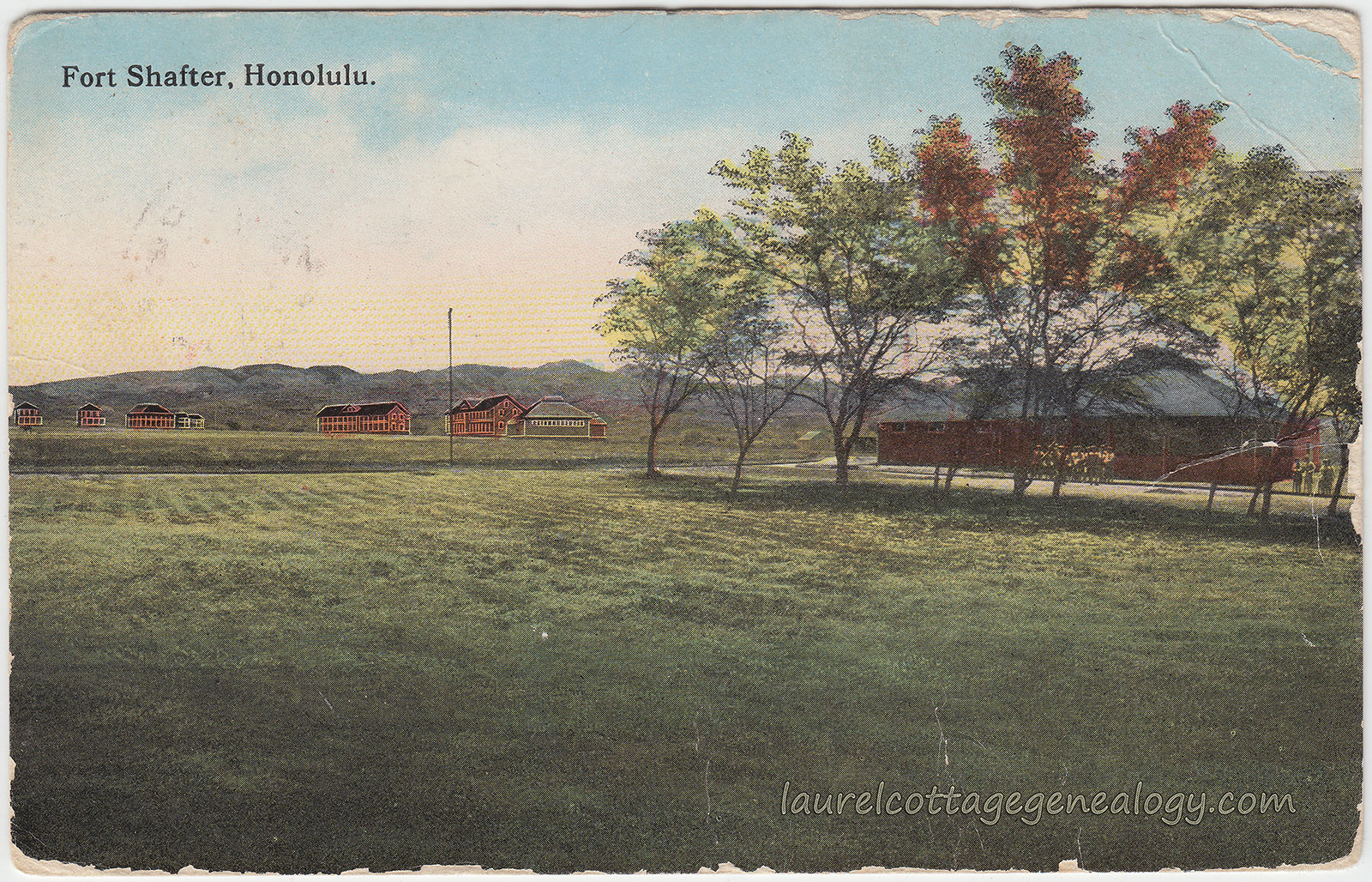
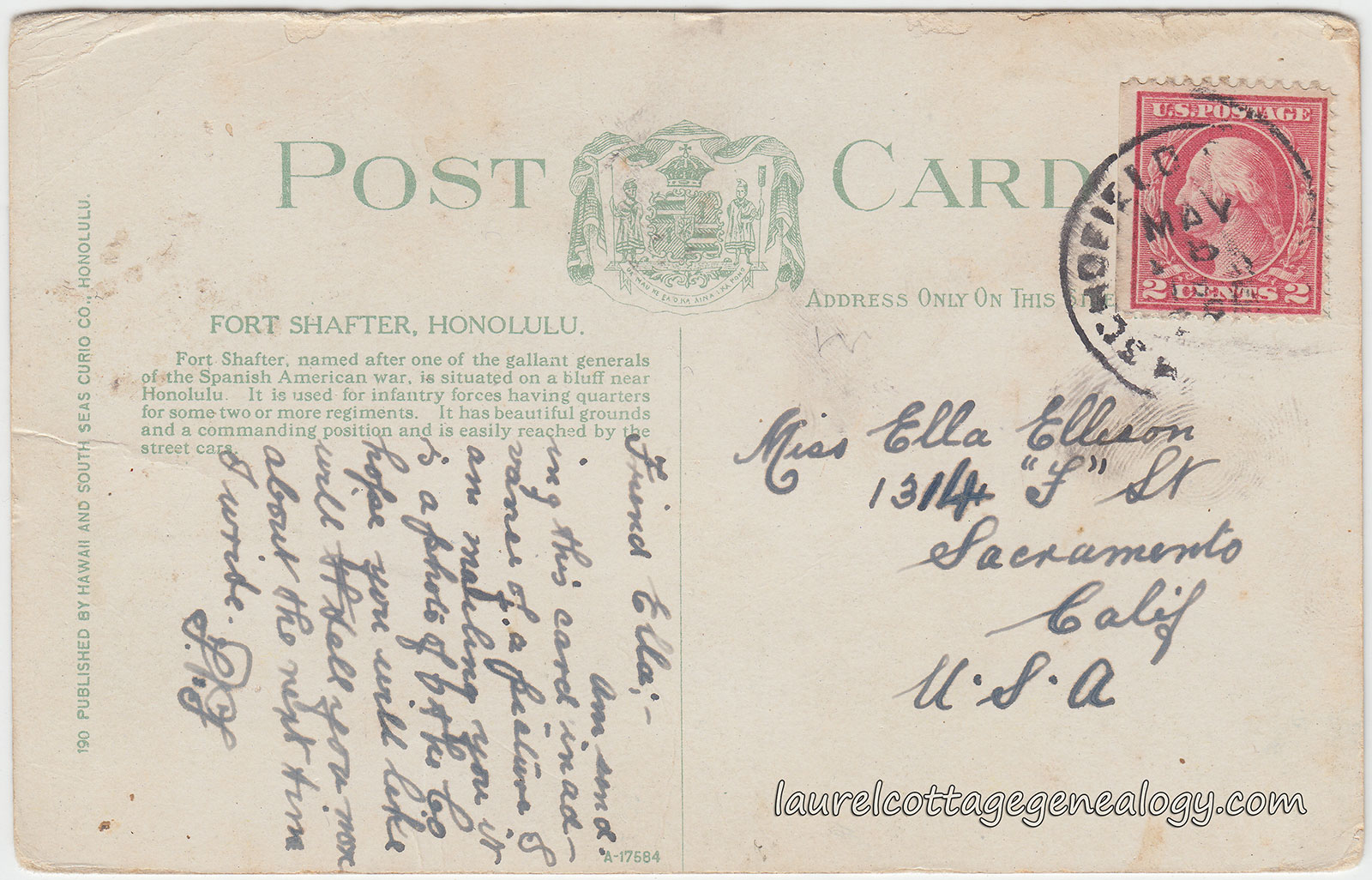
Divided back, used postcard. Postmarked May 1917 from Schofield Barracks, Honolulu, Hawaii. Publisher:  Hawaii And South Seas Curio Co., Honolulu. Series/number 190/A-17584.

Price:  $5.00

The postmark year on this one doesn’t show up but since the postcard has a two cent stamp, it would be from 1917 – 1919, when the postal rate was raised during WWI. The postmark shows Schofield which is Schofield Barracks, a U. S. Army installation in Honolulu. The caption shows:

“Fort Shafter, Honolulu. Fort Shafter, named after one of the gallant generals of the Spanish American war, is situated on a bluff near Honolulu. It is used for infantry forces having quarters for some two or more regiments. It has beautiful grounds and a commanding position and is easily reached by the street cars.”

The sender wrote,  “Friend Ella; –  Am sending this card in advance of a picture & am mailing you it is a photo of the Co. hope you will like will tell you more about the next time I write.  L[?] F.”  The sender, whose first initial is difficult to pinpoint, may have been serving in the army at this time, because of the postmark location and his promised photo of the “Co” which would seem to indicate “Company.”

Addressed to:  “Miss Ella Ellison, 1314 ‘F’ St, Sacramento Calif, U. S. A.”
This is part of the Alice Ellison Collection.

According to a Wikipedia entry, construction for Fort Shafter began in 1905, and the Fort was opened on June 22, 1907. It’s interesting to put into context that when this card was originally mailed, Fort Shafter had only been operating for about ten years.

Source:  Fort Shafter. n.d. http://en.wikipedia.org/wiki/Fort_Shafter (Accessed July 14, 2014).

John Arquero, Tourguide, Hilo, Hawaii

John Arquero Hilo Hawaii pc1John Arquero Hilo Hawaii pc2

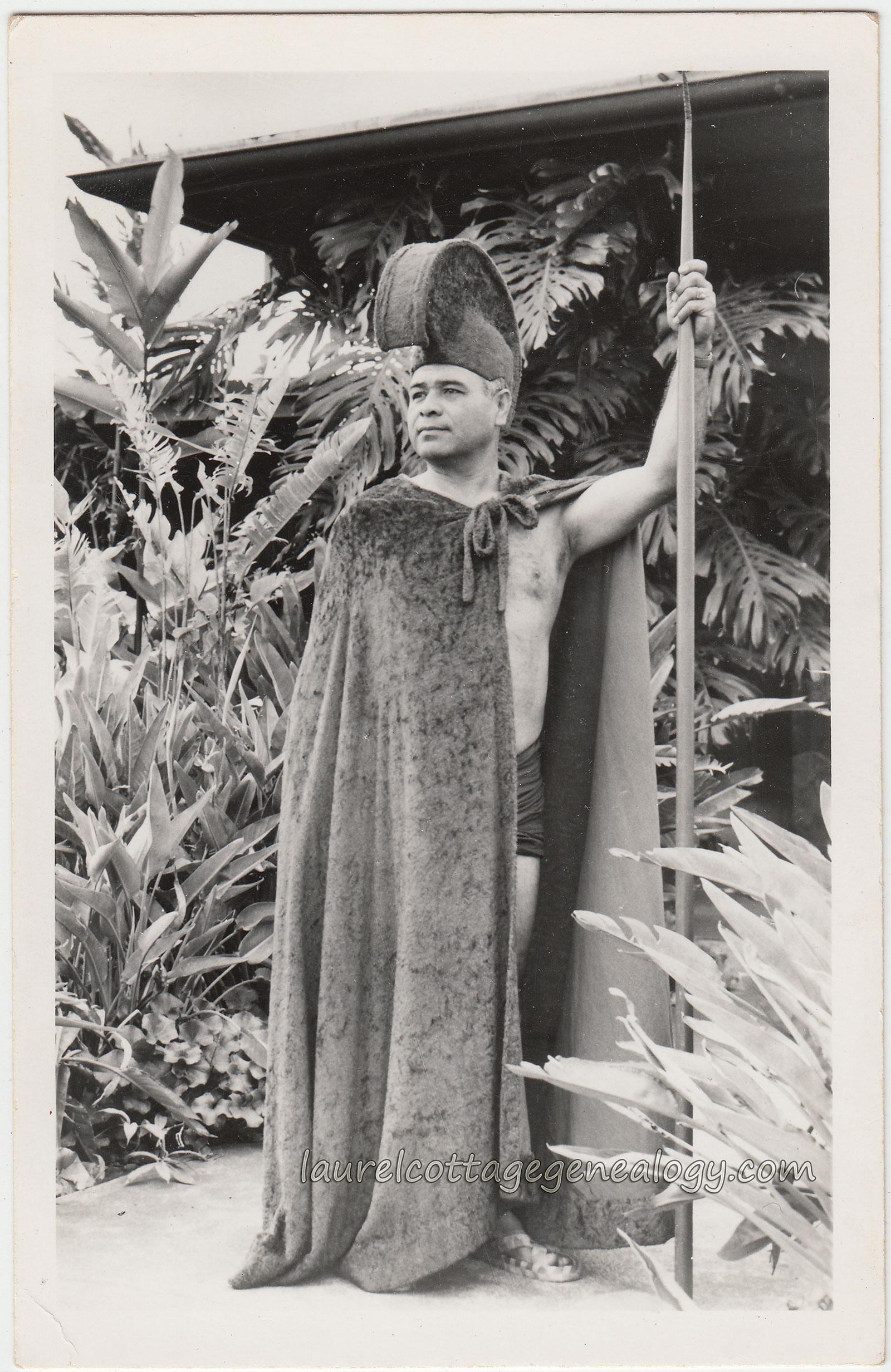
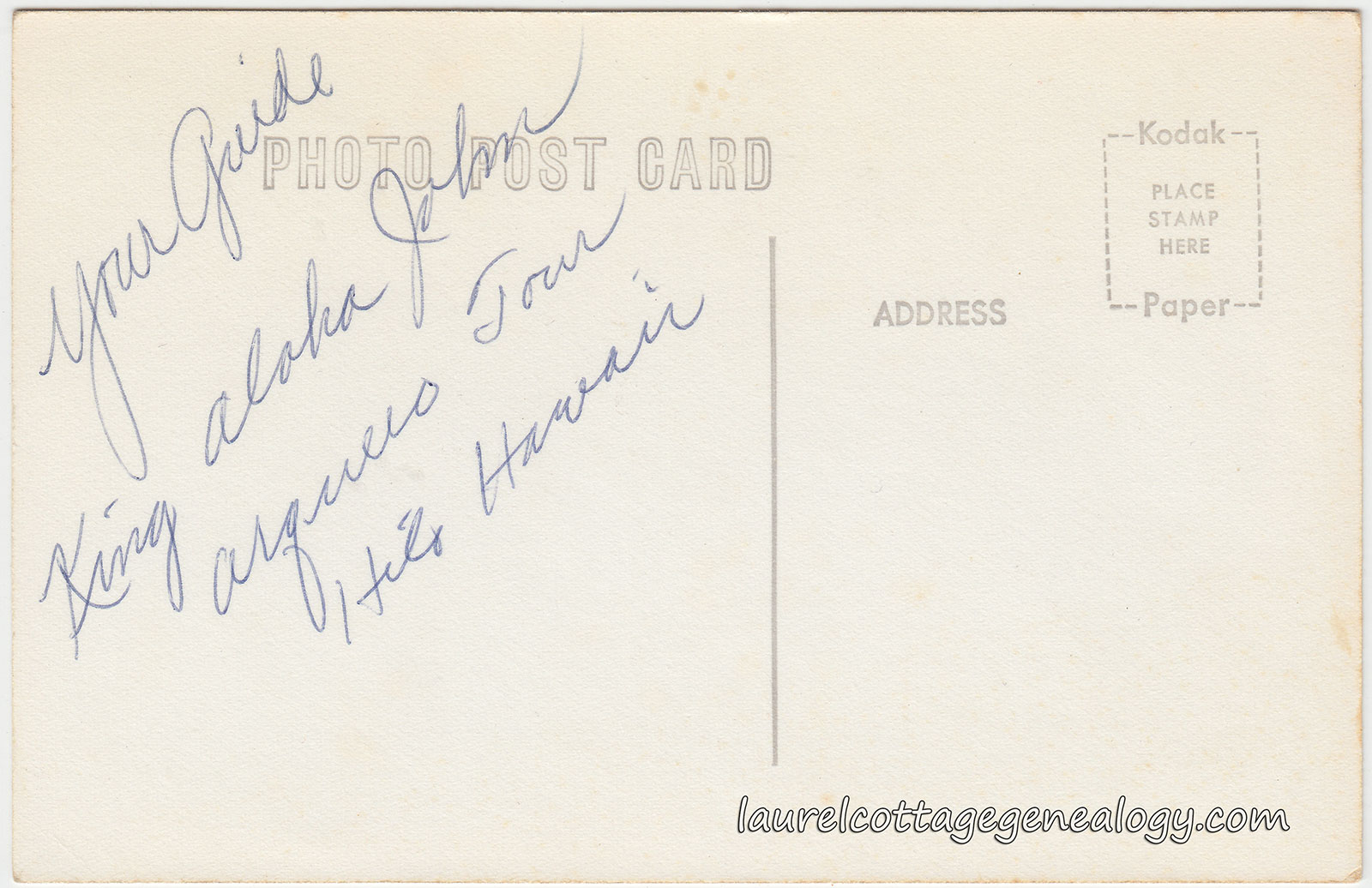
Divided back, Real Photo Postcard, unused with writing. Circa early 1950’s.

Price:  $10.00

Real Photo Postcard in black and white, signed by Hawaii tour guide, John Arquero. He is shown wearing an example of a traditional costume worn by Hawaiian male royalty. He wrote,  “Your Guide, King Aloha John Arquero Tour, Hilo Hawaii”  and is majestically posed holding an upright spear, wearing a long cape, and the type of headgear called mahiole.

According to The British Museum website,  “Helmets, known as mahiole, were constructed of the aerial roots of the ‘ie’ie vine, woven into a basketry frame. They were perfectly fitted to an individual, and protected the most sacred part of the body, the head. All of a chief’s garments were considered tapu, having a divine or sacred power, and would not be worn by anyone else.”

The helmet and cape were traditionally covered in feathers:  red-orange from the ‘i’iwi bird, a species of Hawaiian honeycreeper, and black and yellow from the oo’s and the kioea. The two latter being the common Hawaiian names for two (sadly now distinct) species, that were once previously misclassified as honeyeaters.

Sources:  The British Museum. “Hawaiian feather helmut.” Web accessed 17 Jul 2014. [http://www.britishmuseum.org/explore/highlights/highlight_objects/aoa/f/hawaiian_feathered_helmet.aspx]

Wikipedia. ʻIʻiwi. Web accessed Jul 17 2014. [http://en.wikipedia.org/wiki/%CA%BBI%CA%BBiwi]

Smithsonian. “Hawaii’s Bird Family Tree Rearranged.” ScienceDaily. ScienceDaily, 16 December 2008. Web accessed 18 Jul 2014 [www.sciencedaily.com/releases/2008/12/081211121827.htm]

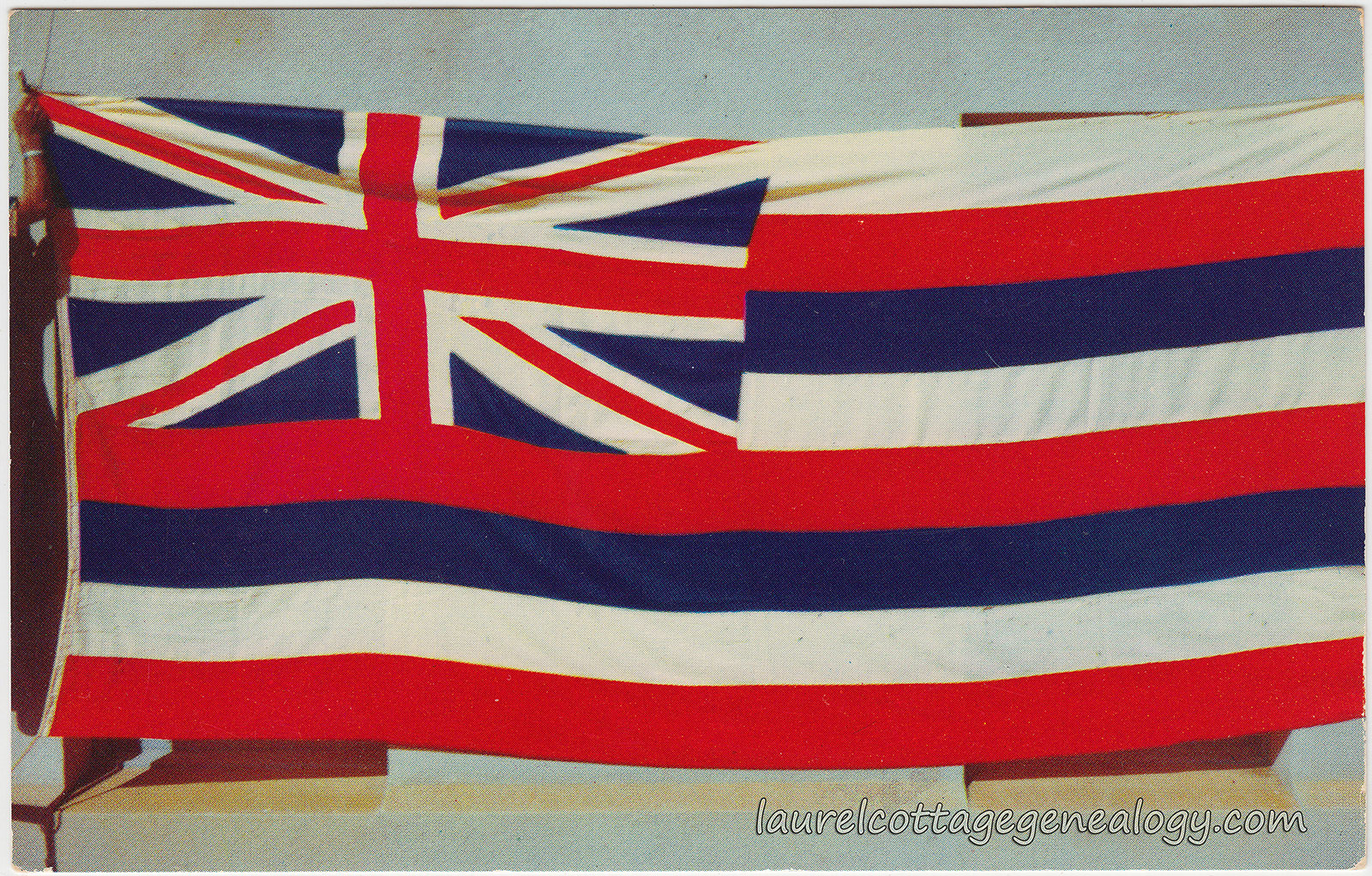
Hawaii’s Flag

Hawaiis Flag pc1Hawaiis Flag pc2

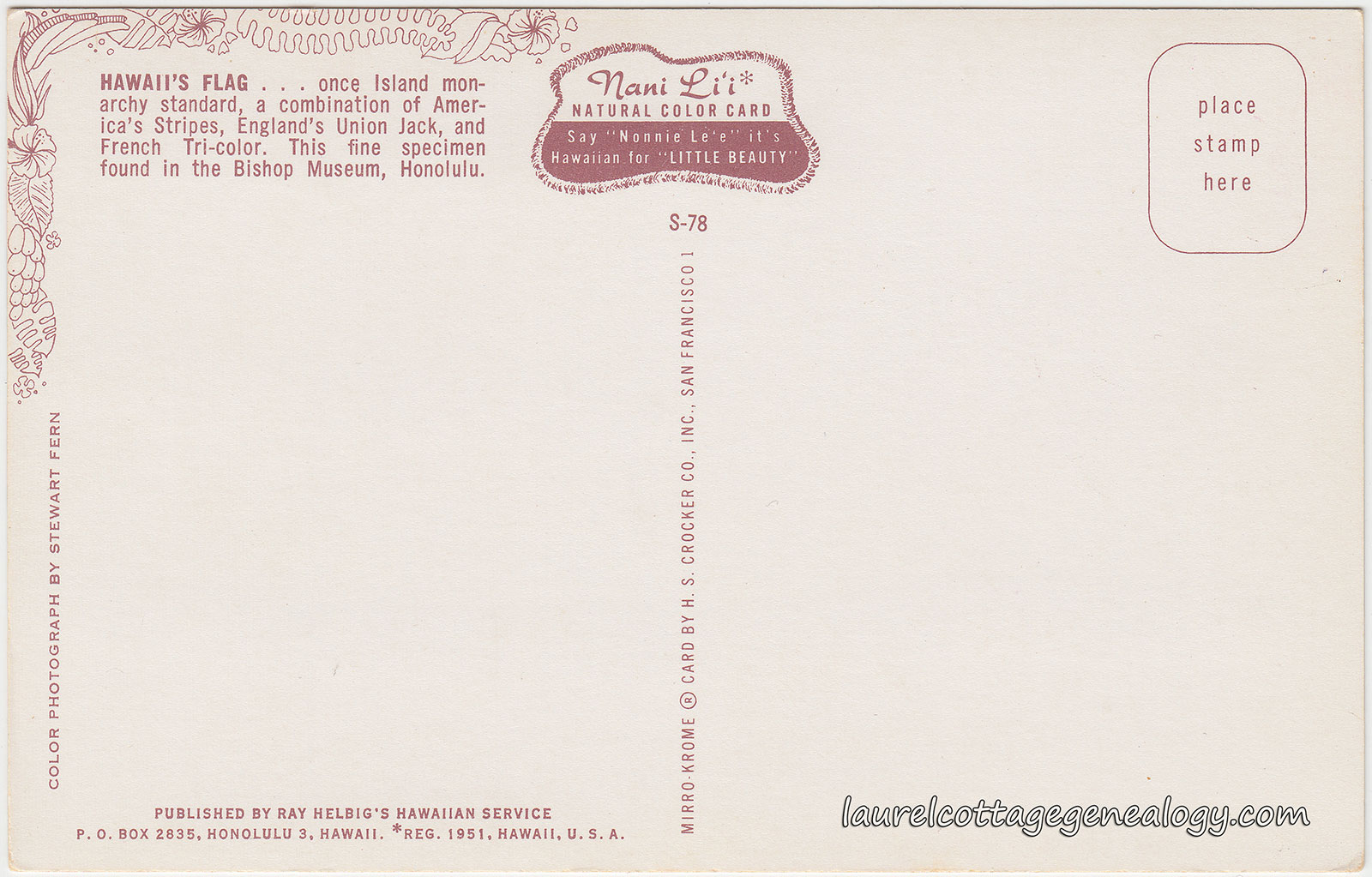
Divided back, unused postcard. Photographer:  Stewart Fern. Mirro-Krome Card by H. S. Crocker, Inc., San Francisco. S-78. Nani Li’i Natural Color Card. Publisher:  Ray Helbig’s Hawaiian Service, P. O. Box 2835, Honolulu 3, Hawaii. Reg. 1951, Hawaii, U.S.A.

Price:  $5.00

From the prior post re the 49th state we travel now to the 50th state, and this posting will be the start of a short visit to Hawaii. The caption for this postcard shows:

“Hawaii’s Flag…once monarchy standard, a combination of America’s Stripes, England’s Union Jack, and French Tri-color. This fine specimen found in the Bishop Museum, Honolulu.”

Vintage Alaska Tourist Photos

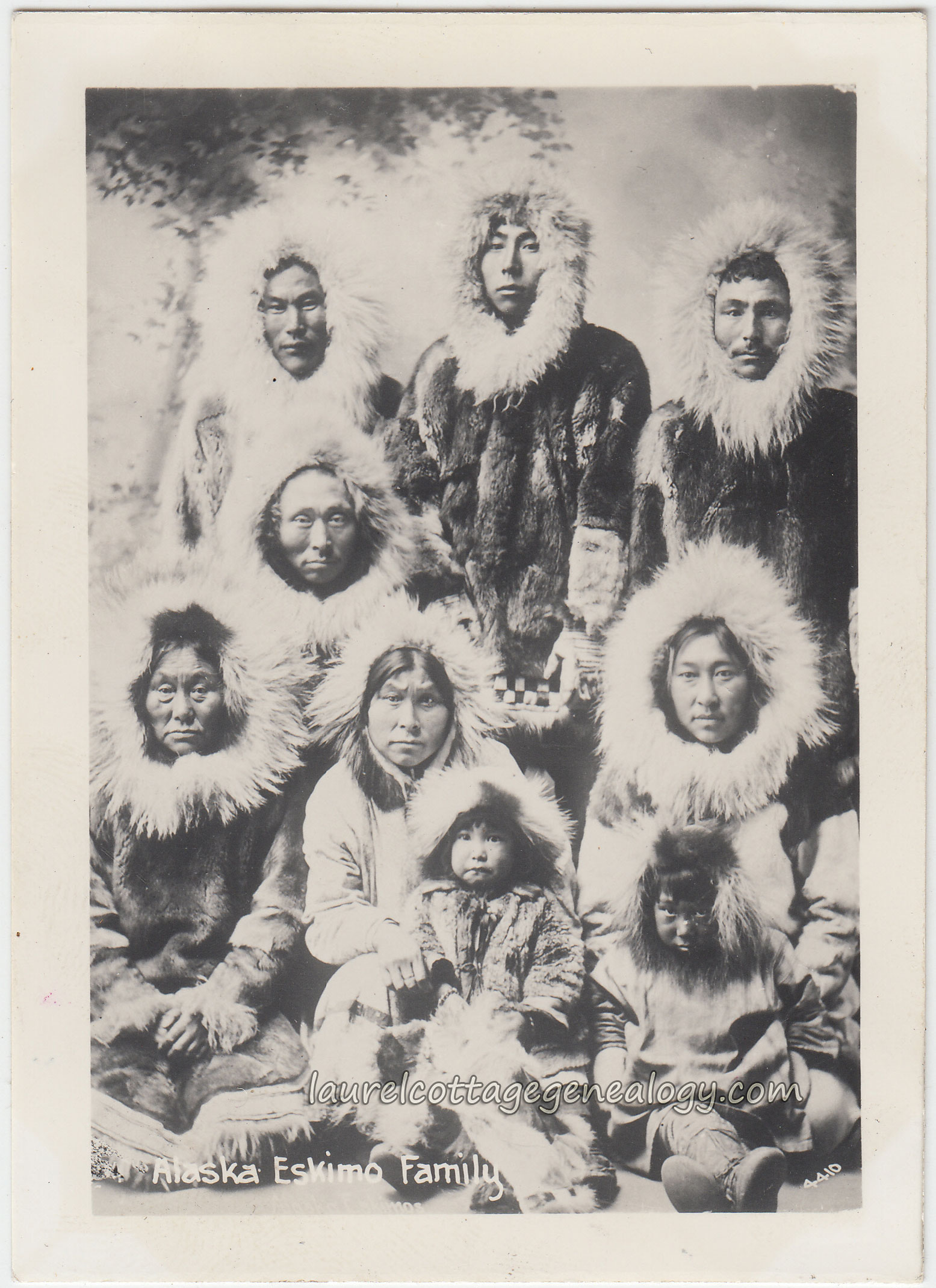
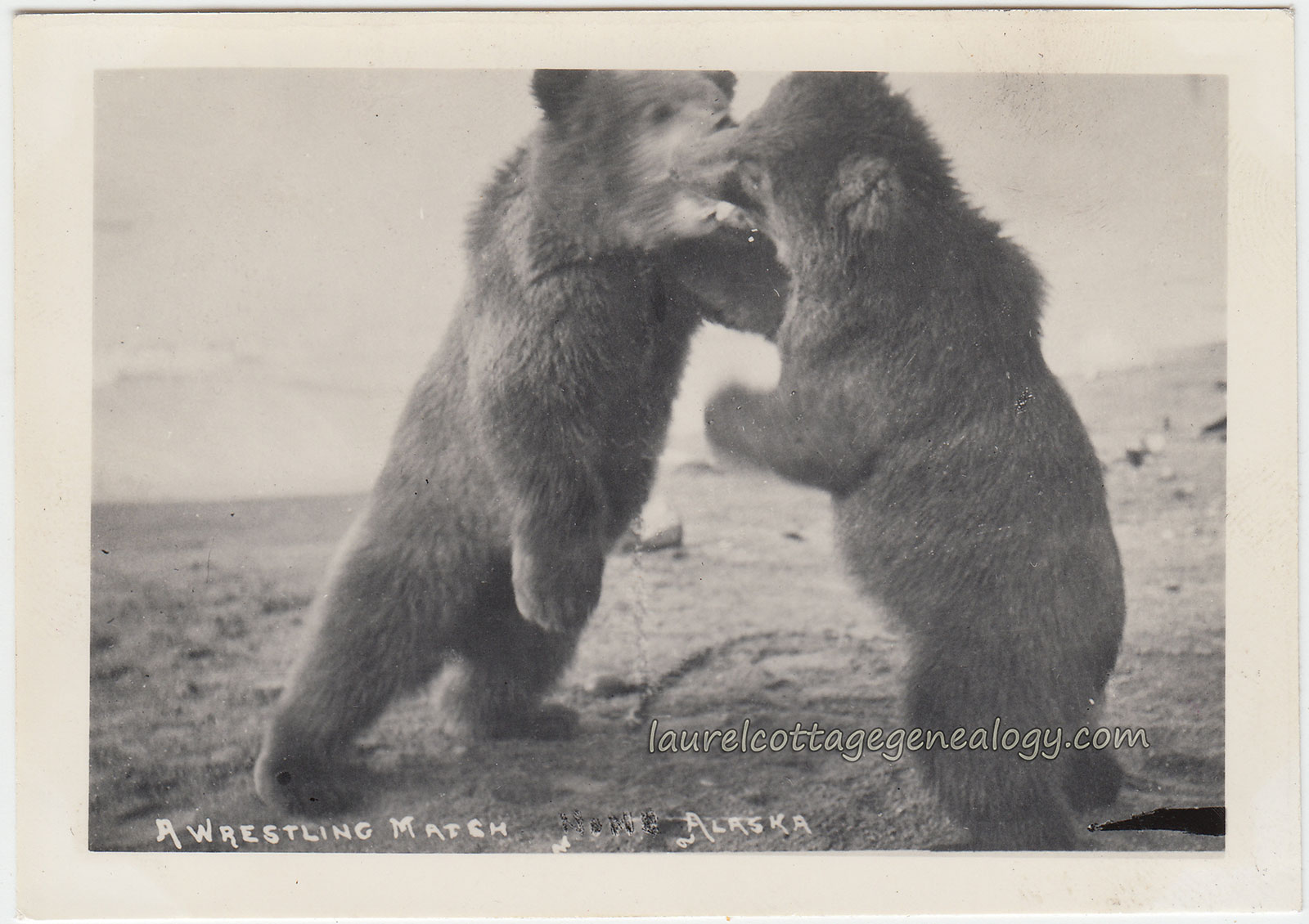
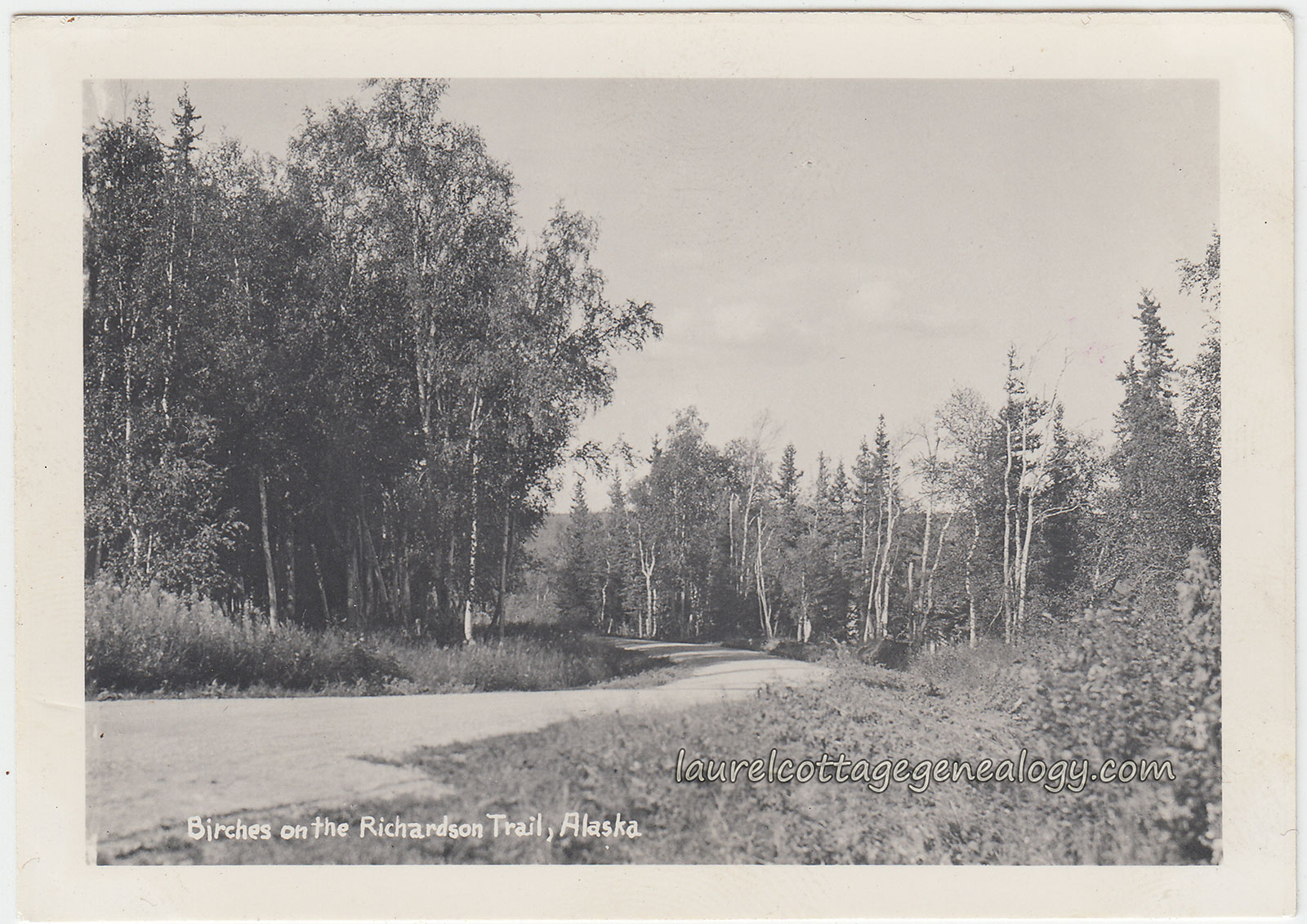
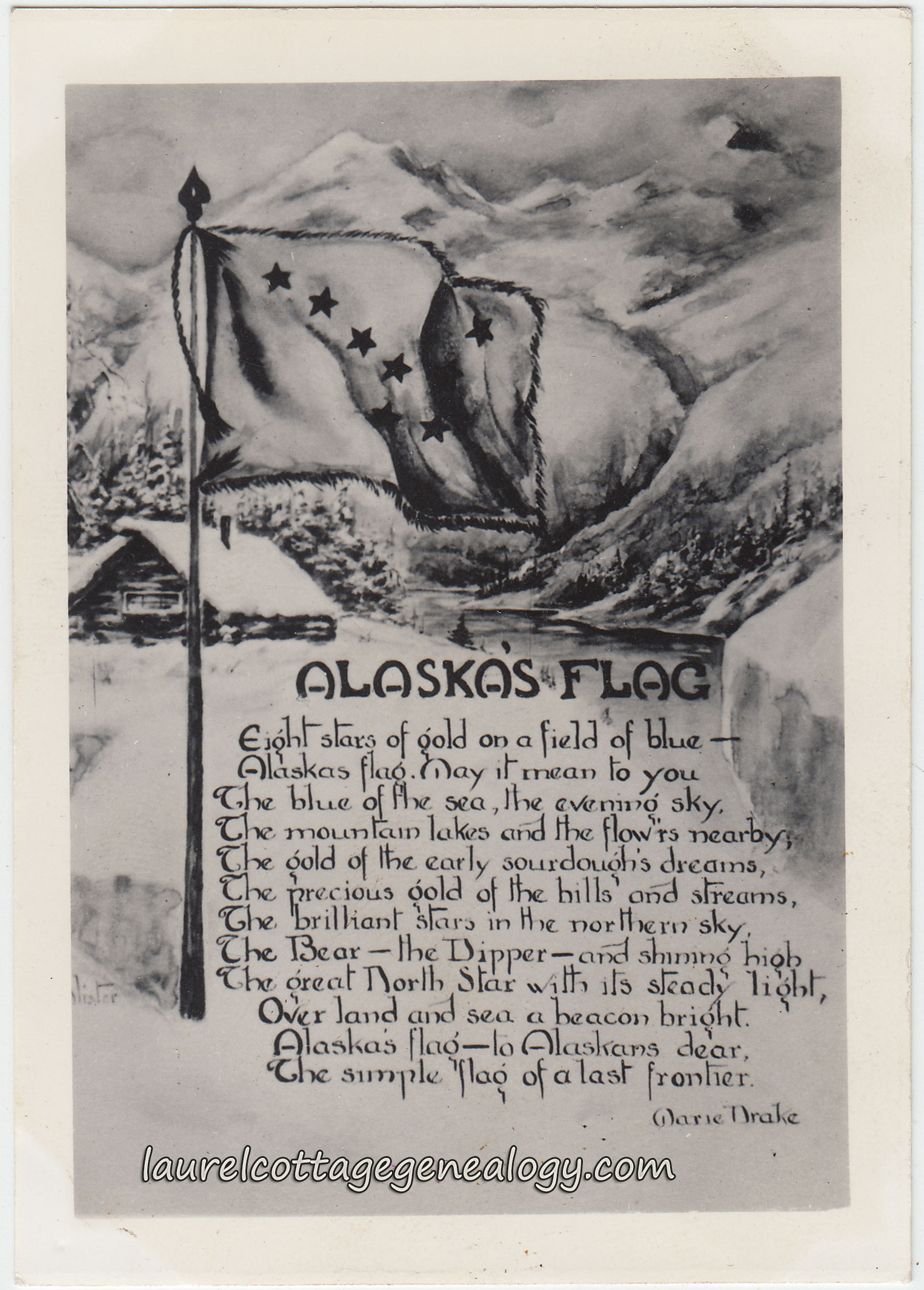
Famous Alaskan Totem Pole p1Little Arctic Natives p1Alaskan Eskimo Family p1A Wrestling Match p1Birches On The Richardson Trail p1Alaskas Flag p1

Price for the set:  $15.00  Size for each photo:  3 and 1/2 x 2 and 1/2″

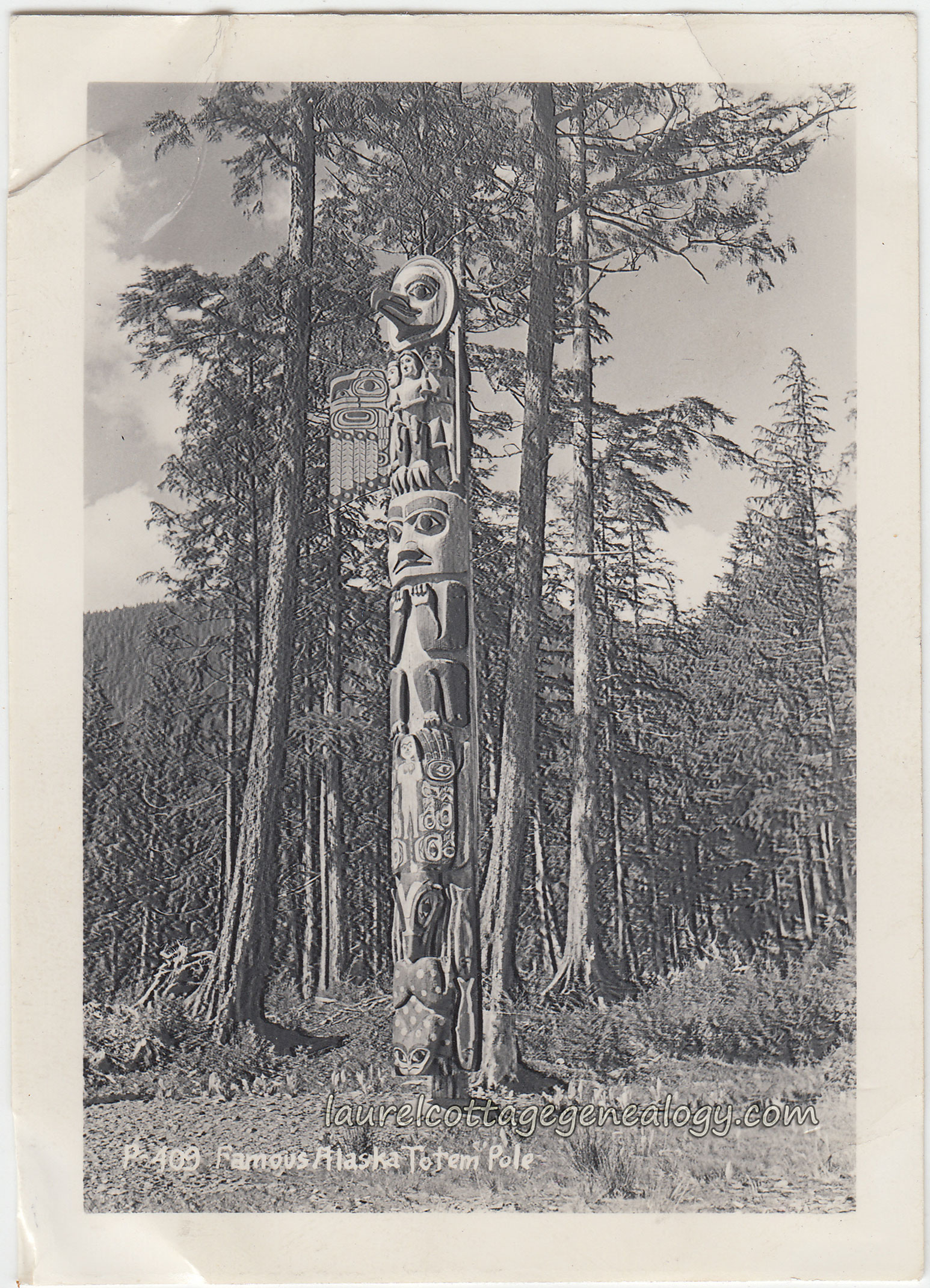
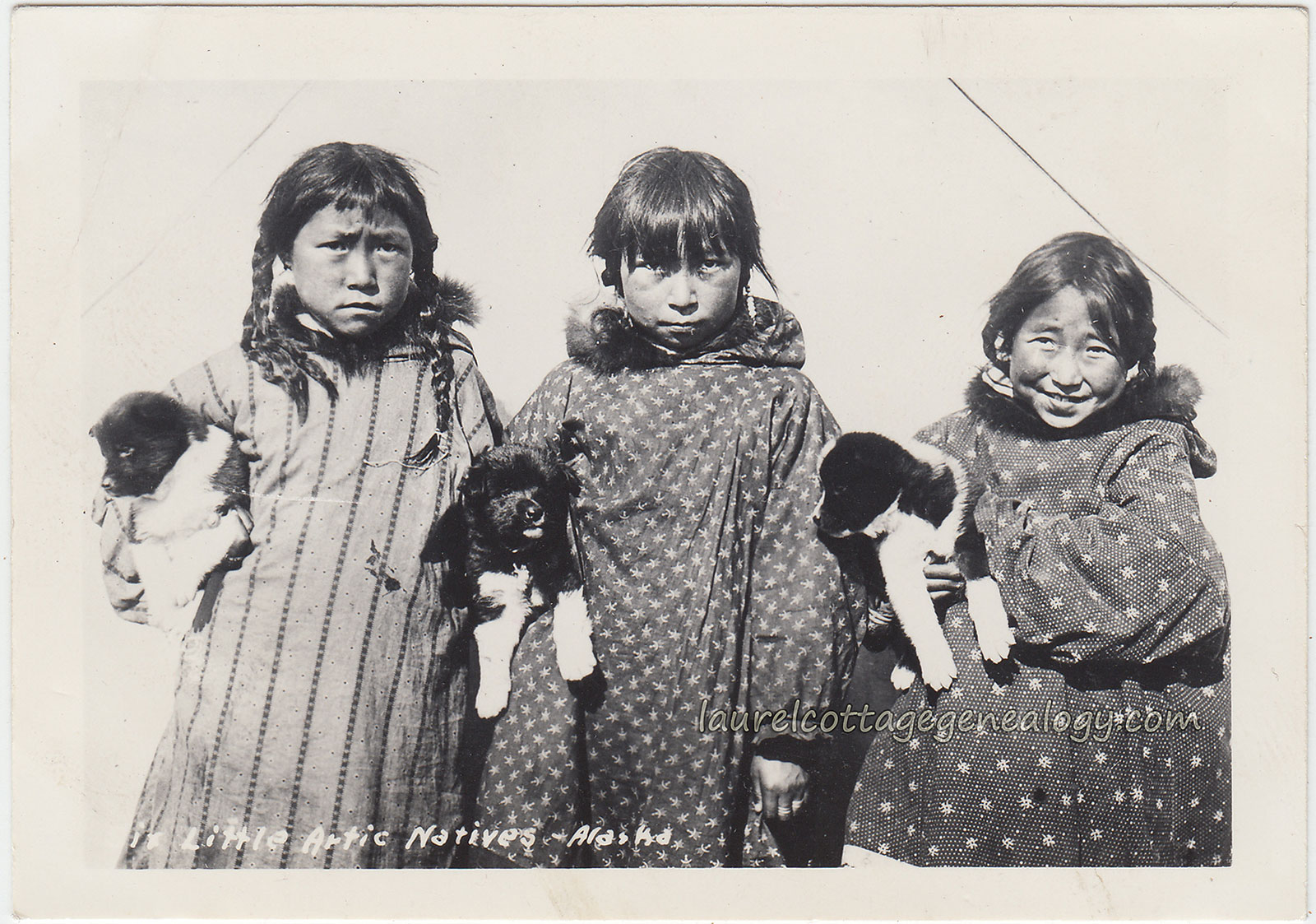
Here is a wonderful collection of vintage black and white photos, (in very good condition except for the top two which have some major creasing) estimated to have been produced in the 1940s for the tourist trade. However, the original of at least one of the photos, that of the children holding the sled dog puppies, was taken by Frank H. Nowell (1864 – 1950), who was photographing in the Nome, Alaska area from about 1901 – 1908. (Notice how the word arctic is misspelled in that photo’s caption.) Frank H. Nowell was the official photographer for the Alaska Yukon Pacific Exhibition, (the 1909 World’s Fair held in Seattle) and later ran a commercial photography studio in Seattle. The photo of the beautiful family with the caption “Alaska Eskimo Family” was probably also taken in the very early 1900s. Too bad the tribal info was not included for the two of the Alaska Natives and the one of the totem pole. As far as the Alaska’s Flag photo, this one could not have been taken until 1935 at the earliest, when Marie Drake, who was an employee of the Alaska Department of Education, wrote the poem. The poem is, of course, based on the explanation that Benny Benson gave for his winning design which was chosen for Alaska’s (then Territory of, later to become state) flag, and later became Alaska’s state song (music written by Elinor Dusenbury.) I recall that moment in grade school, when we learned (about the territory-wide contest for schoolchildren) and that Alaska’s state flag was designed by a thirteen-year old. (There we were, a classroom of about 30 kids, collectively thinking “wow” and we were not that easily impressed, I’m sure.) What is intriguing about the photo of this painting, (and by the way the original must be beautiful, with the high snow banks, the river, the cabin, the fir trees, the mountains and the cloudy sky all appearing as the backdrop for the flag and verse) is the partial signature that appears at the bottom left. Other examples of the painting show up online as vintage postcards and tourist photos but without the signature; in the others the left side is either cropped or the signature removed.

Another mystery that we’ll have to re-visit at a later date is the location of the “famous Alaska totem pole” as no other examples of this particular totem pole were found online either in Alaska, British Columbia or Washington State.

Sources:  Northwest Digital Archives (NWDA) Biographical Information for Frank H. Nowell. Web. 16 Jul 2014  [http://nwda.orbiscascade.org/ark:/80444/xv75935]

Frank Hamilton Nowell. n.d. https://en.wikipedia.org/wiki/Frank_Hamilton_Nowell (accessed July 14, 2014).

http://en.wikipedia.org/wiki/Alaska%27s_Flag

http://en.wikipedia.org/wiki/Alaska%E2%80%93Yukon%E2%80%93Pacific_Exposition

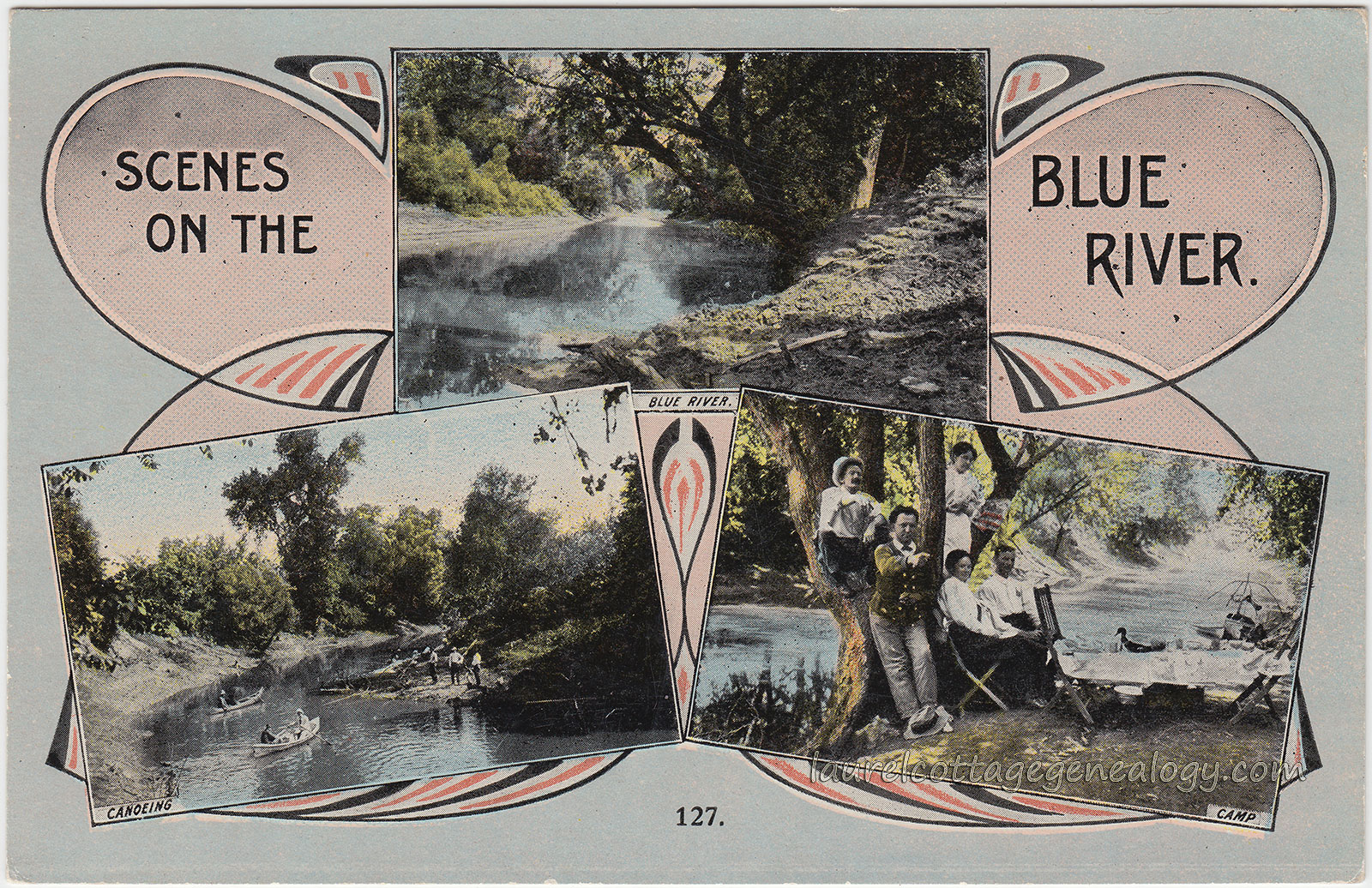
Scenes On The Blue River, Kansas City, Missouri

Scenes On The Blue River pc1Scenes On The Blue River pc2

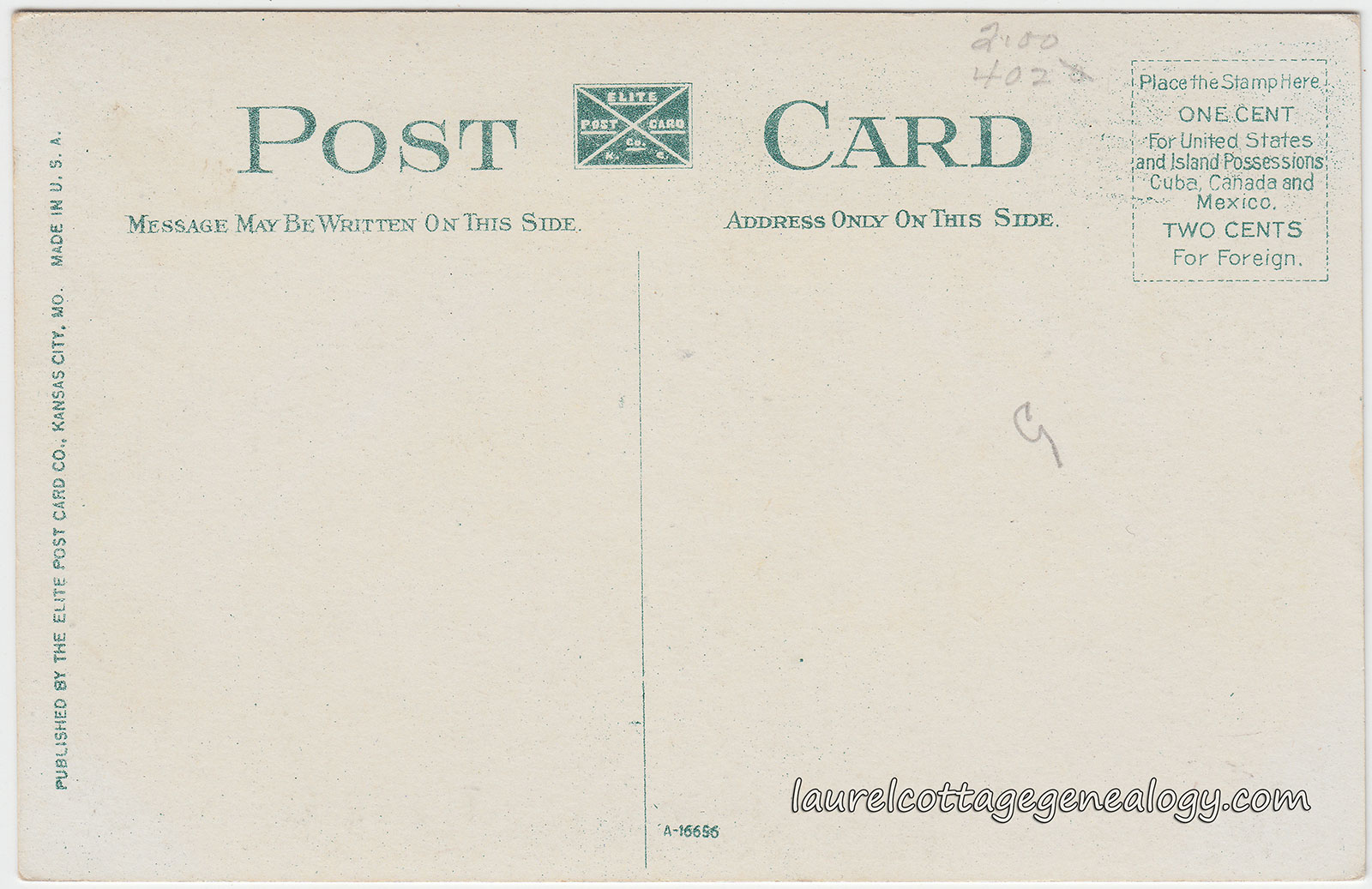
Divided back, unused postcard. Publisher:  The Elite Post Card Co., Kansas City, MO. Made in the U.S.A. Number/Series:  127  A-16656. Circa 1908 – 1914.

Price:  $8.00

Another Art Nouveau style postcard from The Elite Post Card Co. of Kansas City, MO. This one shows three tinted photo scenes of the Blue River, Canoeing, and “Camp.” The website Blueriver.org describes the river as “a wonderful little stream located on the south side of the Kansas City metro area”  and goes on to give a fuller account of it’s location. (I do adore this description which for me gives the river a cognizant – and rightly so – quality.) There is just something so compelling, mysterious, poetic and sacred about a river.

Source:  http://www.blueriver.org/