Genealogy Services, Old Photos, Postcards, Trade Cards, Etc.

Entrance To Hotel Del Monte

Entrance To Hotel Del Monte pc1Entrance To Hotel Del Monte pc2

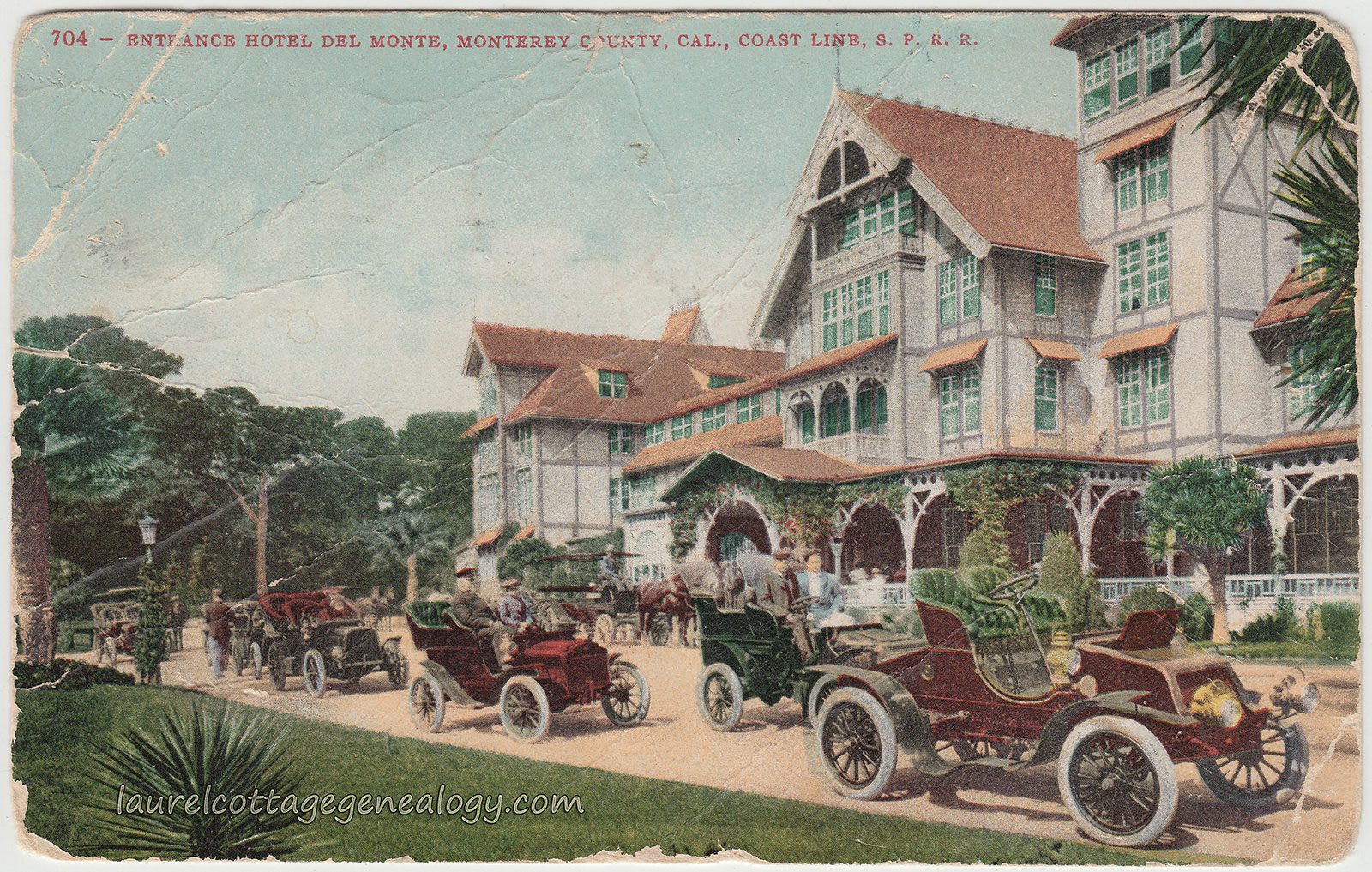
“704 – Entrance Hotel Del Monte, Monterey County, Cal., Coast Line, S. P. R. R.”

There’s so much going on with this postcard…

Early autos

Well, for starters, this continues the topic from the prior post – early American cars – steering wheel on the right. You can see that the first two vehicles from the right – have their steering wheels on the right, while the third one in line, has it’s wheel on the left. The card was postmarked in 1910, and it may have been produced from a newspaper photograph of that year or within several years prior. However, if you’ll notice – the “driver” in the third car is a woman, while the man next to her looks more “geared up” in coat and hat, to drive. Maybe they switched places for the photo, or maybe the image was altered for the postcard, and the wheel was drawn in on the left. (We’ve seen similar alterations on other old postcards.)

The car on our right is possibly an early Winton, with that continuous curved fender. I found a four-seat 1904 model displayed at Early American Automobiles, the 9th photo down on the left; you can check out the similarities between the two. Wikipedia’s entry regarding the “Winton Motor Carriage Company” shows the famous two-seat touring Winton “Vermont” (again with that distinctive fender.) It was 1903 that Dr. Horatio Nelson Jackson, along with his mechanic, made the first successful automobile trip across the U.S. in a “Vermont.”

The Hotel

The luxurious Hotel Del Monte, was built by railroader Charles Crocker, and operated from 1880 – 1942. It was part of a 20,000 acre resort; a playground for the rich and famous, and a big part of the Central Coast’s history. See  “St. John’s Chapel, Del Monte, California”  for a related post. The hotel showing on this postcard would have been the second of three; the first two being destroyed by fire. The wooden, Gothic first and second hotels were designed by Southern Pacific Railroad architect, Arthur Brown, Sr. and built by S.P.R.R. workers.

The Coast Line

Opening January 1, 1880, the Monterey Branch of the Coast Line of the S.P.P.C. ran from Castroville to Pacific Grove; linking San Francisco to the Hotel Del Monte and Pebble Beach. It included Southern Pacific’s longest running “named” passenger train, the Del Monte, which ran from San Francisco to Pacific Grove, and mainly served wealthy tourists. This passenger train made her last run on April 30, 1971.

The sender wrote:

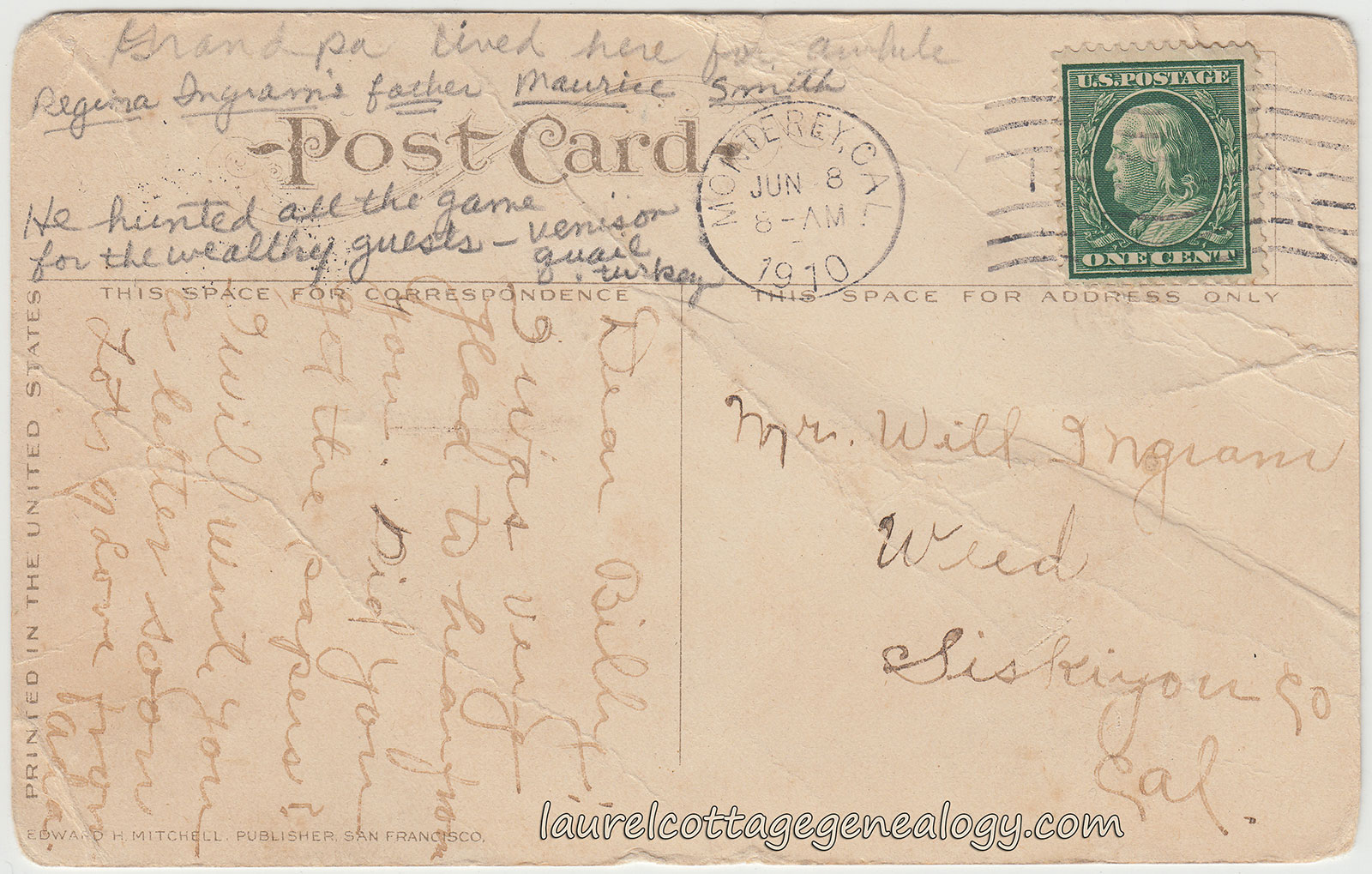
“Dear Billy, I was very glad to hear from you. Did you get the papers? I will write you a letter soon. Lots of Love from Ada.”

The card is addressed to:  “Mr. Will Ingram, Weed, Siskiyou Co. Cal.”

Game hunting for the wealthy

The great thing about this postcard is the added info at the top, which must have been written in later years and by a relative:  “Grandpa lived here for awhile. Regina Ingram’s father Maurice Smith. He hunted all the game for the wealthy guests – venison, quail, turkey.”

Regina Ingram was Lilac Regina Smith (Lilac – love that!) born in 1895 in Monterey. She married William Ingram, the recipient of the postcard, born 1885 in Monterey. From research on Ancestry.com, the postcard sender, Ada, was likely William’s sister. Regina’s father, Maurice Smith, was born in New York about March 1865. He appears as early as 1880 (from the census) living in Monterey, and on subsequent census records with his wife and children. No clues were found in records as to when exactly he would have stayed at the Del Monte, perhaps early on before his marriage, which was in about 1892. The town of Weed in Siskiyou County is located almost 400 miles north of Monterey, up Highway 5. The 1910 Federal Census taken in nearby Edgewood, shows William living with some family members:  Amy Ingram, William’s sister, was running a hotel; another sister, Mary, was working there as a waitress; and he and brother George, were working for the Weed Lumber Company as bricklayers.

Divided back, used postcard. Postmarked June 8, 1910 from Monterey, California. Publisher:  Edward H. Mitchell, San Francisco.

Price:  $18.00

Sources:  “1904 Winton. Winton Motor Carriage Co., Cleveland OH. 1897 – 1924.” Early American Automobiles. Web accessed April 1, 2015.

Winton Motor Carriage Company. n.d. http://en.wikipedia.org/wiki/Winton_Motor_Carriage_Company. (accessed April 1, 2015).

California’s Most Historic Resort: Hotel Del Monte. Naval Postgraduate School. Web accessed April 3, 2015. [http://nps.edu/About/Publications/HotelDelMonte_updated_Final.pdf]

Castroville to Pacific Grove: The Monterey Branch. Abandoned Rails. Web accessed April 3, 2015. [http://www.abandonedrails.com/Monterey_Branch]

Year: 1880; Census Place: Monterey, Monterey, California; Roll: 69; Family History Film: 1254069; Page: 252A; Enumeration District: 057; Image: 0505. (Ancestry.com)

Year: 1910; Census Place: Monterey, Monterey, California; Roll: T624_89; Page: 20B; Enumeration District: 0013; FHL microfilm: 1374102. (Ancestry.com)
When Last Seen On The Road

When Last Seen On The Road pc1When Last Seen On The Road pc2

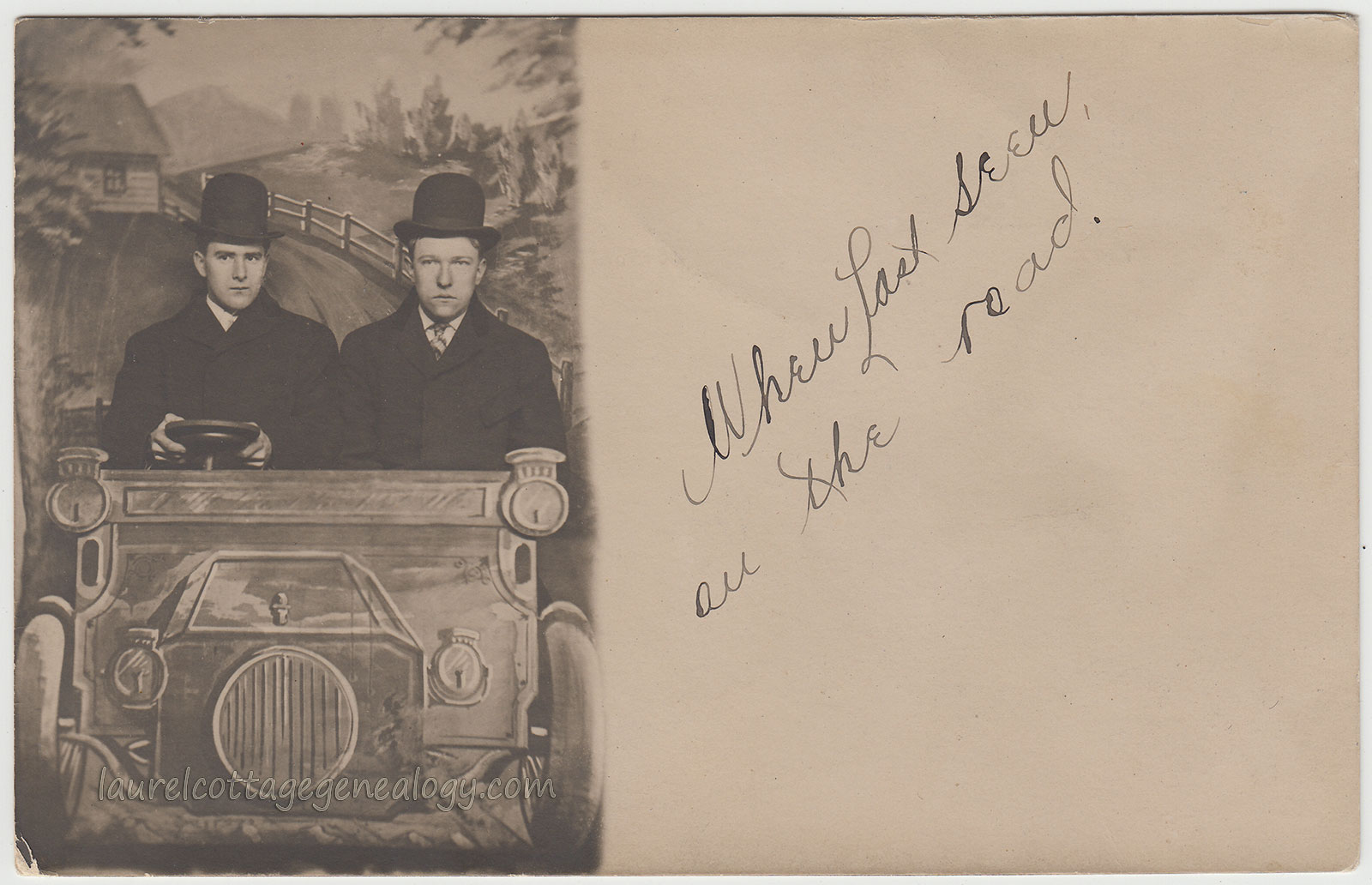
This RPPC has one of the best homemade captions ever! The image shows a couple of guys (we presume them to have a great sense of humor) in their photo prop car, overcoats and derby or bowler hats.

If you’ve noticed that the steering wheel is on the right in this photo, then “good eye.”  So, was the image reversed or the card from Great Britain then? No, the explanation (for those of us who were not previously aware) is that prior to the 1908 Ford Model T, almost all American cars were made with the steering wheel on the right. Ford’s Model T design placed it on the left, to make it easier for the passenger to avoid oncoming traffic. See the link below for a great web article on the subject.

Undivided back, Real Photo Postcard, unused with writing. Sailboat stamp box, manufacturer unknown. Circa 1905 – February 1907.

Price:  $7.00

Source:   “Fact: American Steering Wheels Haven’t Always Been On The Left.”  March 13, 2013. Lost In The Pond. Web accessed March 31, 2015.

Boston – Provincetown – NYC 1928 – 1930

Boston Set1Boston Set2

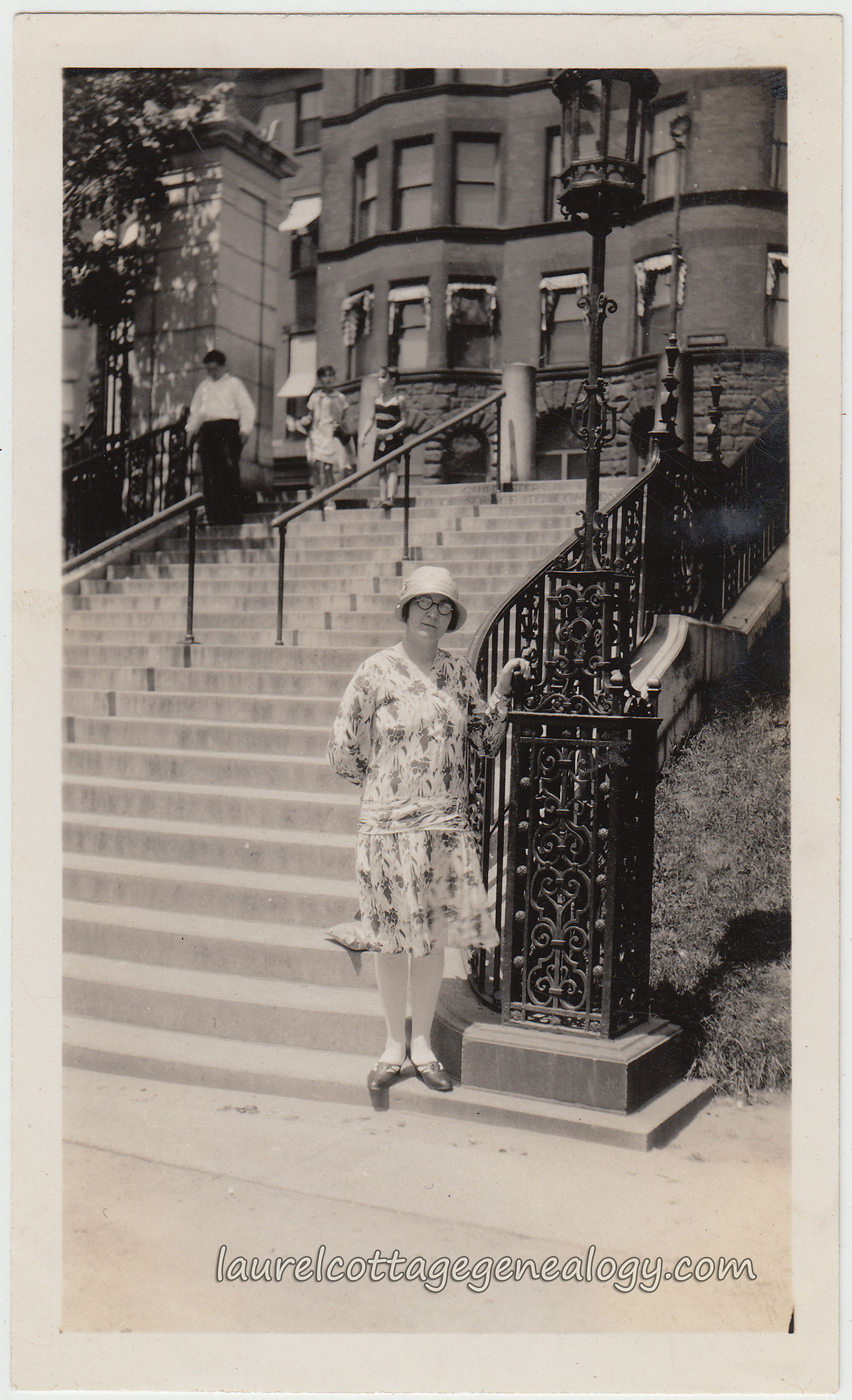
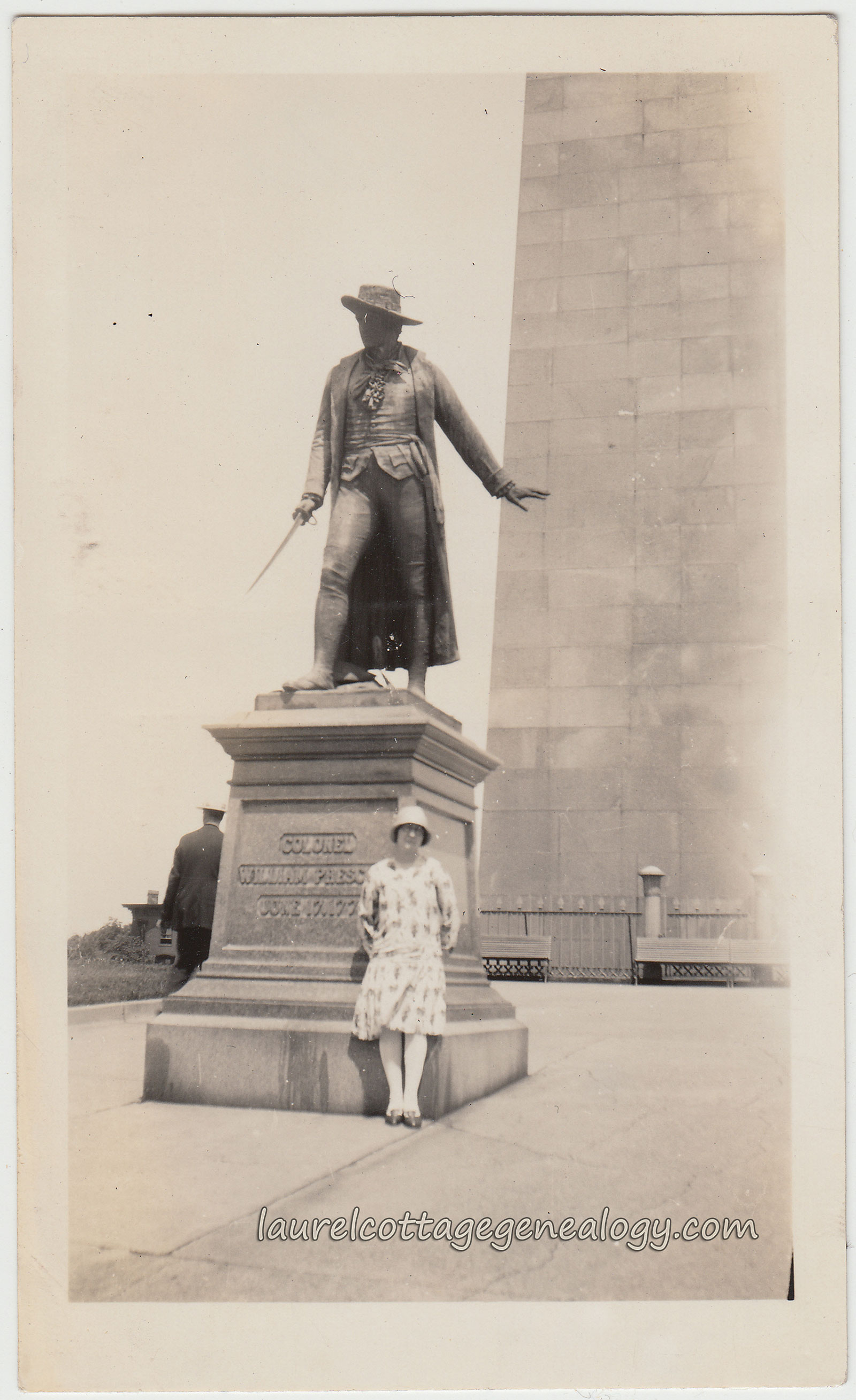
Here is our hostess for this time travel virtual tour of the Boston area, Provincetown, Massachusetts and Central Park, New York City. The photos have present-day writing (mostly done in pencil) on the back, indicating places and dates. There is no identifying information for the woman. (I love her cloche hat and round horn-rimmed eyeglasses.)

The back of the photo on the left says “Boston Commons, 1928.”  For anyone not familiar, Boston Common is the central park in downtown Boston. It is almost 50 acres in size and was built in 1634, which makes it the oldest public park in the United States. It is sometimes erroneously referred to with the “s” on Common, as is the case on the back of the photo.

The photo on the right was taken at Bunker Hill, Charlestown, Mass., 1928. Our unknown sightseer is posing at the statue of Colonel William Prescott, who is best known for leading his rebel forces at the Battle of Bunker Hill, and instructing his troops,  “Do not fire until you see the whites of their eyes.” 

Sources:  Boston Common. n.d. http://en.wikipedia.org/wiki/Boston_Common. (accessed March 29, 2015).

William Prescott. n.d. http://en.wikipedia.org/wiki/William_Prescott. (accessed March 29, 2015).


MASSACHUSETTS STATE HOUSE, BOSTON, 1928

Boston Set3

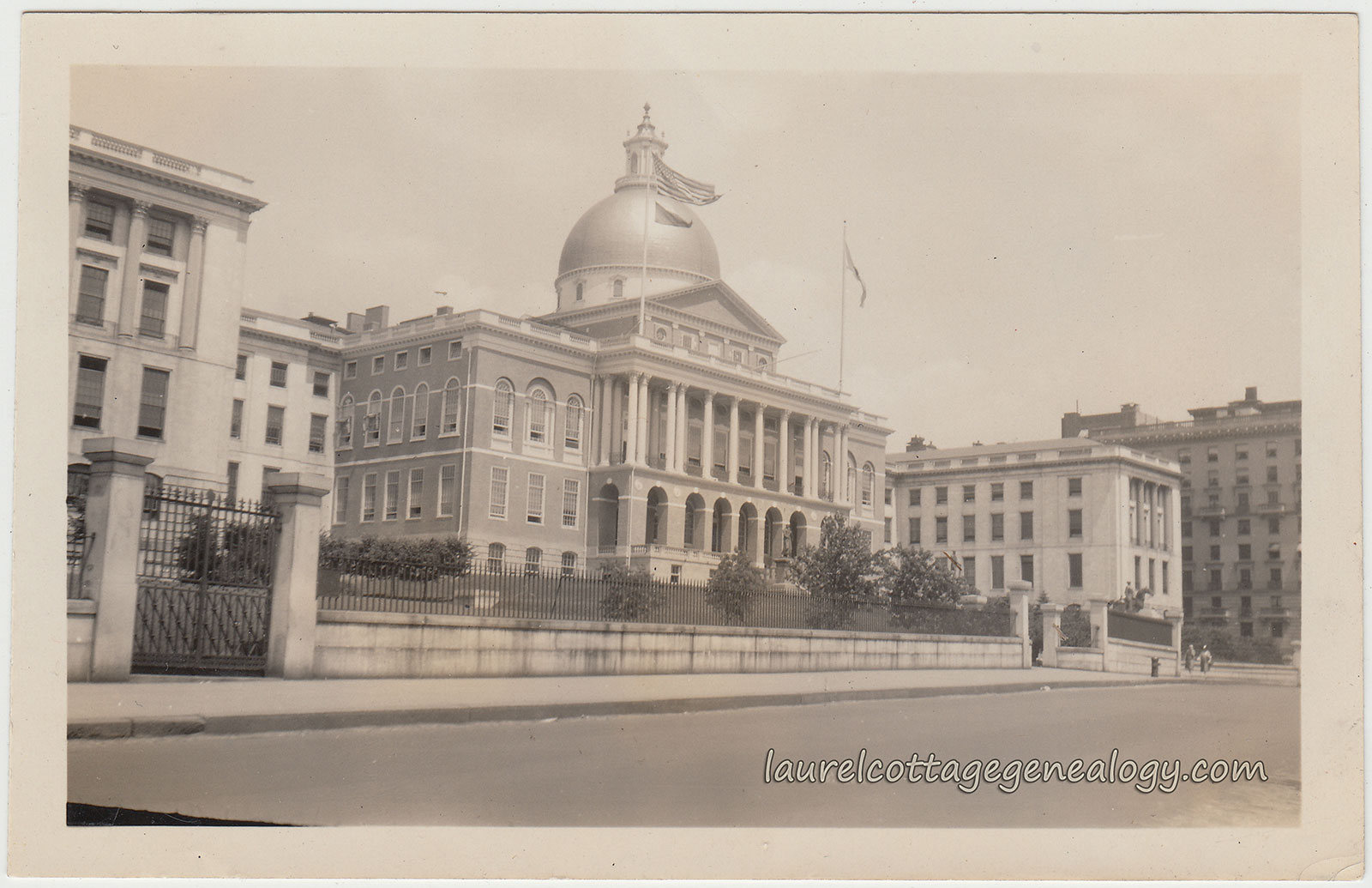
Massachusetts State House, Boston 1928. The State House (or Statehouse) was built between 1795 – 1797 on Beacon Hill, and overlooks Boston Common. This historical landmark, housing the government offices for the Commonwealth of Massachusetts, was designed by architect Charles Bulfinch (having since been enlarged) and is considered a masterpiece of Federal style architecture.

Source:  Massachusetts State House. n.d. http://en.wikipedia.org/wiki/Massachusetts_State_House. (accessed March 29, 2015).


STEAMER BETTY ALDEN

Boston Set4

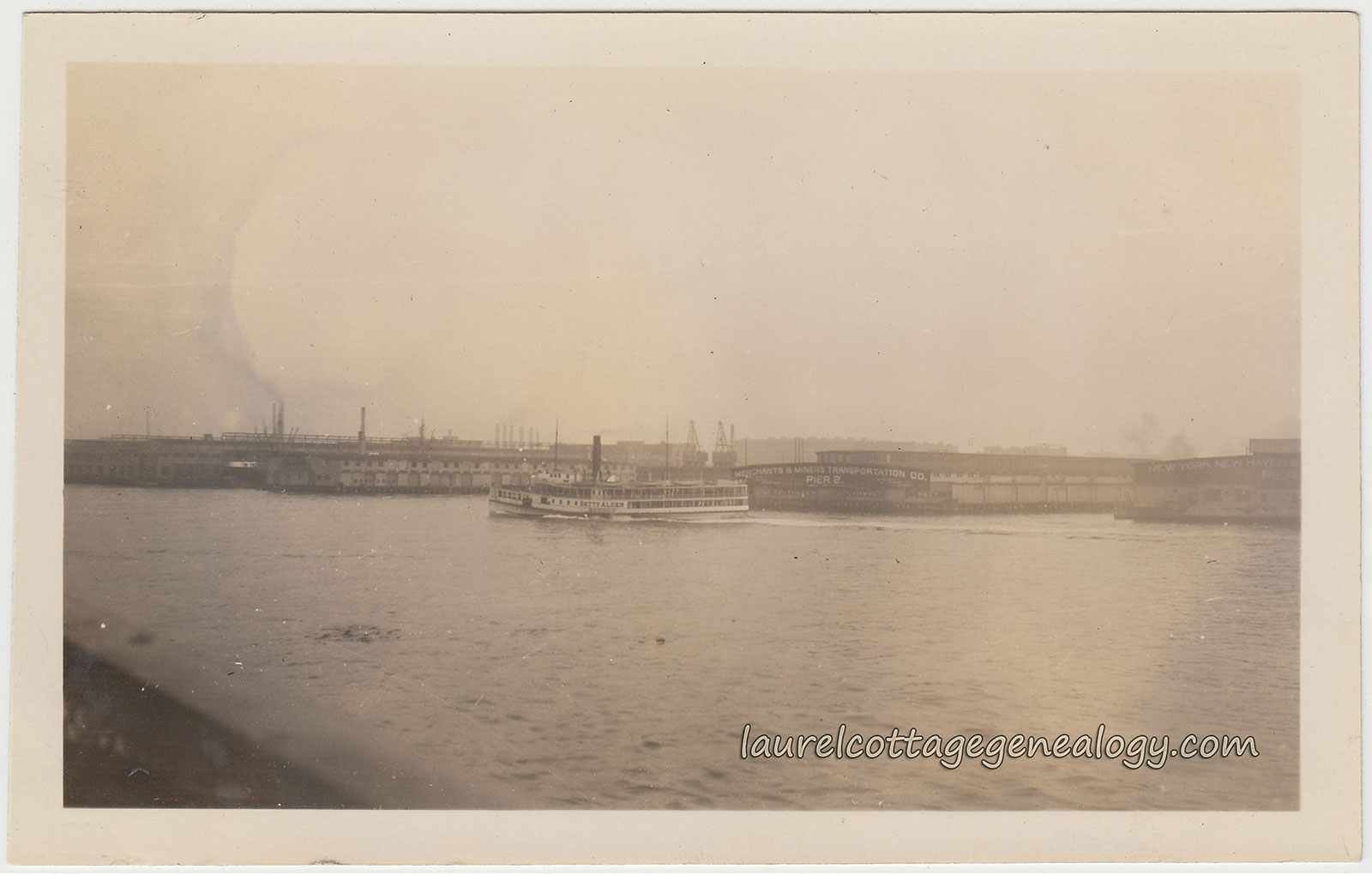
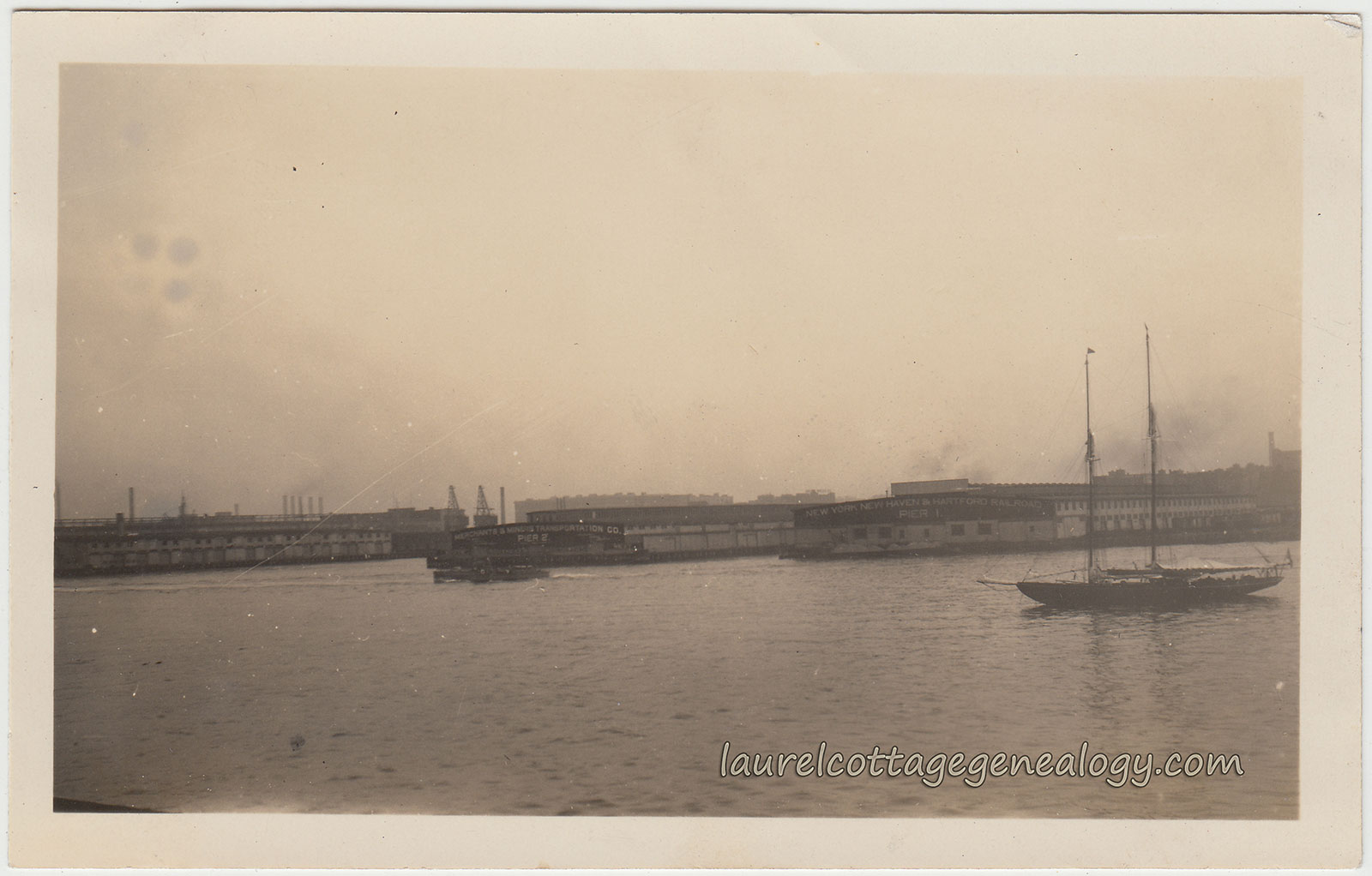
Steamer Betty Alden, Boston Harbor 1928 or 1929. This passenger steamship, owned by Nantasket Beach Steamship Co., was built in 1908 and was lost to fire in 1929. If you enlarge the photo you can read the sign on one of the pier buildings showing  “Merchants & Miners Transportation Co., Pier 2.”

According to a 1908 New York Times newspaper article, this steamship was named by Miss Betty Alden, who taught school in Middleborough, Massachusetts. Miss Alden was a direct descendant of Pilgrams, Priscilla Williams and John Alden.

Sources:  Atlantic Ironworks, East Boston, MA. Shipbuilding History. Web accessed March 29, 2015. [http://www.shipbuildinghistory.com/history/shipyards/719thcentury/atlantic.htm]

“Betty Alden Names A Ship.” New York Times, 26 Jan. 1908. Web accessed March 29, 2015. (Newspapers.com)


BOSTON HARBOR

Boston Set5

Boston Harbor, 1928 or 1929. This photo shows a couple of boats, one appears to be a small steamer, and the other a two-masted sailboat, with sails furled. At the shoreline we see another view of the Merchants & Miners building, and the large sign on the adjacent building showing,  “New York, New Haven & Hartford Railroad, Pier 1.”


ON BOARD A STEAMER ON CAPE COD BAY

Boston Set6

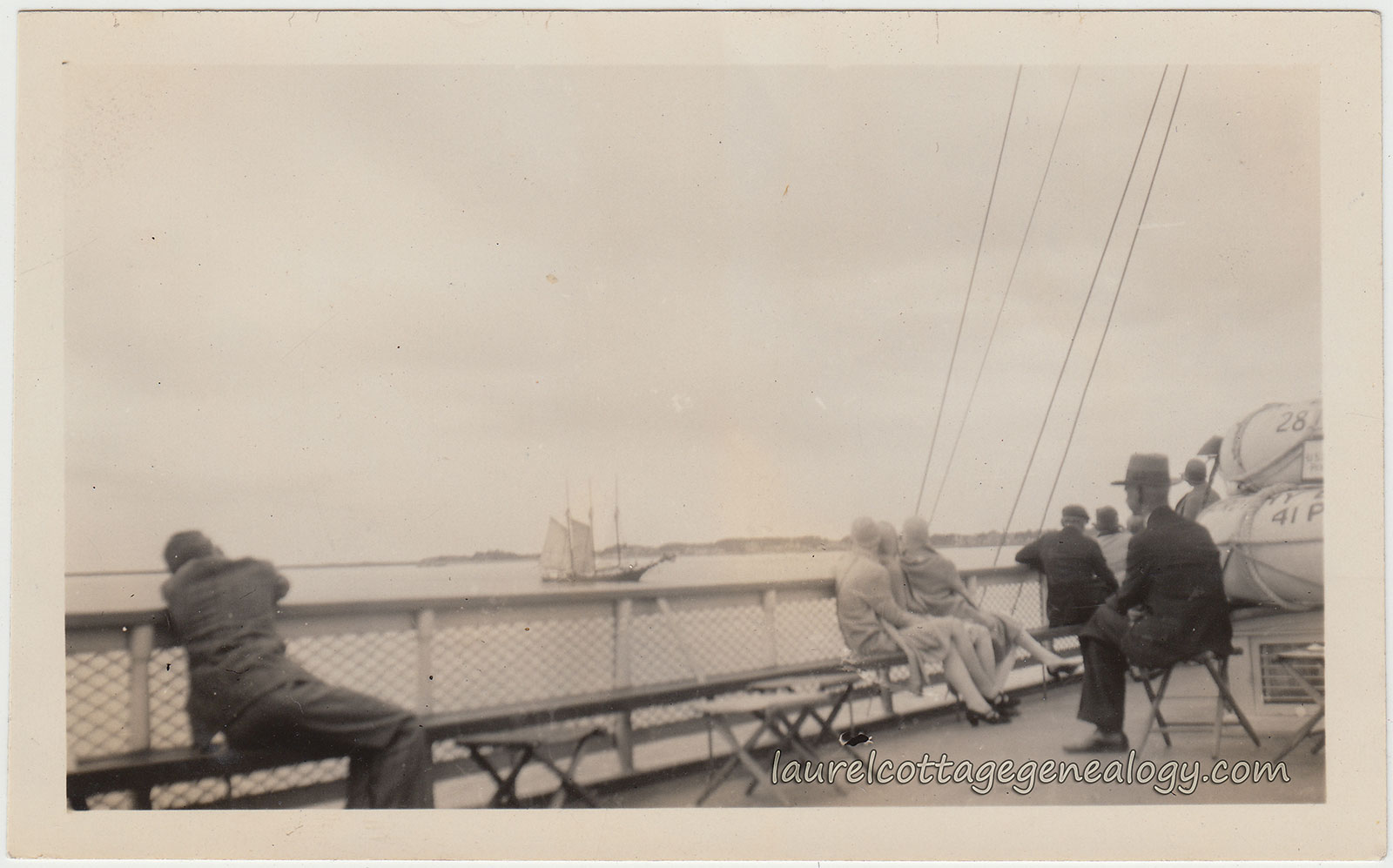
On board a steamer, Cape Cod Bay, off of Provincetown, Massachusetts, 1928. This photo shows nine passengers on the steamer’s deck and taking in the view of the water and a sailing vessel with three masts. The gentleman on our left appears to be taking a photo. Note the three ladies further down on the bench, dressed almost identically.


 ANOTHER CAPE CODE BAY VIEW

Boston Set7

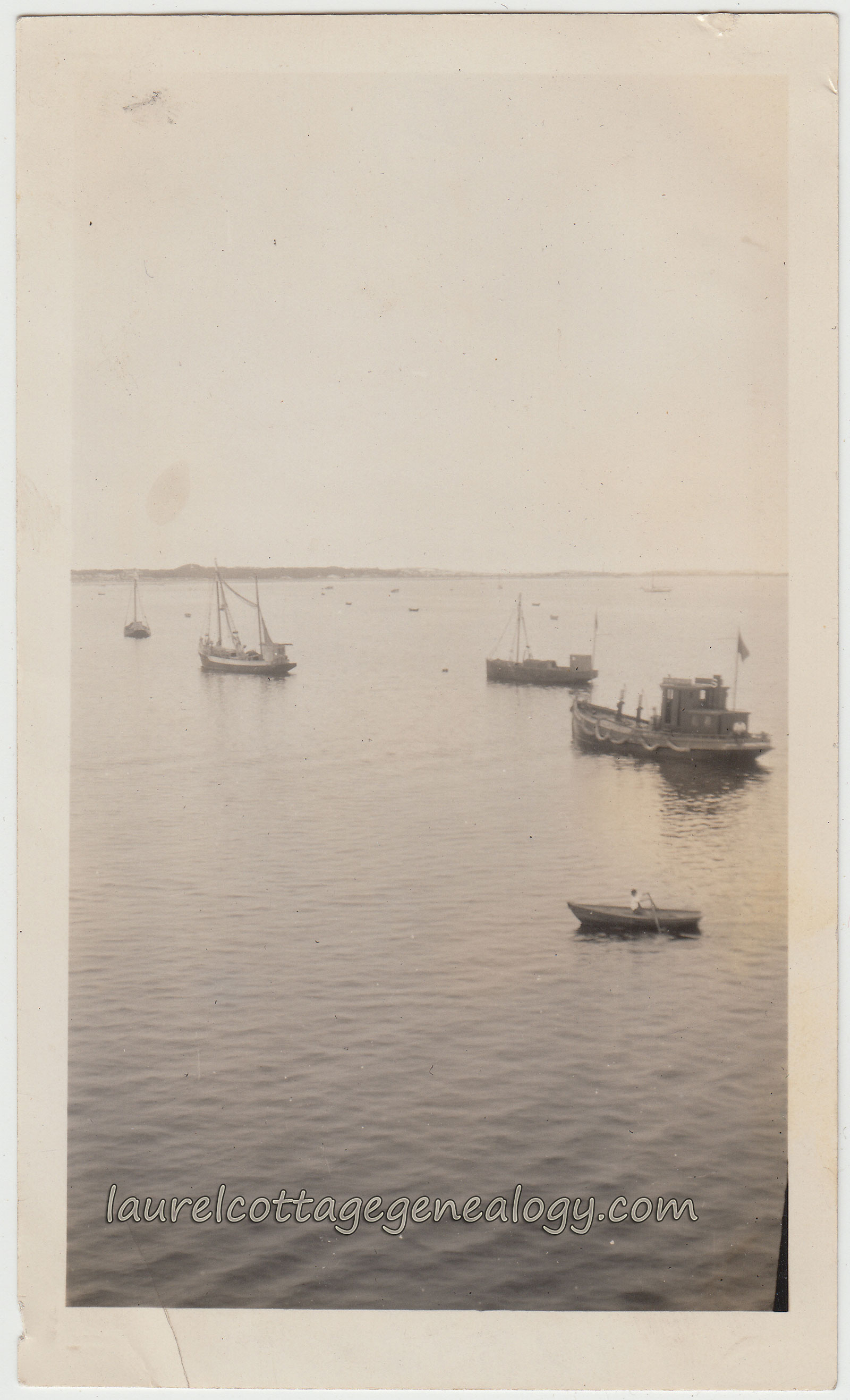
A view of Cape Cod Bay, off of Provincetown, Mass. 1928 or 1929, showing various vessels, including a rowboat with a gentleman in the act of rowing – leaned back, arms extended, both oars in the water.


 A PIER AT PROVINCETOWN

Boston Set8

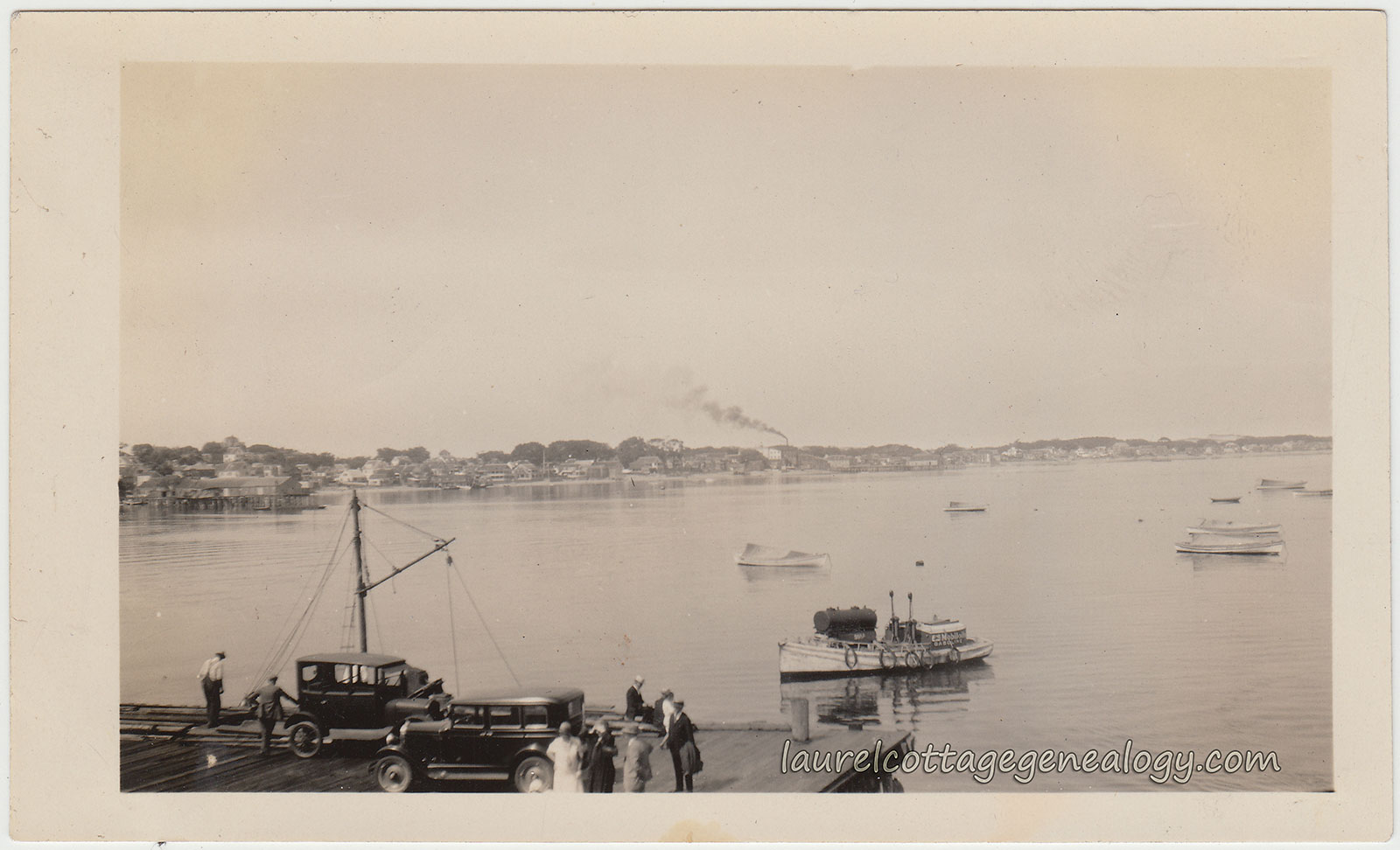
Cape Cod Bay and Provincetown, Mass. 1928 or 1929. At the pier showing a couple of cars and various people standing or seated. The signage on the boat closest to us shows  “Mobileoils Gasoline.”


 USS V-4 – TRIALS OFF THE COAST AT PROVINCETOWN

Boston Set9

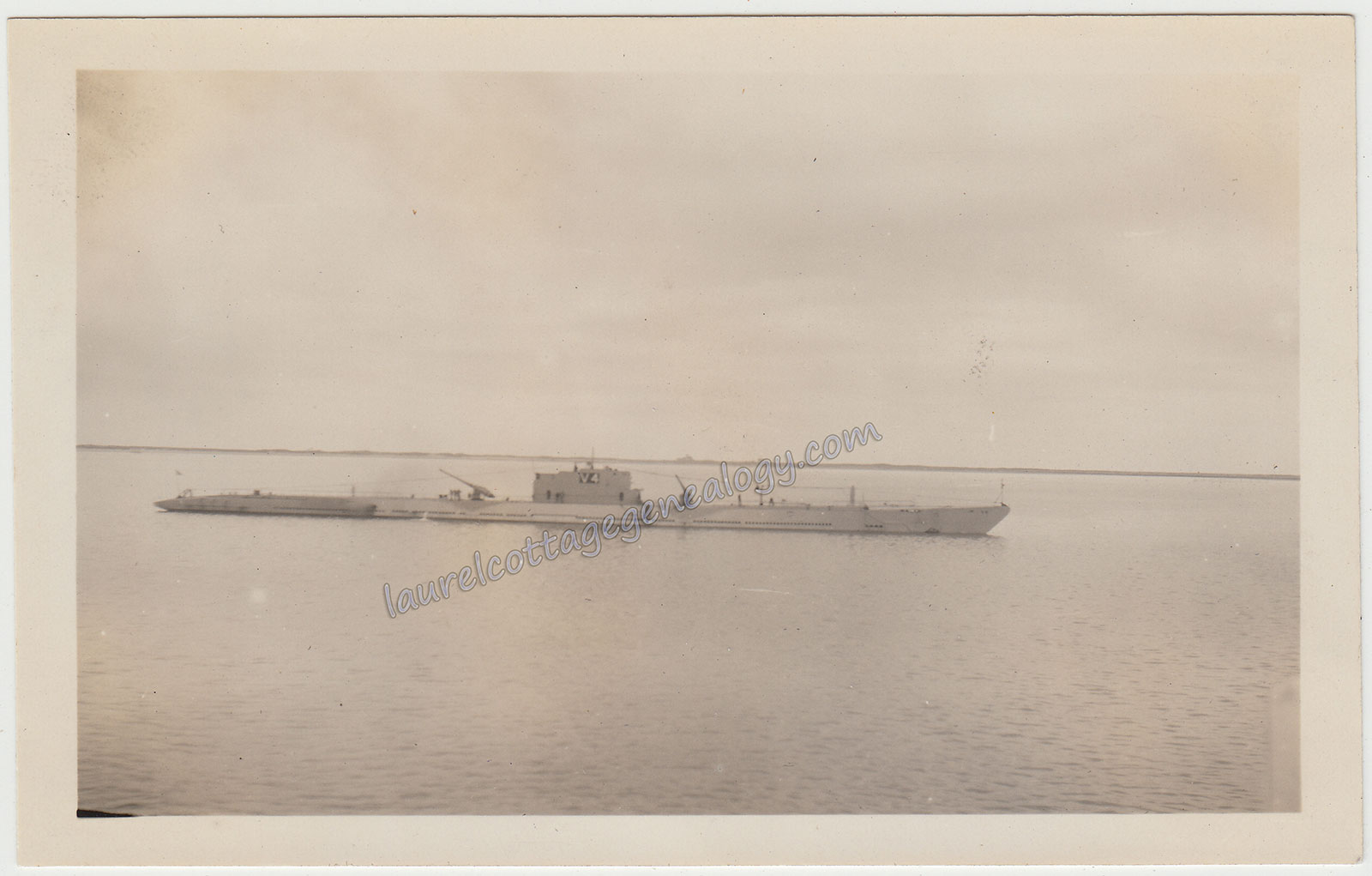
A shot of submarine USS V-4, (later USS Argonaut) taken during trials in January – February 1929, off the coast at Provincetown, Mass. During these trials she submerged to 318 feet (97 meters) which was a record depth at that time. She was also the largest non-nuclear sub ever commissioned by the U.S. Navylaid down as V-4 on May 1, 1925 at the Portsmouth Navy Yard; launched November 10, 1927; commissioned April 2, 1928; renamed Argonaut on February 19, 1931. She saw pre-war duty at Pearl Harbor and served in WWII. On January 2, 1943, she sank the Japanese gunboat Ebon Maru, in the Bismark Sea. She met her demise during combat eight days later on January 10th, with a loss of all 105 men on board. (The Wiki article indicates 102, other sources indicate 105.) Her bell, however, remains:  It is housed in the belfry of the Pearl Harbor Submarine Base Chapel on Oahu, and poignantly tolls for her own crew and those of the other 51 U.S. Navy subs lost during the war. See a wonderful article, “Bells Left Behind.”

One unexpected fact about this boat (submarines are called boats) is that in 1931 she was heavily featured in the film “Seas Beneath” directed by John Ford. V-4 appeared as a fictional WWI German sub, “U-172.”

Sources:  USS Argonaut (SM-1). n.d. http://en.wikipedia.org/wiki/USS_Argonaut_%28SM-1%29. (accessed March 29, 2015).

Jones, Col. Charles A.  “Bells Left Behind.”  Web accessed March 29, 2015. [http://www.navy.mil/navydata/cno/n87/usw/issue_10/bells.html]


CENTRAL PARK, NEW YORK CITY, 1930

Boston Set10

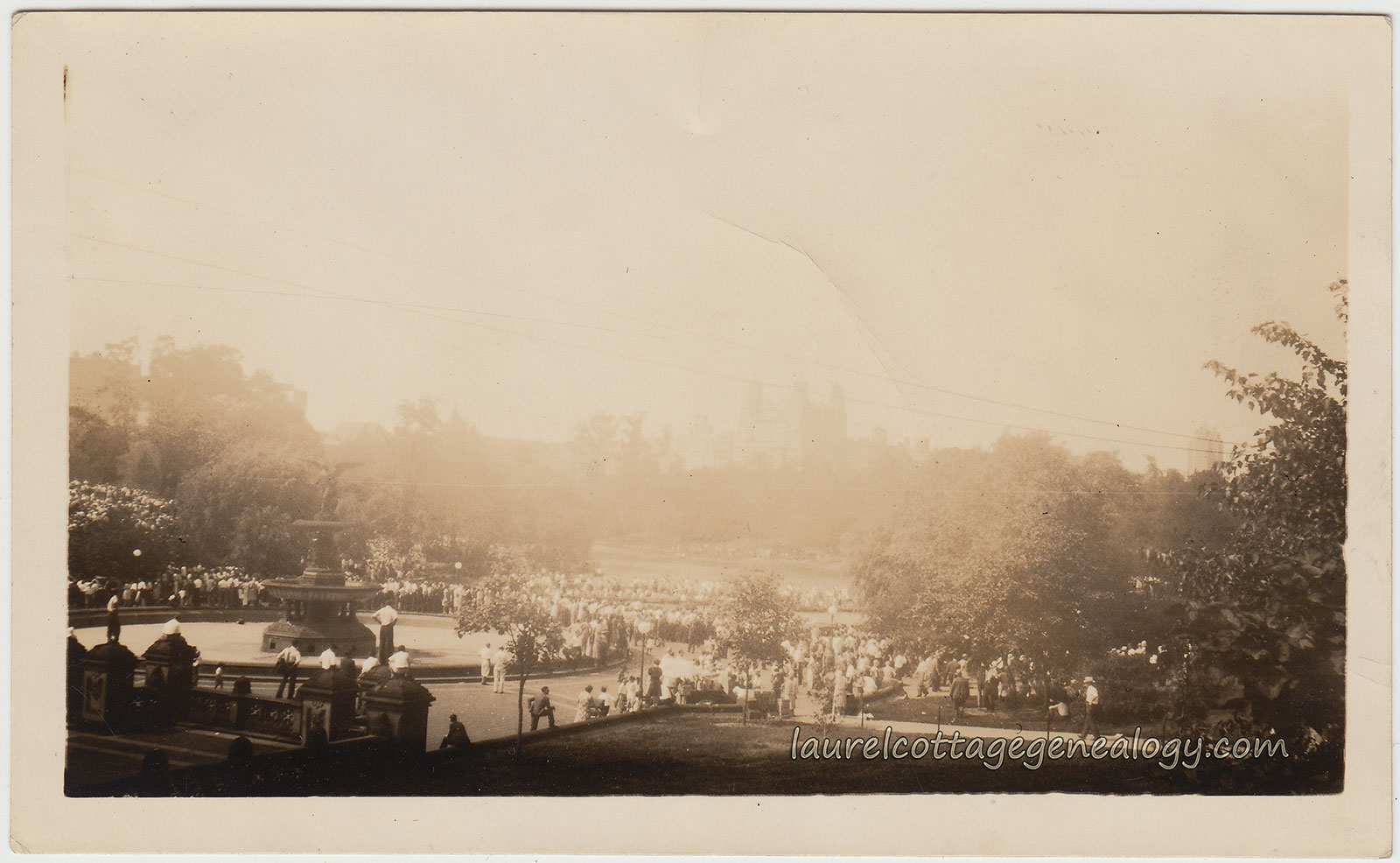
Central Park, New York City showing some type of event, 1930. On the left you can see Bethesda Fountain, also known as the “Angel of the Waters” statue, designed by Emma Stebbins in 1868, and dedicated in 1873. The angel holds a lily in one hand, and with the other outstretched, she offers a blessing on the “water.” Of course in this photo, the fountain is dry. The sculpture was erected to commemorate the 1842 opening of the Croton Aqueduct, which supplied fresh water to the city of New York. Beneath the angel are four cherubs, representing health, purity, temperance and peace.

Source:  Bethesda Statue. Central Park. Web accessed March 29, 2015. [http://www.centralpark.com/guide/attractions/bethesda-terrace/bethesda-fountain.html]

Set of 10 photos, 1928 – 1930.  Sizes:  4 and 1/2 x 2 and 3/4″ or 2 and 3/4 x 4 and 1/2″

Price:  $50.00

Lewando’s French Dye House

Lewandos French Dye House tc1

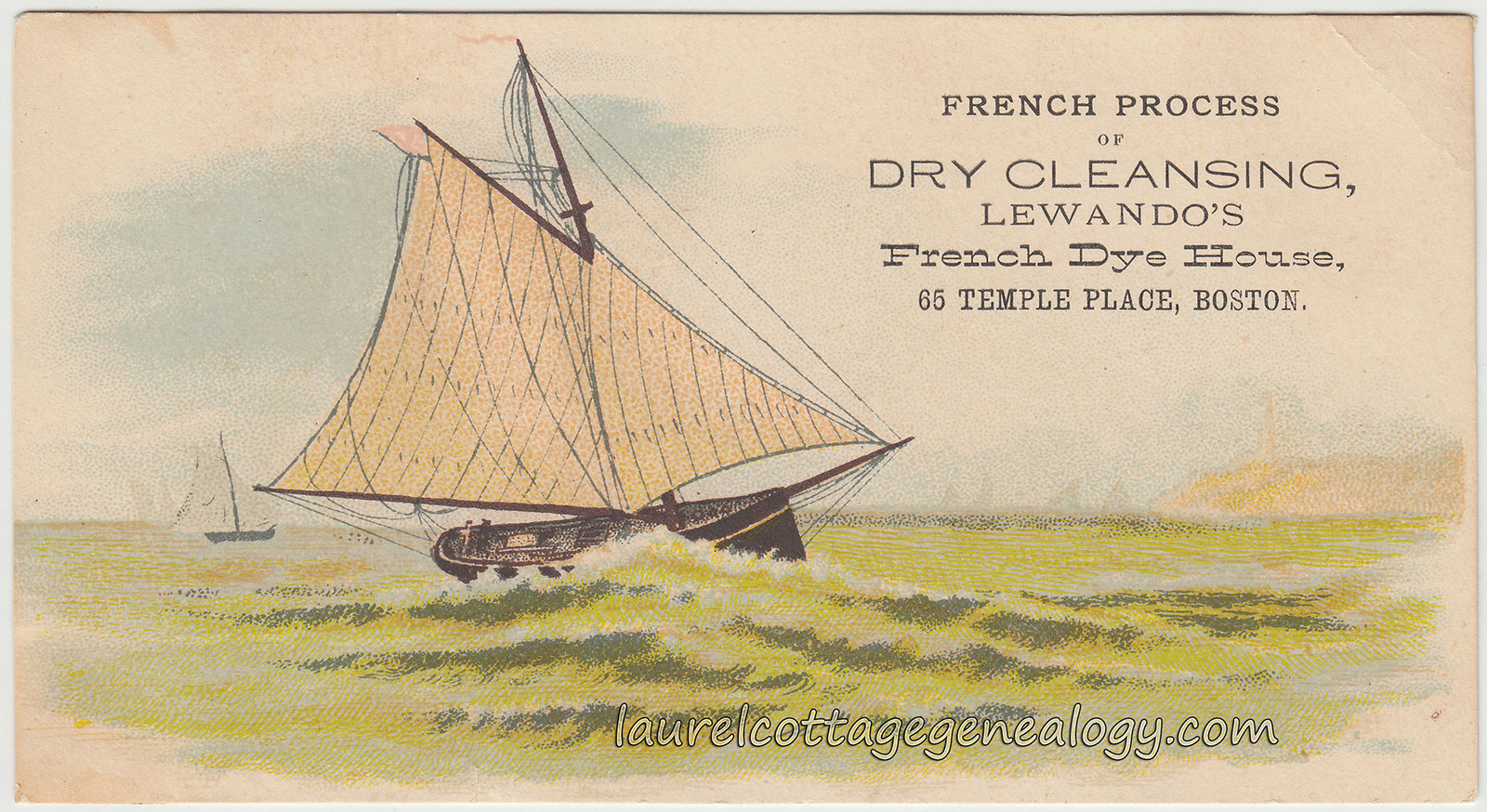
Trade card. Circa 1877 – 1881.    Size:  About 5 and 1/4 x 2 and 3/4″

Price:  $25.00

“French Process of Dry Cleaning, Lewando’s French Dye House, 65 Temple Place, Boston.”

Here’s a beauty: a trade card showing a sailboat prominent in the foreground, with some others in the background, and a bare suggestion of a lighthouse atop some hills protecting the harbor. The light green color of the ocean is a little unusual, and I think, part of what makes this card so nice.

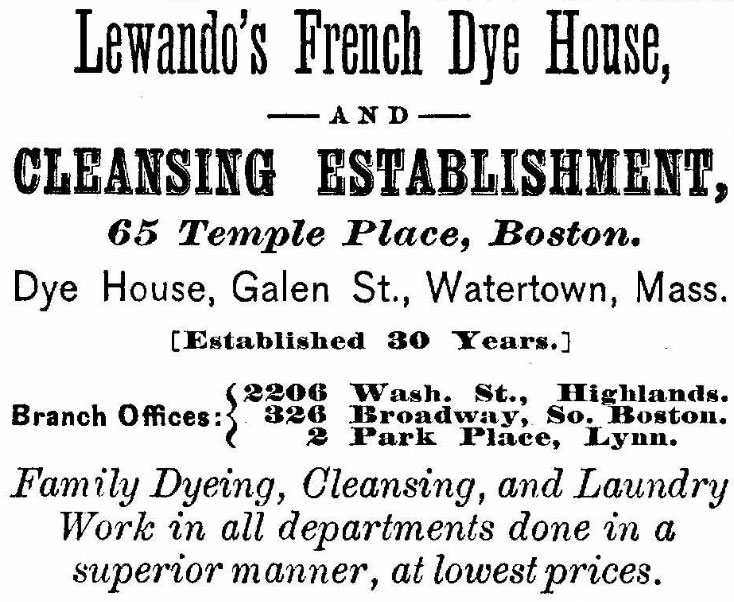
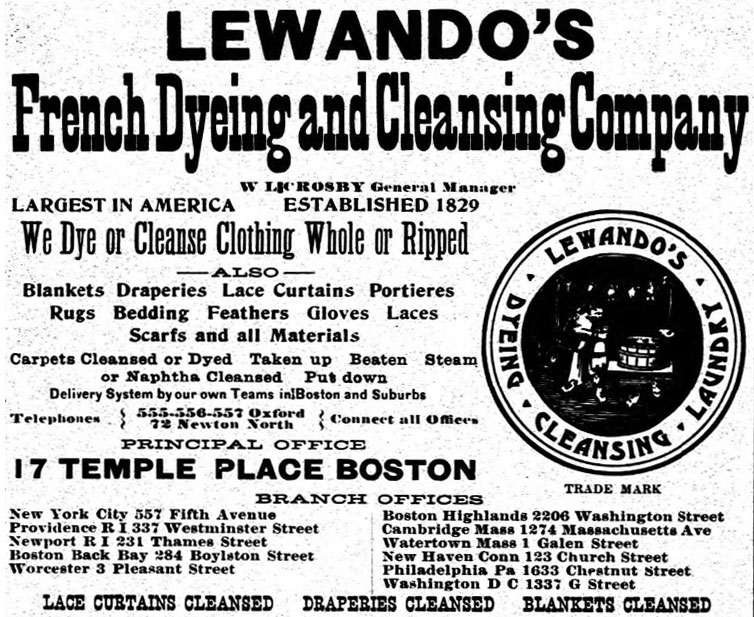
City directories were found from 1877 – 1880 for 65 Temple Place address. By at least 1882 Lewando’s was at 17 Temple Place. Below is the 1877 ad showing they had been in business for the past 30 years, but a conflicting date shows up online at Historic New England for an undated trade card which shows  “Established 1829.”  In any case, Lewando’s was very successful and city directory ads show up into at least the 1960’s, as well as a current location in Needham, MA under the name of Lewando’s (not sure if the more recent ones were a continuation of the original business; they may or may not have been, but that would require more research which we won’t get into here.)

Lewandos 1877 Ad

1877 ad showing the 65 Temple Place address.

Lewandos 1906 Ad

1906 ad showing the 17 Temple Place address as well as eleven other locations.

Well, we could veer off in many directions in researching this trade card. What was the “French dye process”? After searching online briefly, I still don’t know but did find out that the word “denim” is of French origin….Did you know that ancient Romans used a dry cleaning method – of urine (for the ammonia), lye and fuller’s clay? Here’s a great article on the history of dry cleaning highlighting two men, Thomas Jennings, the first African American to receive a U.S. patent (1821 for his method of dry cleaning he called “dry scouring”) and Frenchman Jean-Baptiste Jolly, sometimes called the father of modern dry cleaning. Check out green alternatives to modern dry-cleaning though, if you haven’t done so already.

UPDATE:  Do also check out this link re Lewando’s and playing cards from the comment below and the website, Amused by Jokers am I!

Sources:  Boston City directory, p. 1302.  The New-England Business Directory, 1877.  Ancestry.com. U.S. City Directories, 1821-1989

The Boston Directory, No. LXXVI. 1880. p.1254. Ancestry.com. U.S. City Directories, 1821-1989.

The Boston Directory, No. LXXVII. 1882. p.1471. Ancestry.com. U.S. City Directories, 1821-1989.

Sampson & Murdock Co. Boston Directory. 1906. p. 2816. Ancestry.com. U.S. City Directories, 1821-1989

Stone, Sarah, “How Dry Cleaning Works And Who Invented It.”  Today I Found Out. Web accessed March 28, 2015. [http://www.todayifoundout.com/index.php/2014/09/history-dry-cleaning/]

Green “Dry” Cleaning. September/October 2007. Green America. Web accessed March 28, 2015. [http://www.greenamerica.org/livinggreen/drycleaning.cfm]

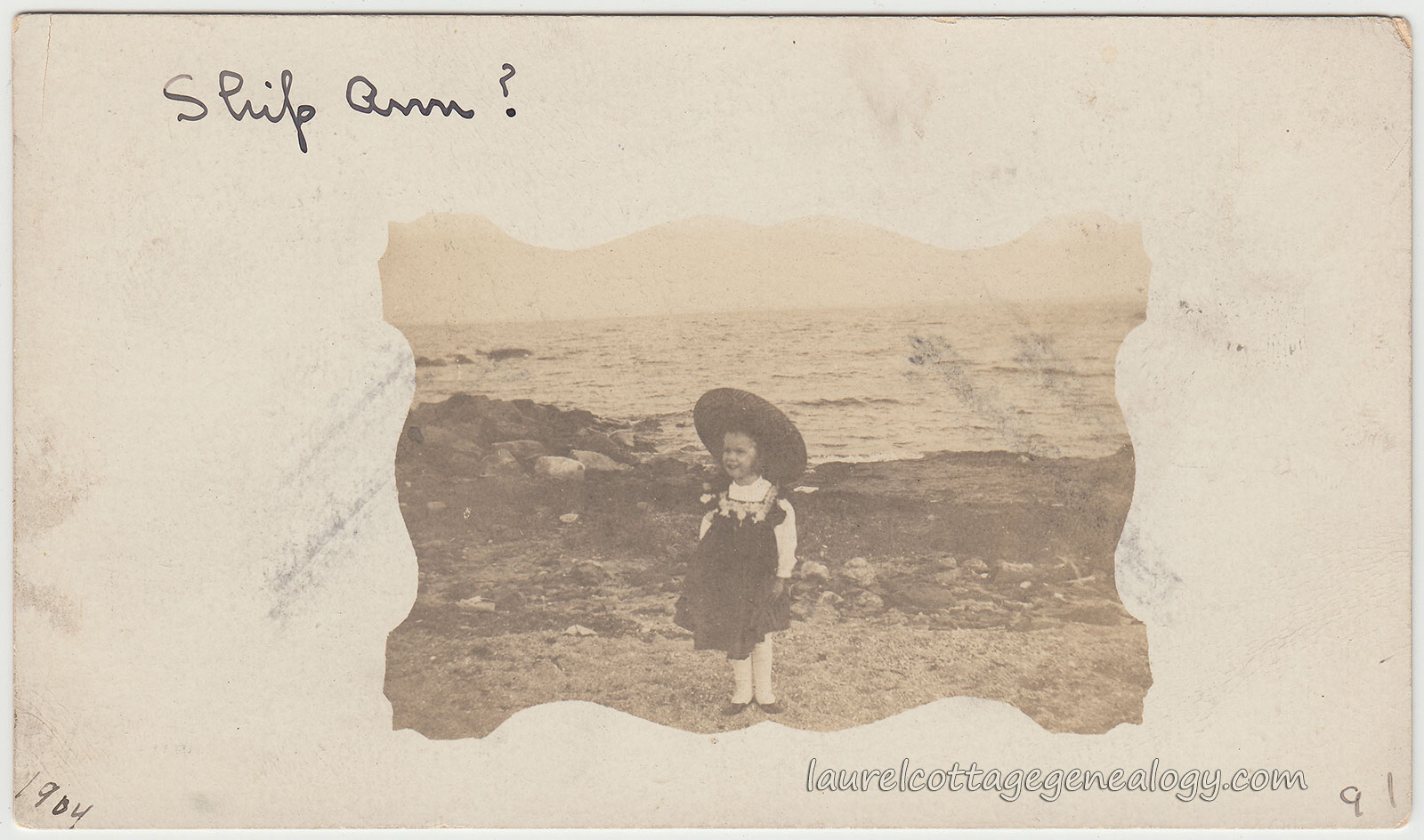
Ship Ann?

Ship Ann pc1Ship Ann pc2

Undivided back, Real Photo Postcard, unused with writing. CYKO stamp box shows “Prints at Night” and “Place Postage Stamp Here.” 1904.

Price:  $4.00     Size:  About 5 and 1/2 x 3 and 1/8″

I really do not understand the handwritten caption on this one which appears to say,  “Ship Ann?”  Was Ann the little girl in the photo? Did she like ships? But she’s adorable in her big hat, standing on the shore. This postcard was found along with the prior post entitled “One Of My Favorite Stunts” and most certainly appears to have been written by the same person.

One Of My Favorite Stunts

One Of My Favorite Stunts pc1One Of My Favorite Stunts pc2

Undivided back, Real Photo Postcard, unused with writing. CYKO stamp box shows “Prints at Night” and “Place Postage Stamp Here.” 1904.

Price:  $4.00      Size:  About 5 and 1/2 x 3 and 1/8″

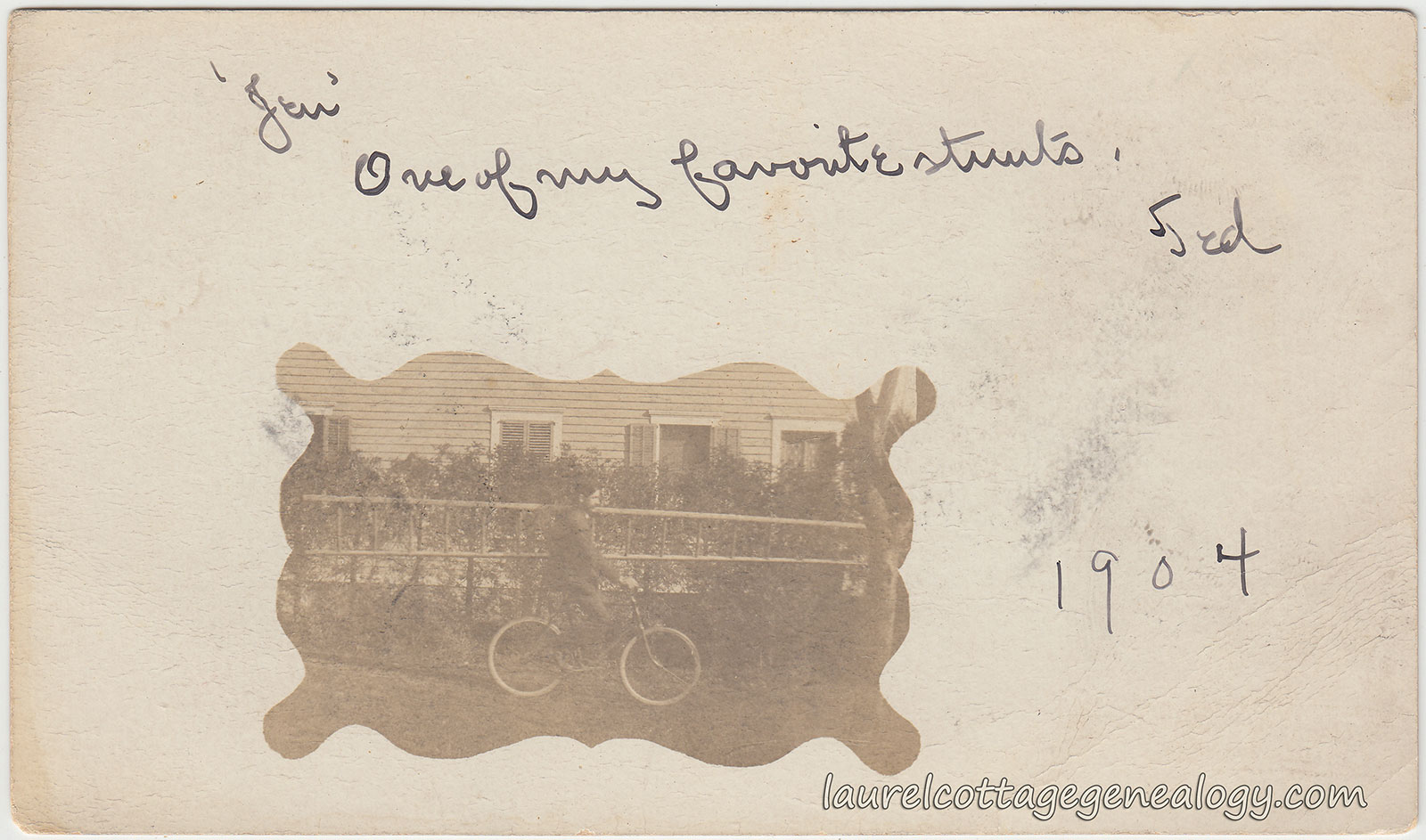
” ‘Jen’   One of my favorite stunts.   Ted.  1904″

Click on the front of this postcard view, then click once more to get the best look at this photo. It shows a young man riding a bicycle while balancing on his shoulder a tall ladder – sideways. Not an easy thing to do! The photo’s unusual border is sort of like a puzzle piece. This postcard, and the following one under the title “Ship Ann?” appear to have both been written by Ted.

Another View Of The Agua Caliente

Another View Of The Agua Caliente pc1Another View Of The Agua Caliente pc2

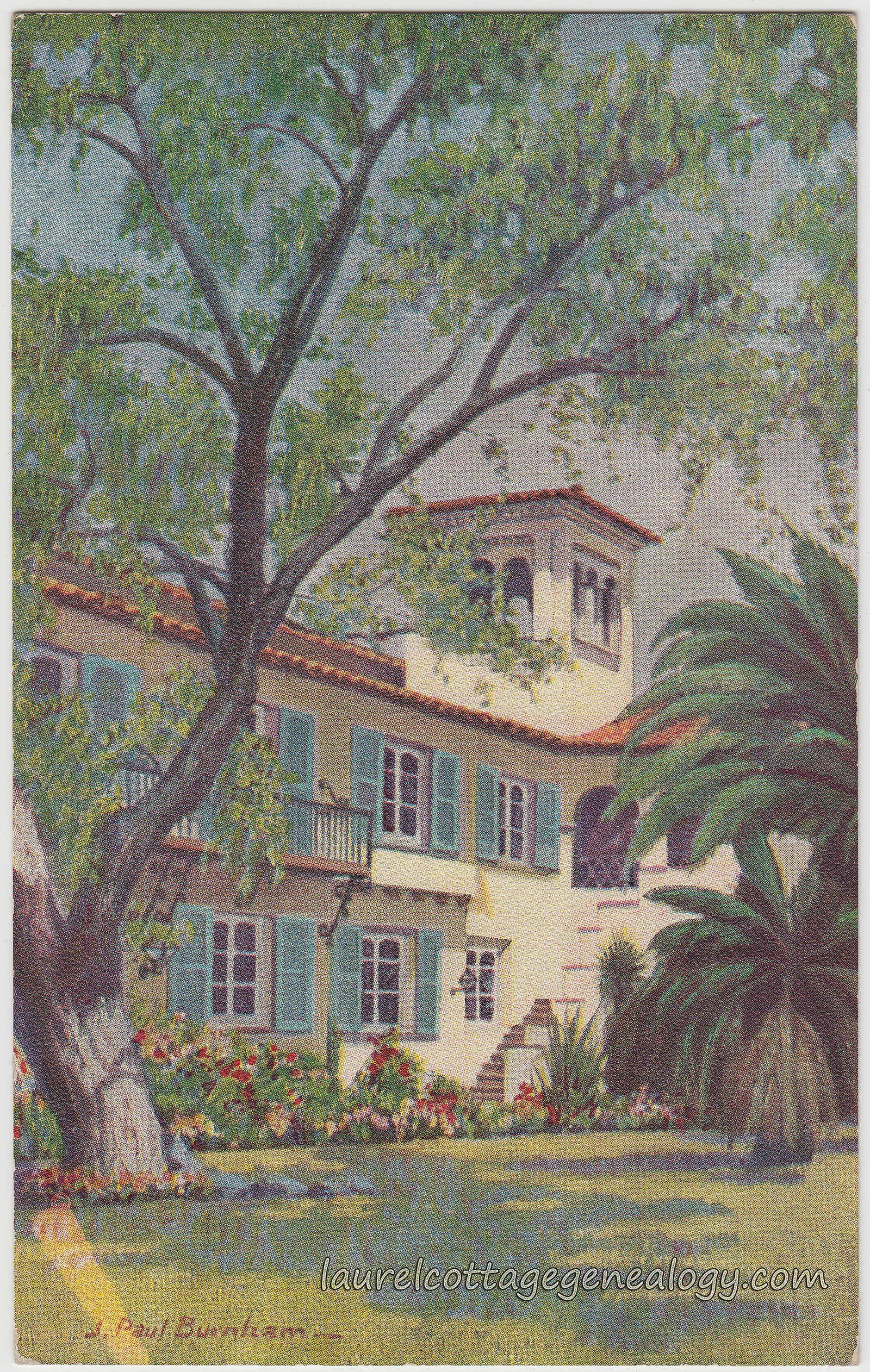
“A quaint escalera leads to the cool, shaded galleria from which one may view the Avenida de las Palmas, Agua Caliente.”

See prior post for more information.

Divided back, unused, artist-signed postcard. Artist:  John Paul Burnham. Publisher information:  Copyright 1929 L.G.S.

Price:  $12.00

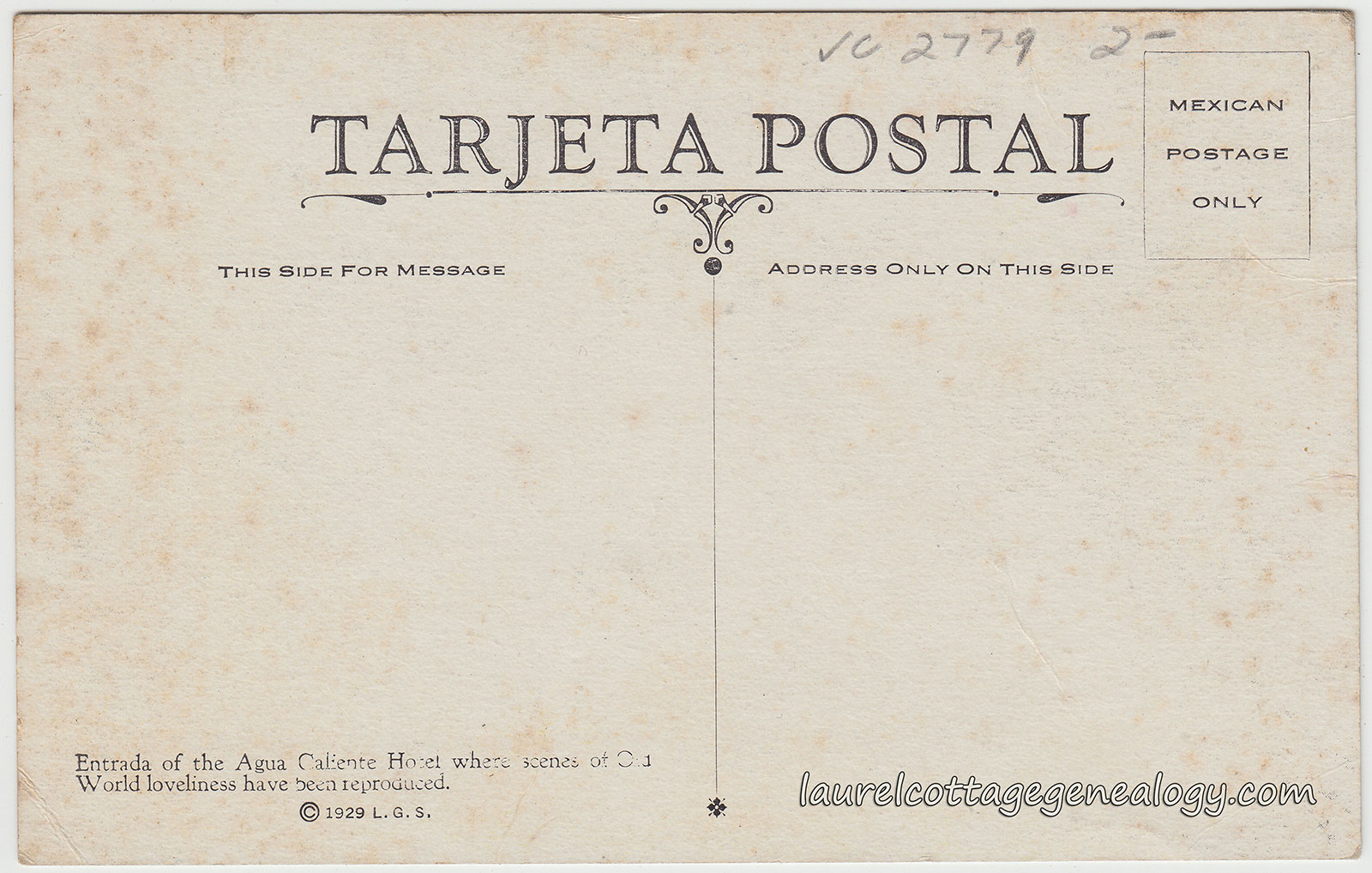
Entrada of the Agua Caliente Hotel

Entrada of the Agua Caliente Hotel pc1Entrada of the Agua Caliente Hotel pc2

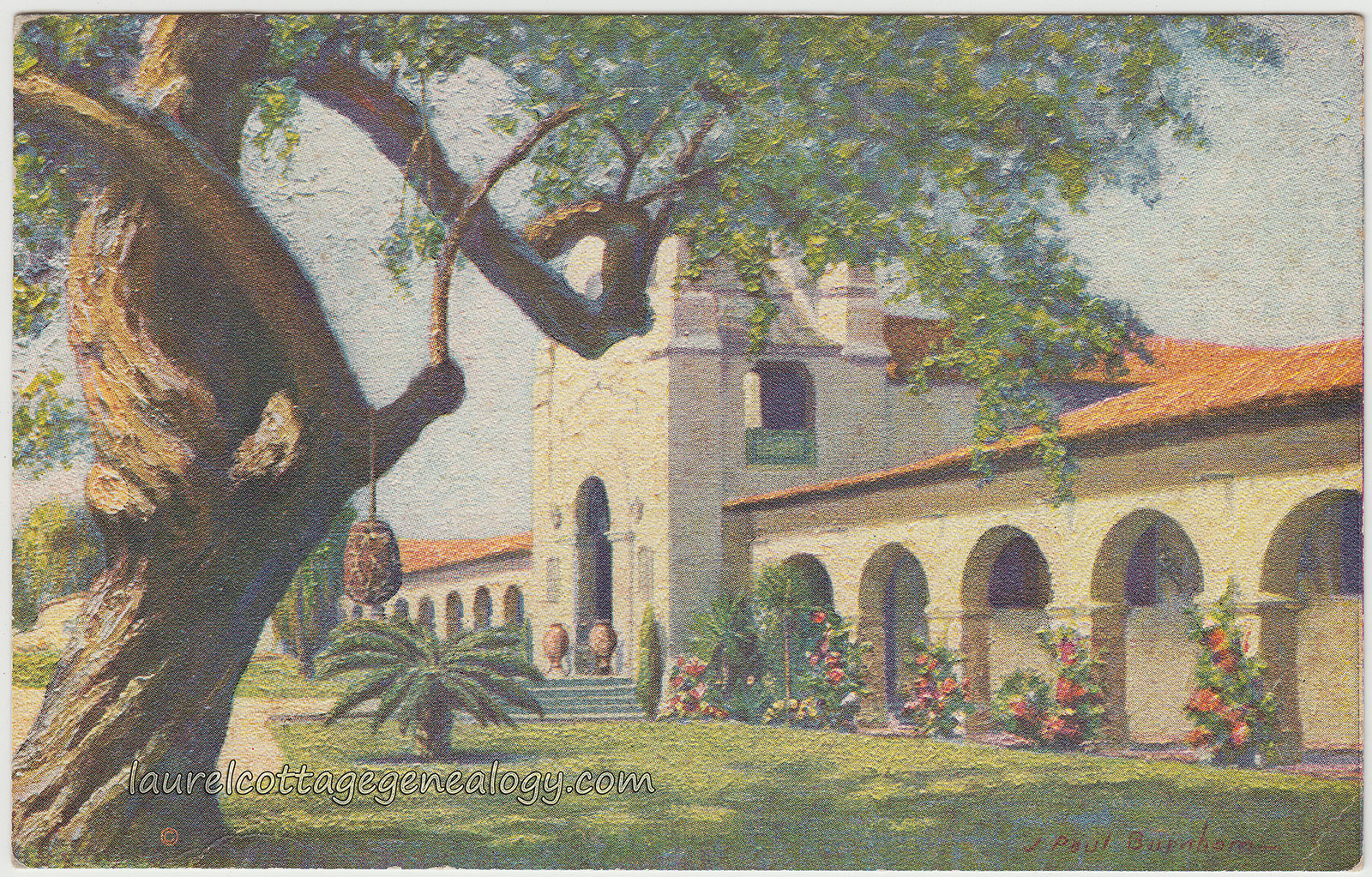
“Entrada of the Agua Caliente Hotel where scenes of Old World loveliness have been reproduced.”

This, and the following post, are two more artist-signed postcards by John Paul Burnham that we’ve recently come across. See our first post for this artist for more regarding the hotel.

Divided back, unused, artist-signed postcard. Artist:  John Paul Burnham. Publisher information: Copyright 1929 L.G.S.

Price:  $12.00

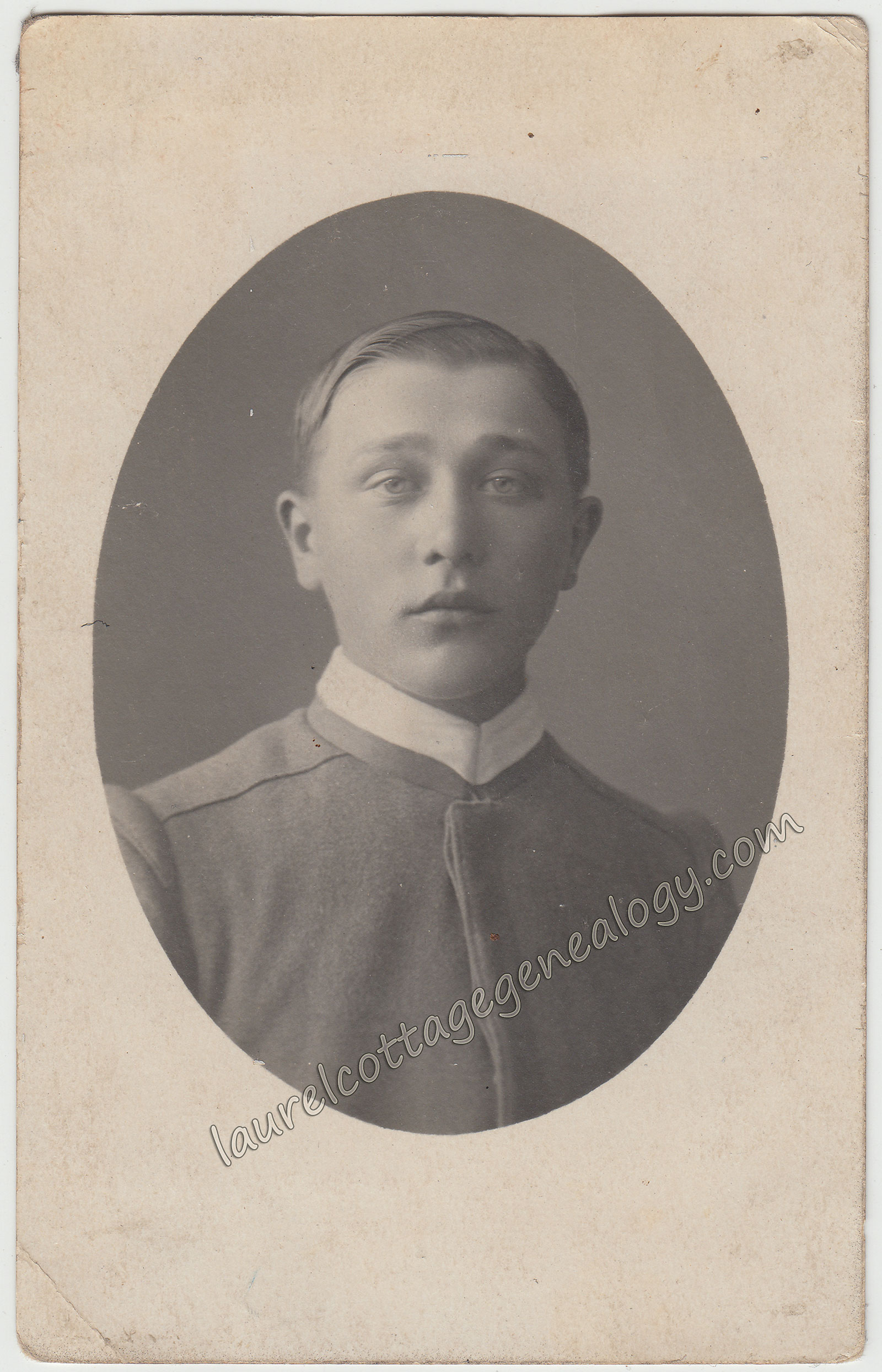
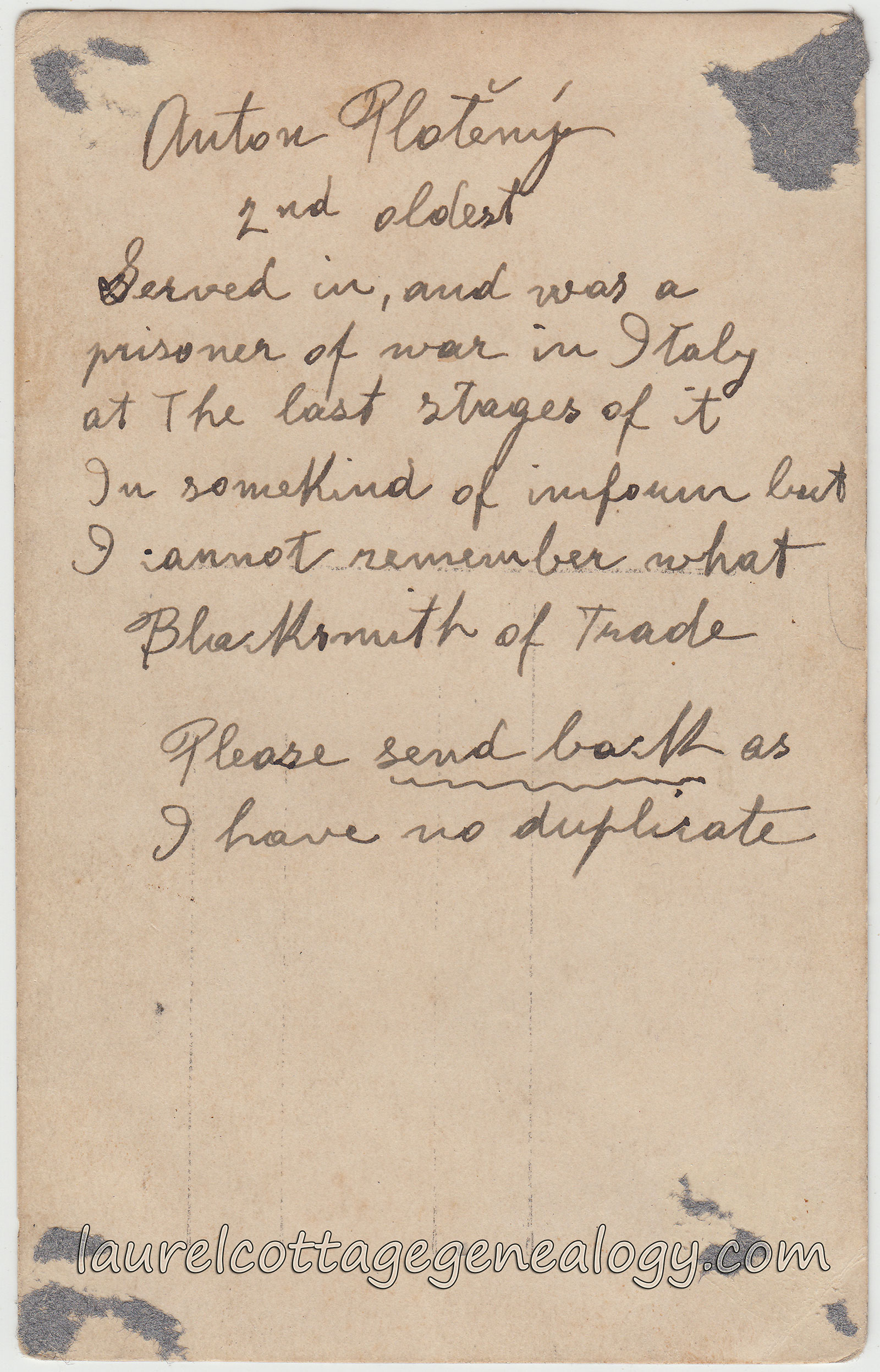
Anton Plotěný

Anton Ploteny pc1Anton Ploteny pc2

“Anton Plotěný – 2nd oldest. Served in, and was a prisoner of war in Italy at the last stages of it. In some kind of uniform but I cannot remember what. Blacksmith of trade. Please send back as I have no duplicate.”

This photo was a “must have” – for one, because of the identifying information given (which is so often missing) and secondly so we could help this young man’s image continue to survive, especially after the care expressed by the writer above, and especially in the hopes that his descendents might find this post and recognize him. It was found at an antique paper fair in California, and probably had been originally obtained from an estate sale. The Plotěný surname is probably of Czech origin. And since WWI was 1914 – 1918, this photo was likely either taken during this time or before the war. He does appear to have been quite young here, probably in his late teens or very early twenties.

Real Photo Postcard, possibly of Czech origin. Circa 1910 – 1918.

Price:  $15.00

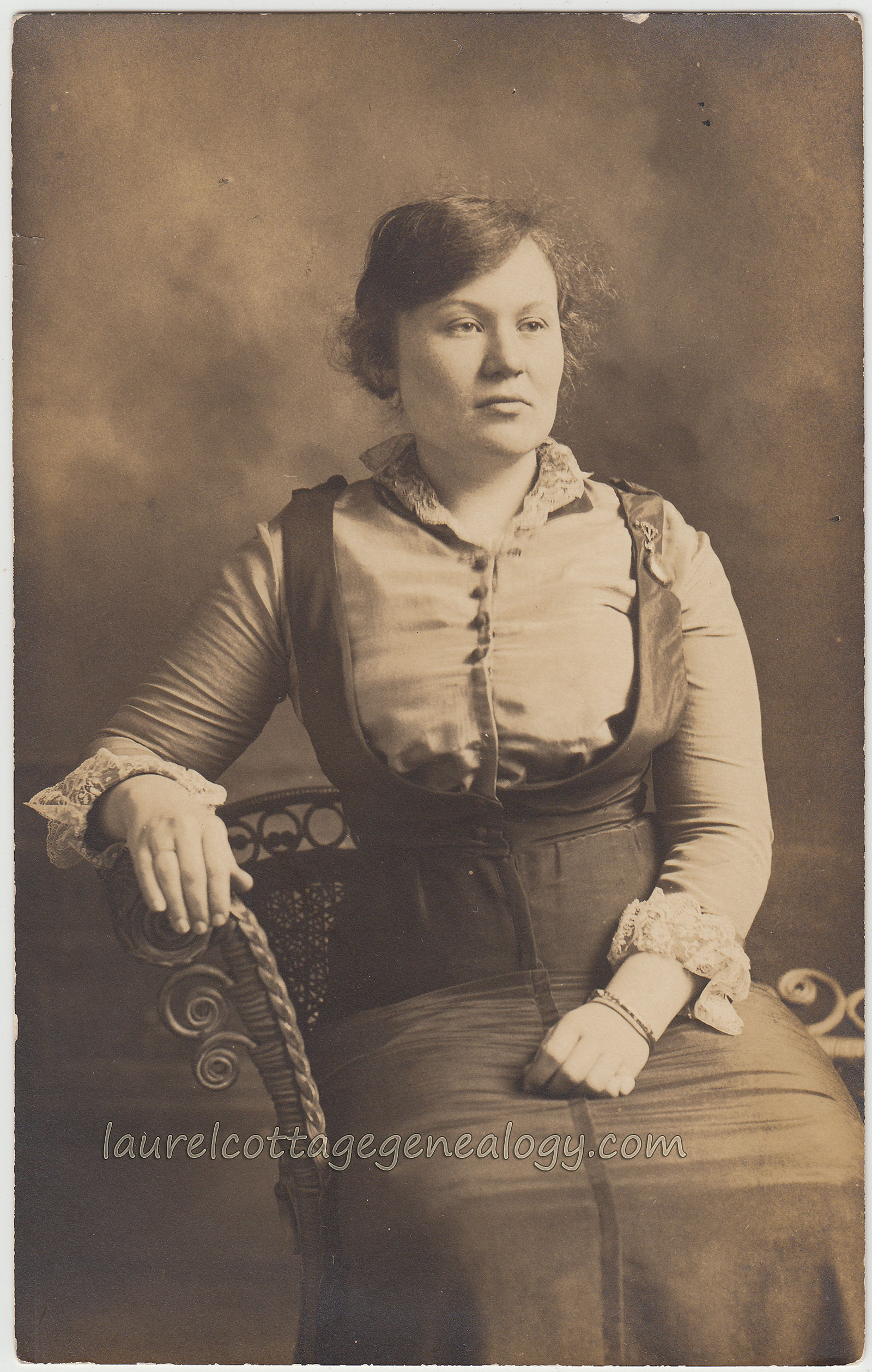
The Suspender Skirt

The Suspender Skirt pc1The Suspender Skirt pc2

Here’s a beautiful young woman with a regal bearing, seated in an ornate wicker settee. She wears a long sleeved blouse with a ruffled collar and cuffs, and what is called a suspender skirt, according to the very helpful website that we visit from time to time, Past Patterns. This type of skirt had a high waistline and is described as  “made with or without the plain suspenders or suspender bodice.”  It was popular from about 1915 – 1916.

Divided back, unused Real Photo Postcard. AZO stamp box. Circa 1915 – 1916.

Price:  $12.00

Source:  #6204:  Ladies’ Five-Gored Suspender Skirt:  Circa 1915 – 1916. Saundra Ros Altman’s:  Past Patterns. Web accessed March 22, 2015.